Trusted Coverage from the Wisconsin State Journal
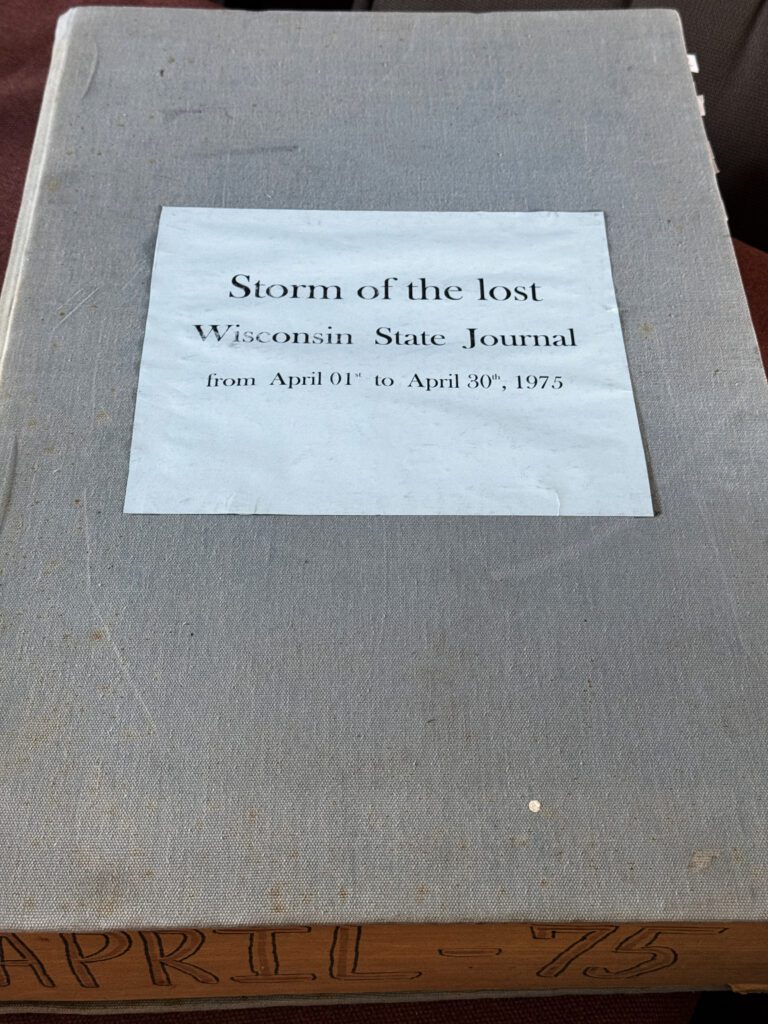
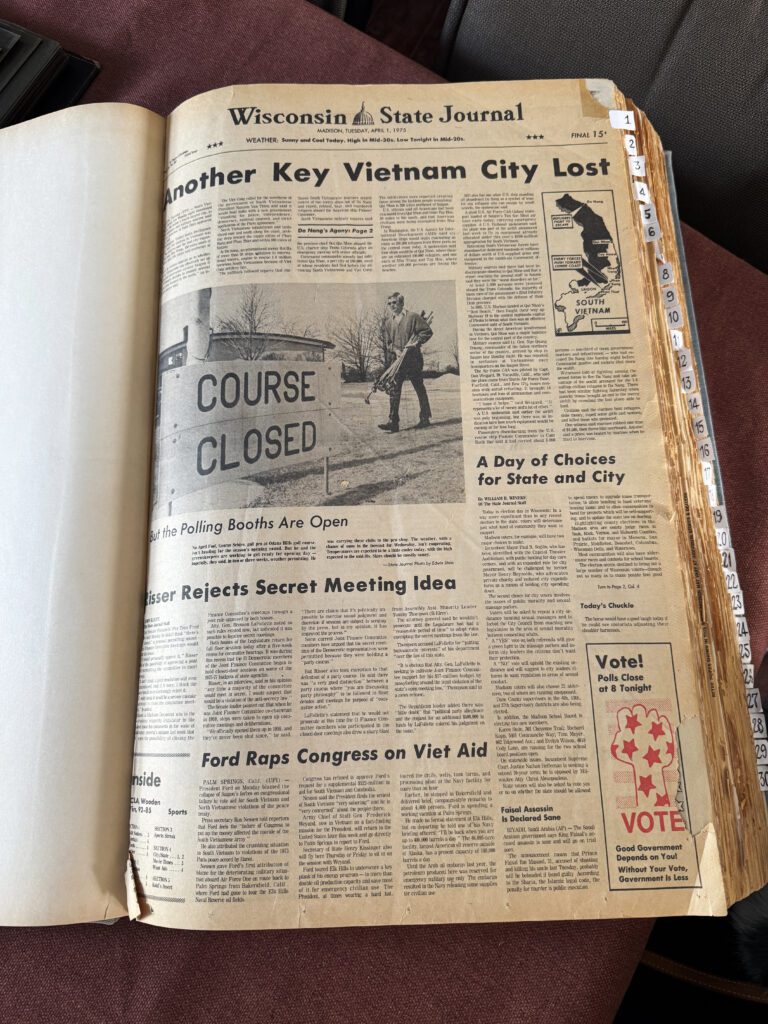
This collection of Wisconsin State Journal front pages from April 1975 captures the final, unraveling weeks of the Vietnam War as it was experienced not in Saigon, but in American living rooms—one headline at a time.
At the center is a binder titled “Storm of the Lost”, spanning April 1–30, 1975. The phrase is apt. Across these pages, history does not arrive as a single dramatic moment, but as a rising pressure: negotiations proposed and rejected, authority questioned, evacuations constrained, and political language growing increasingly hollow as events accelerate beyond control.
1. Diplomacy After the Decision
Headlines speak of negotiations and political solutions, even as events on the ground have already made those outcomes impossible.
2. Exit Without Rescue
Coverage shifts from war to withdrawal, showing an evacuation limited by policy, hesitation, and shrinking authority.
3. War Beside Everyday Life
The collapse of Saigon appears alongside local budgets and domestic politics, revealing how distant catastrophe coexisted with American normalcy.
4. An Ending That Wasn’t Announced
No single headline declares the war over; the end emerges gradually, day by day, only becoming clear in hindsight.
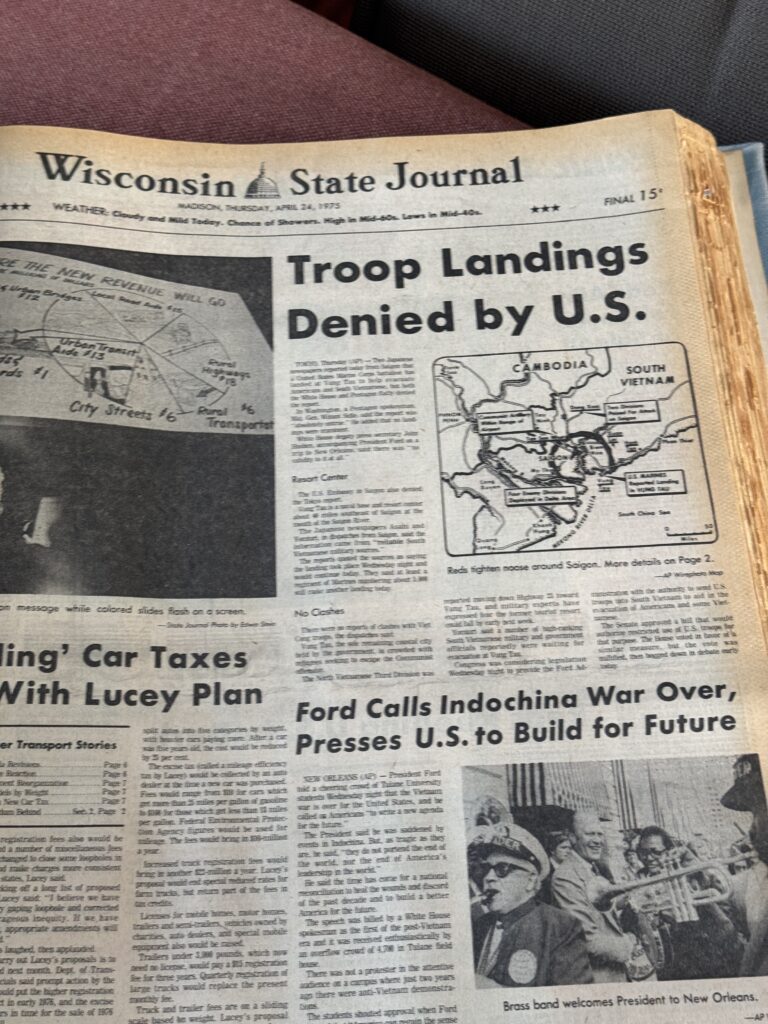
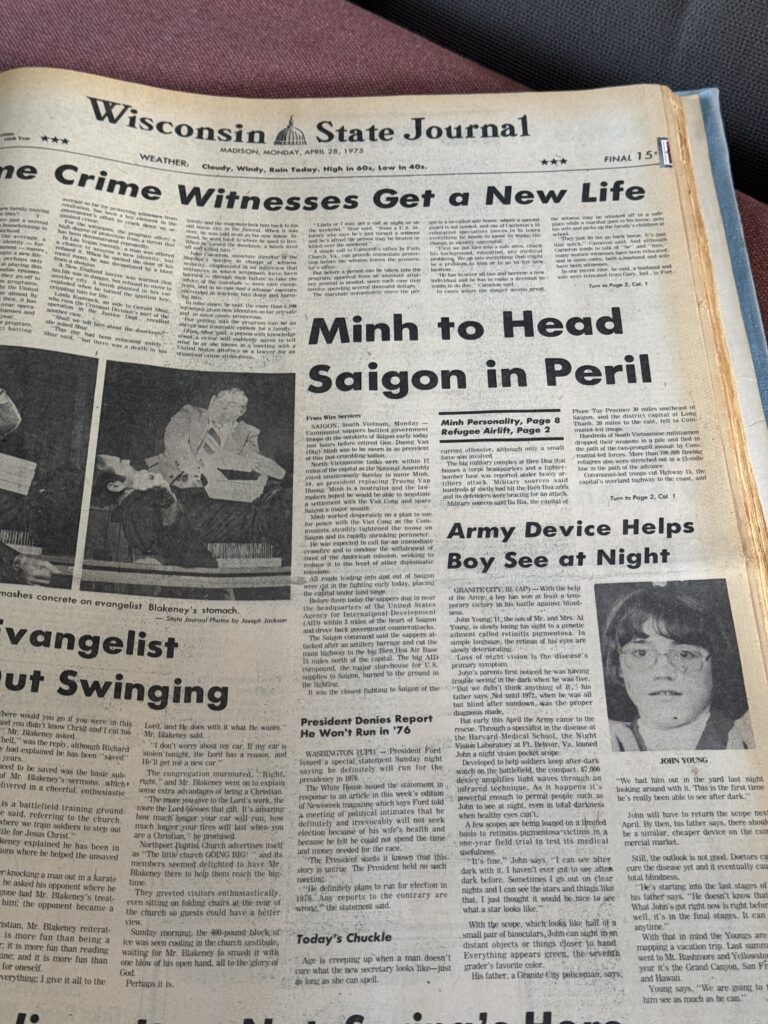
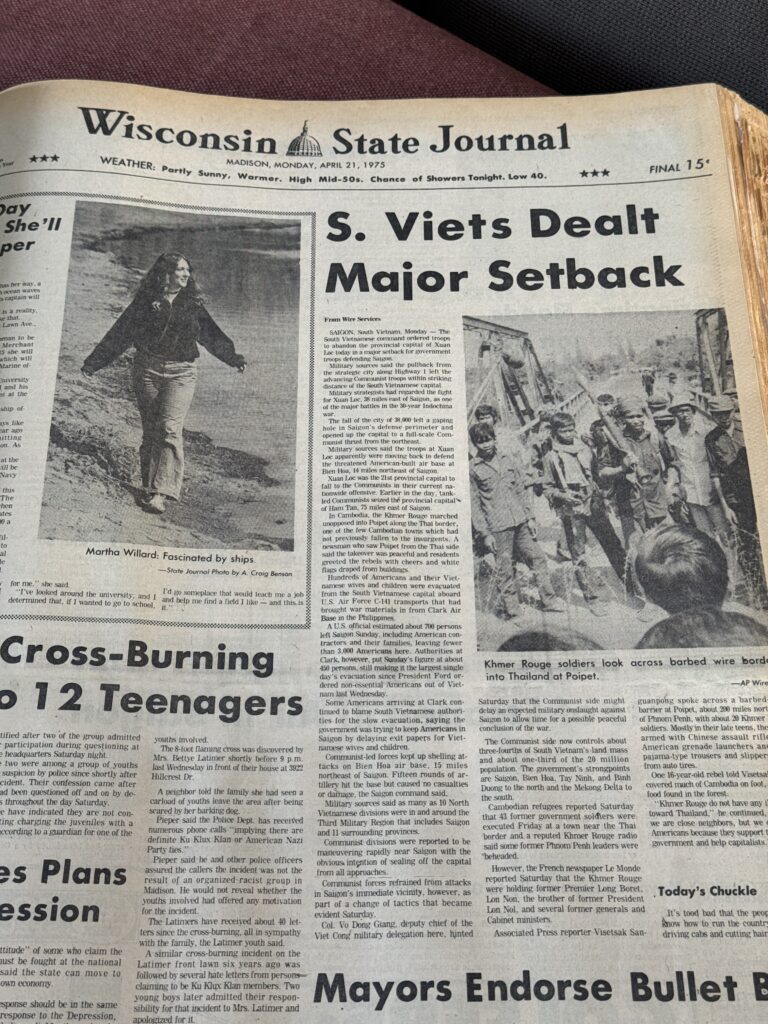
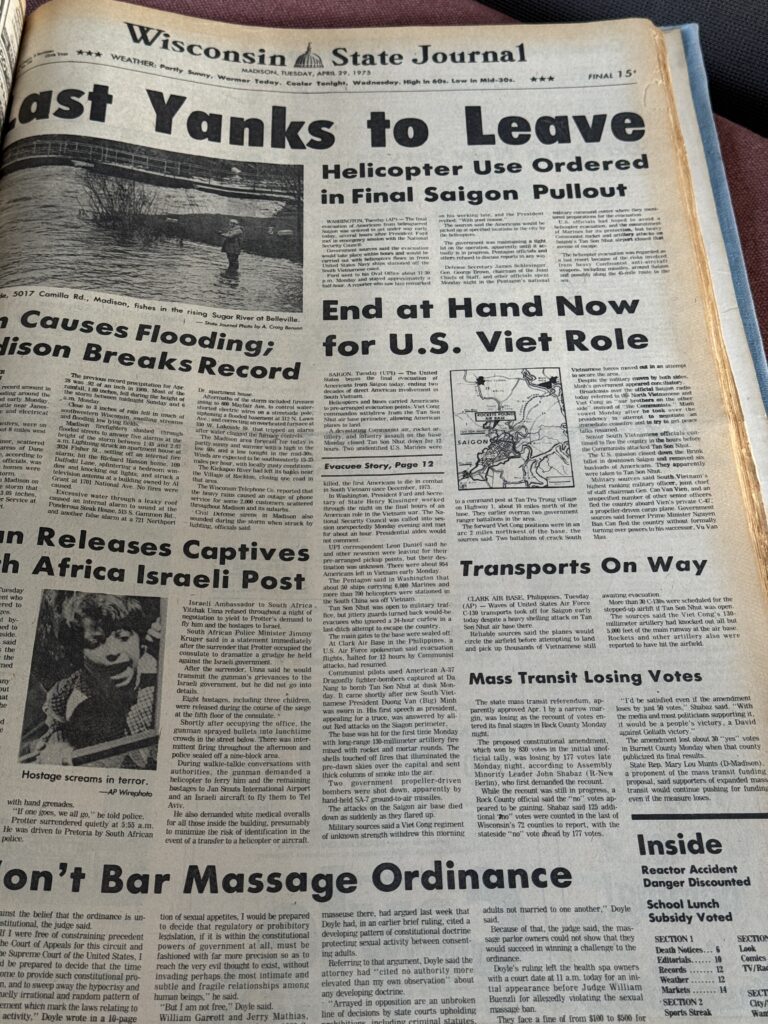
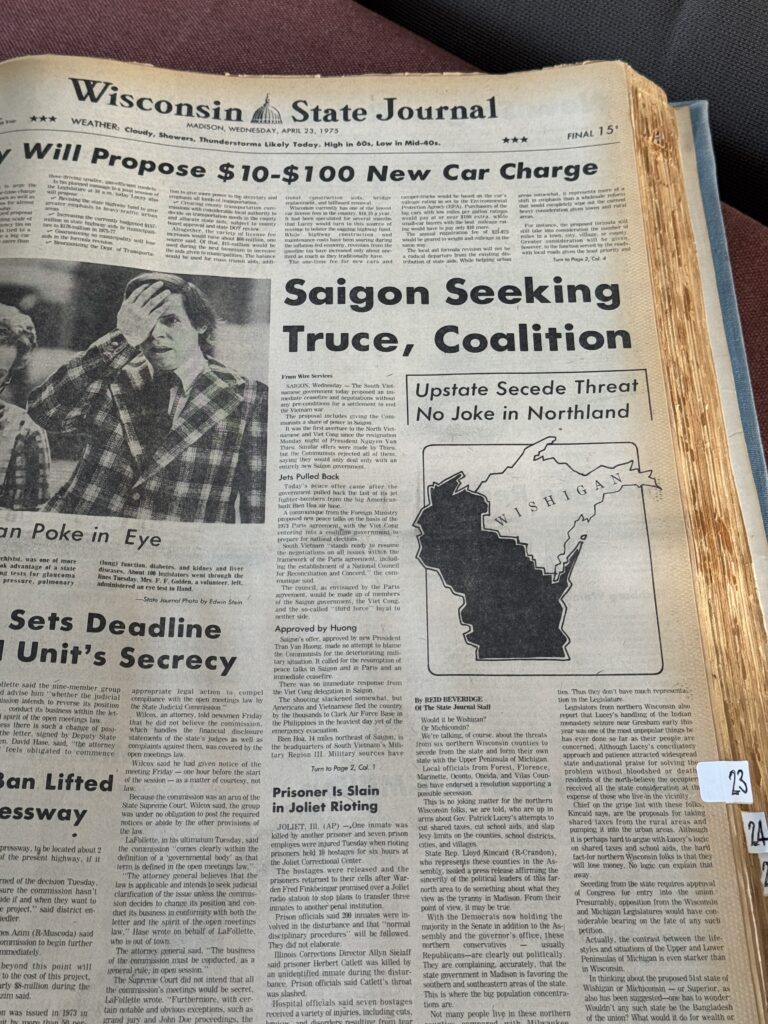
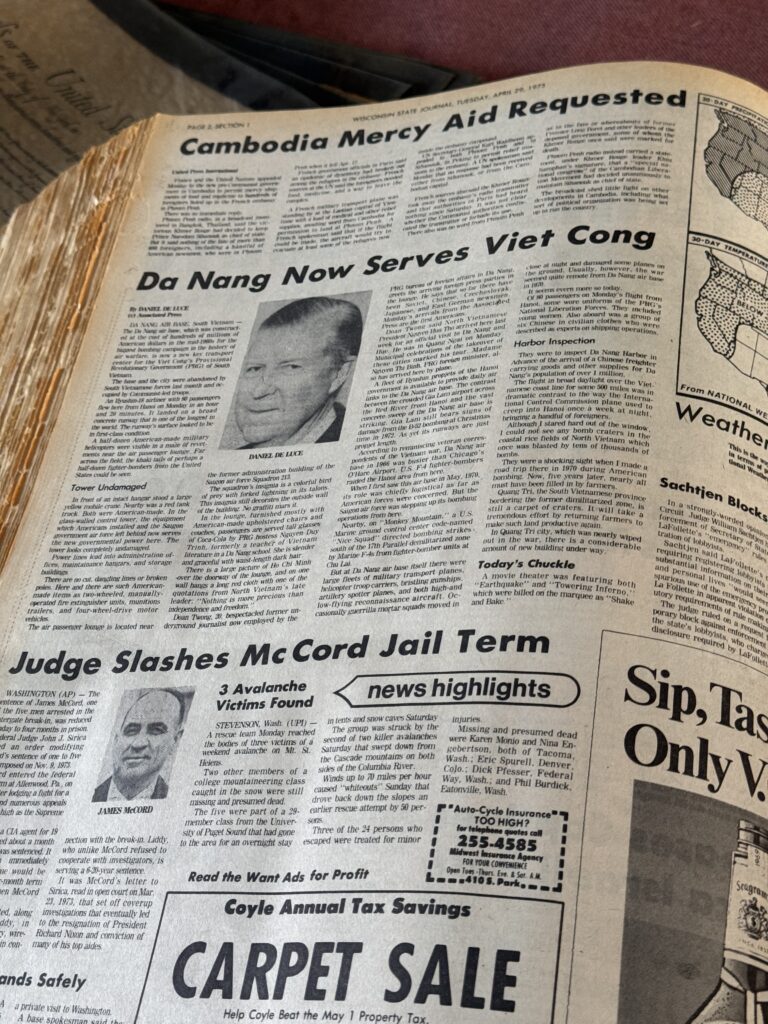
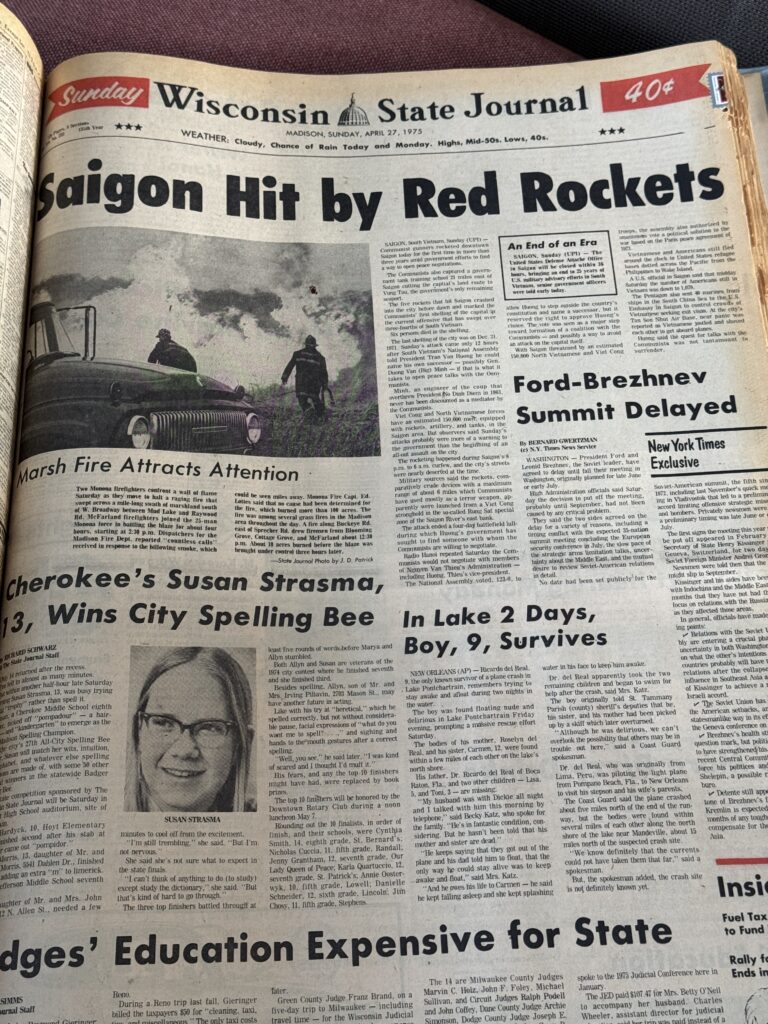
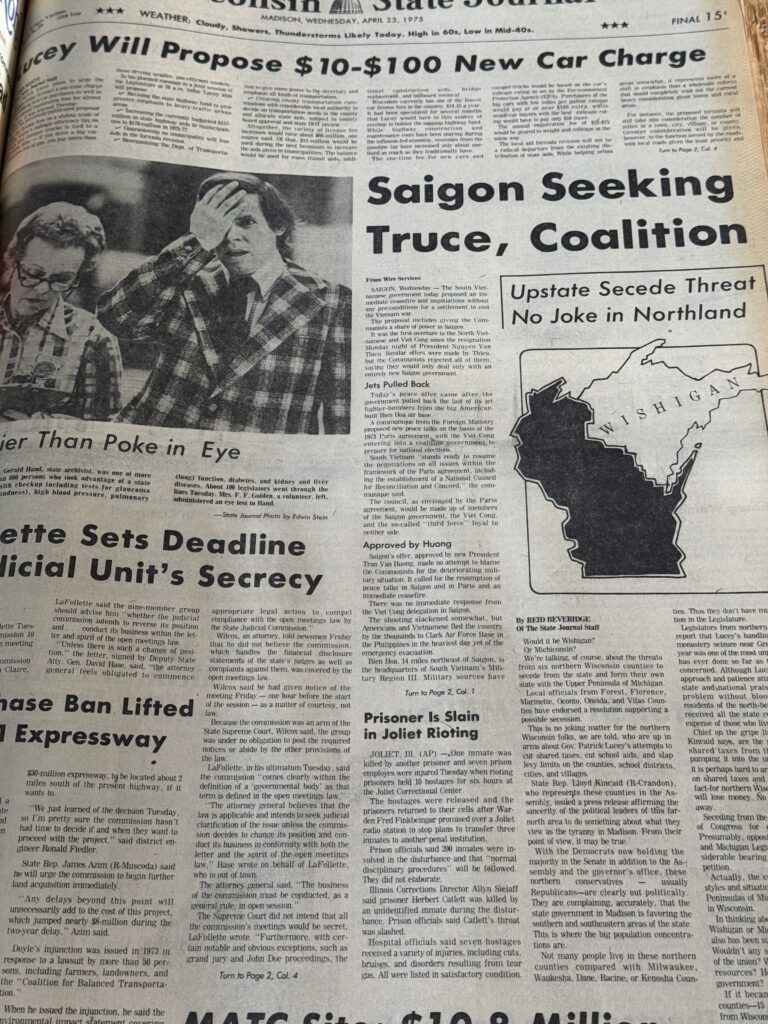
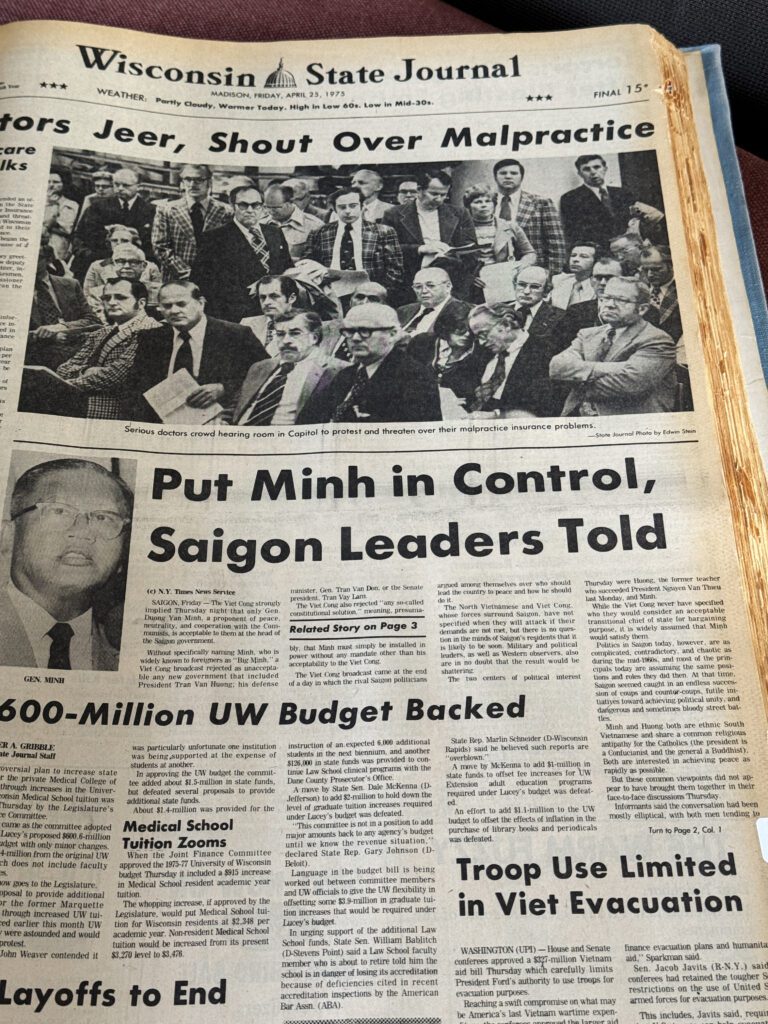
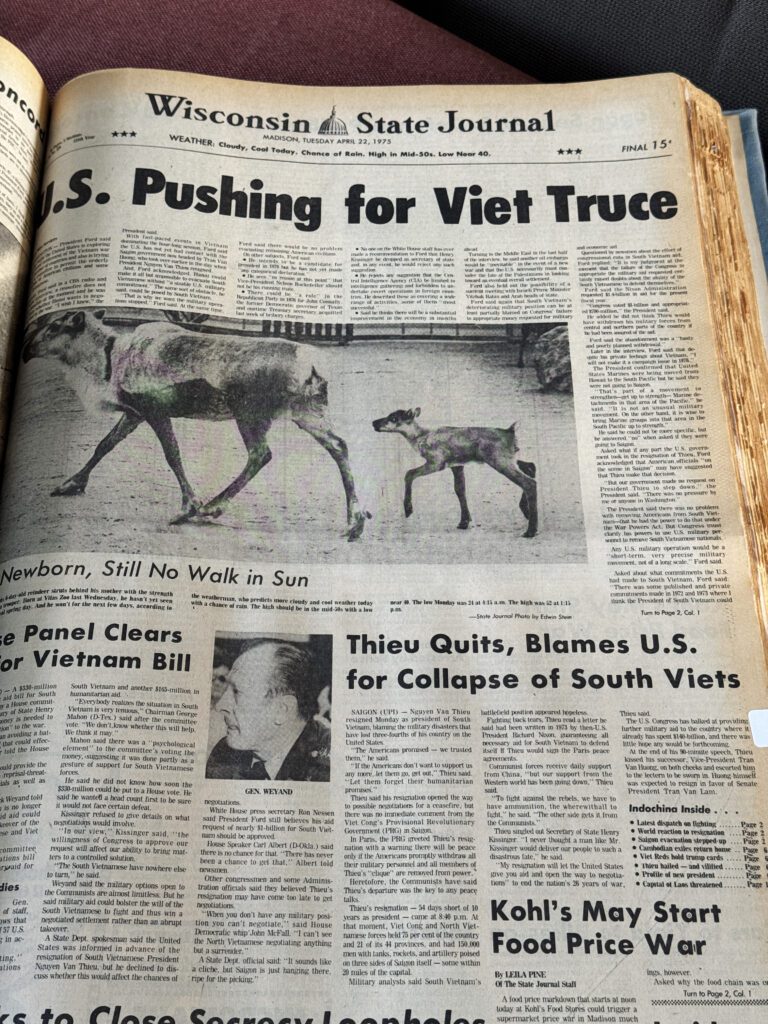
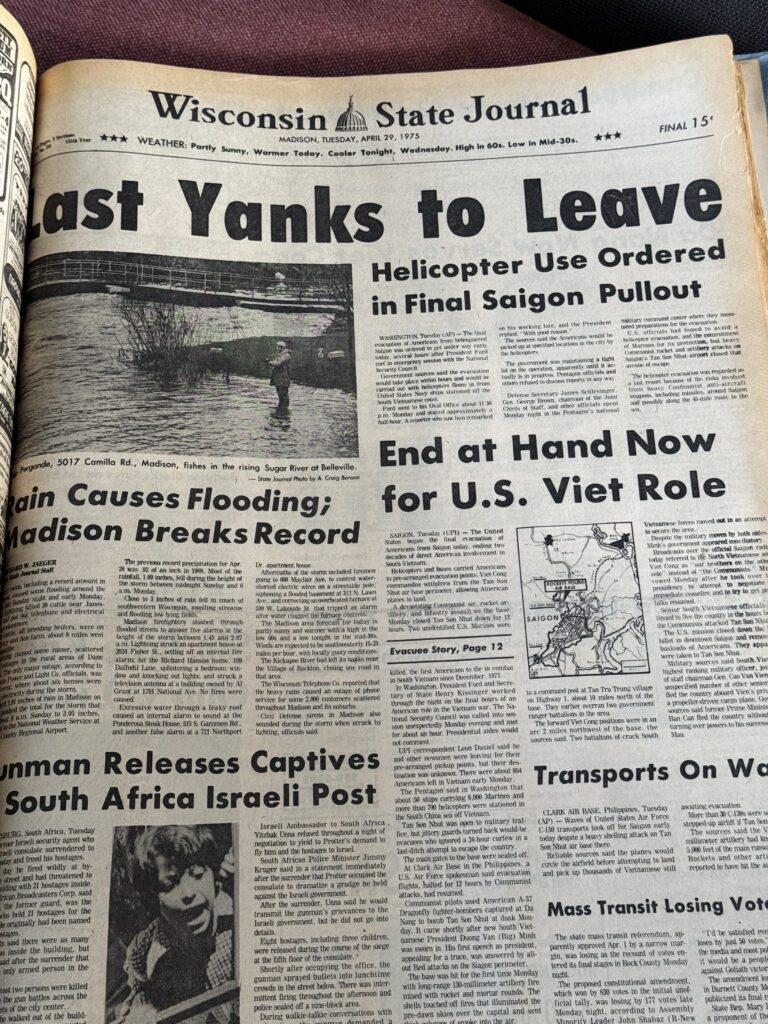
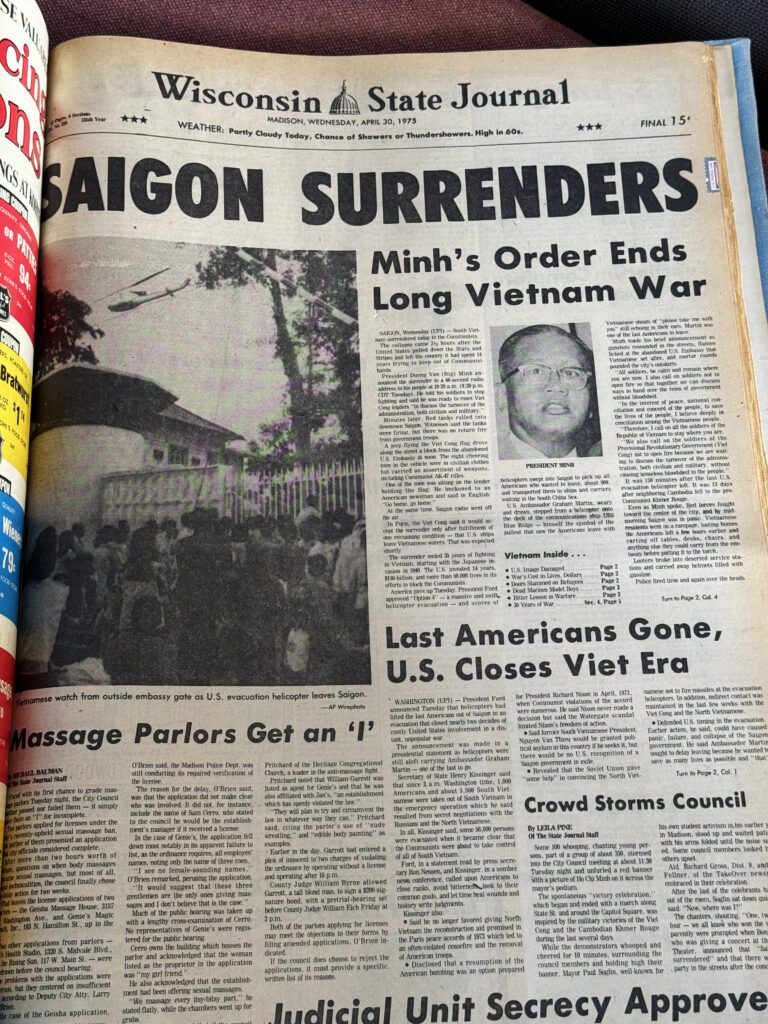
Headlines of Collapse: April 1975
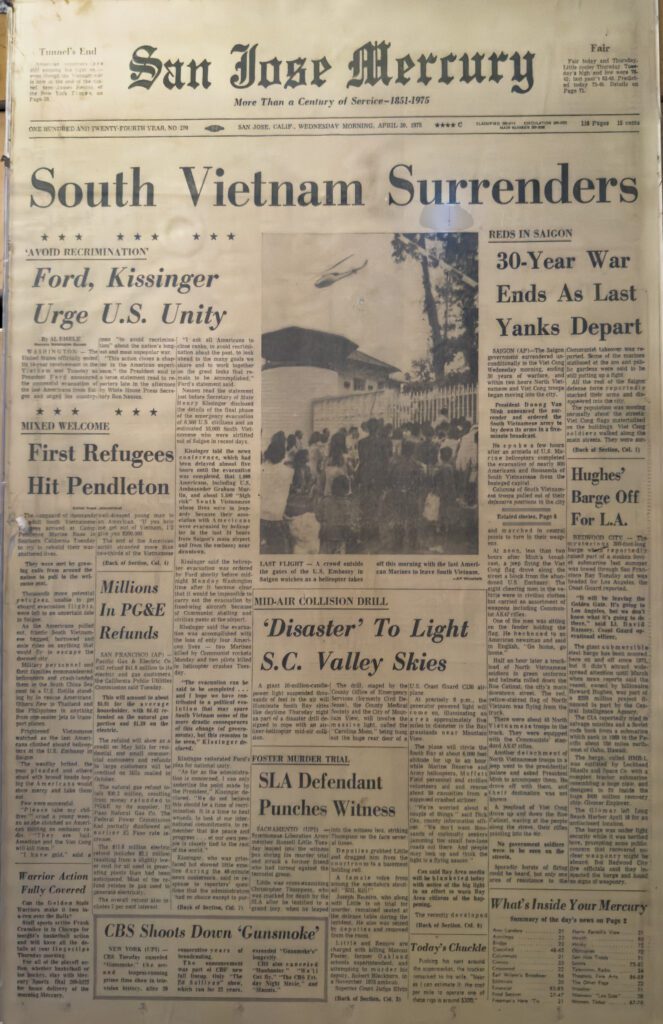
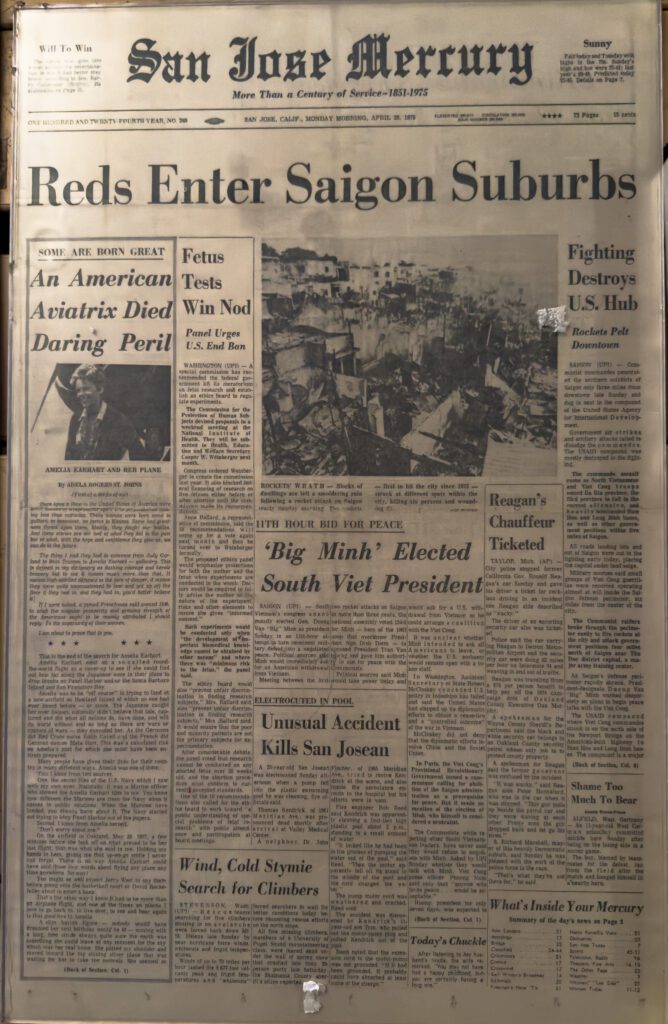
These original front pages from the San Jose Mercury capture the final days of the Republic of Vietnam in April 1975—moments that would soon lead to one of the largest refugee exoduses in modern history.
The April 28 headline, “Reds Enter Saigon Suburbs,” reflects the rapid collapse of South Vietnam’s defenses as North Vietnamese forces closed in on the capital. Just two days later, on April 30, the headline “South Vietnam Surrenders” marked the official end of the war and the fall of Saigon.
For millions of Vietnamese, these were not just headlines—they were life-altering events. As the government fell, thousands fled in desperation, beginning the journey that would define the Boat People experience. Families were separated, futures became uncertain, and survival depended on courage, resilience, and hope.
These newspapers serve as historical witnesses to the moment a nation fell—and a global Vietnamese diaspora began.