The fall of Saigon on April 30, 1975, marked the end of the Vietnam War that had lasted longer than twenty years and had claimed more than three million Vietnamese lives on both sides. In the immediate aftermath of the conflict, the former citizens and soldiers of the fallen Republic of Vietnam were left to confront an uncertain future. Such fears would become reality as social and political persecution ensued, causing many to flee as refugees.
One of the ways that people affiliated with the Republic of Vietnam were persecuted was by being sentenced to so-called “re-education camps” (trại cải tạo) in the remote jungle. While approximately one million South Vietnamese soldiers and civil servants were interned, the death count remains unknown. The re-education camps served as centers of various human rights abuses including forced confessions, disease, torture, self-criticism sessions, malnutrition, beatings, hard labor, and executions. Imprisonment ranged from a few weeks to almost 20 years.
To survive the hardships of the re-education camps, those imprisoned made various crafts from repurposed materials for both practical and psychological reasons. While some of the items served as tools for daily use within the camps, others were meant as gifts for loved ones on the outside. The resulting objects demonstrate the resourcefulness and resilience of those imprisoned, and their preservation - despite their painful connotation - reflects the necessity of remembrance within the Vietnamese refugee community.
Featured below are items and artworks that were used and/or made by those who survived the brutal re-education camps, and were eventually brought to the U.S. by refugees.
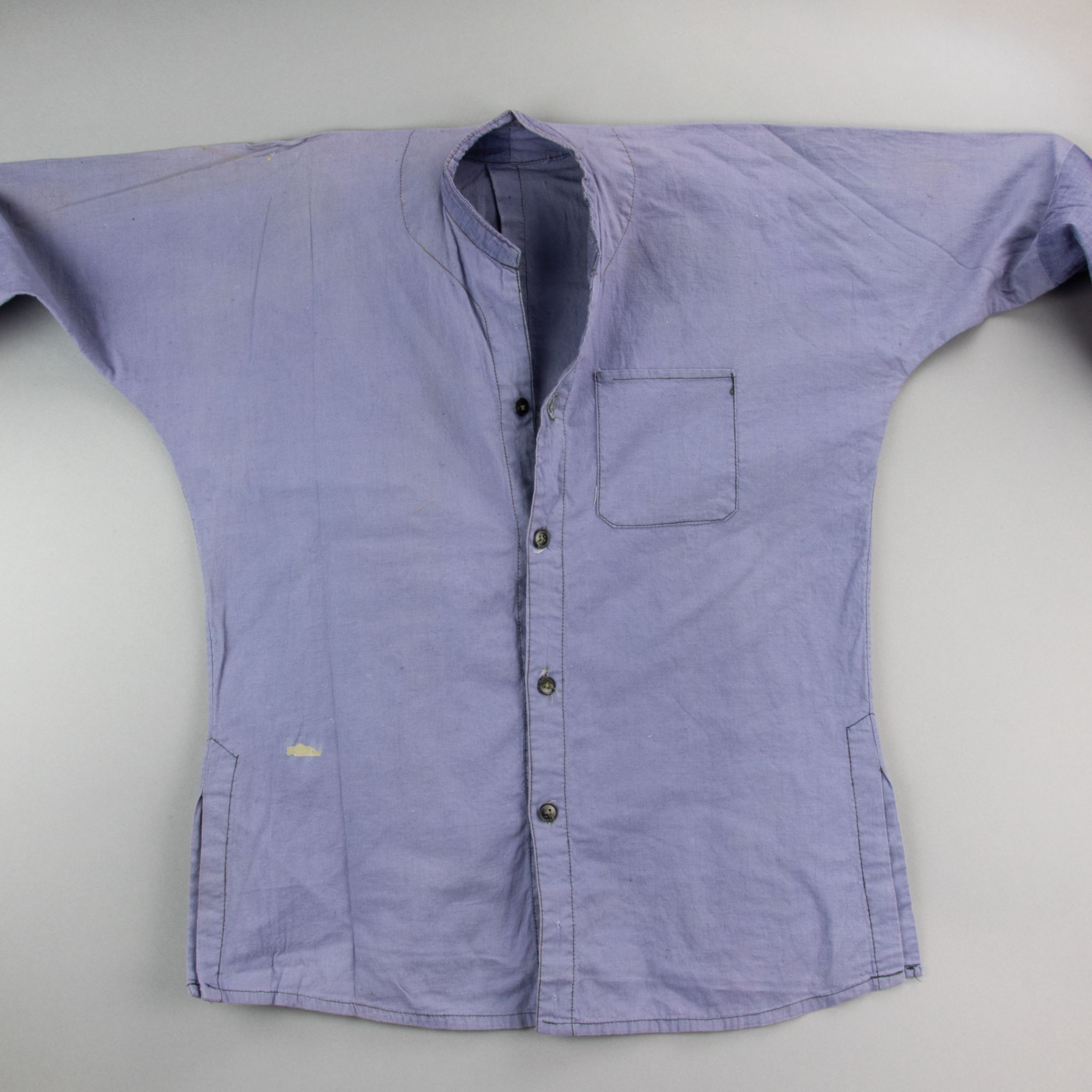
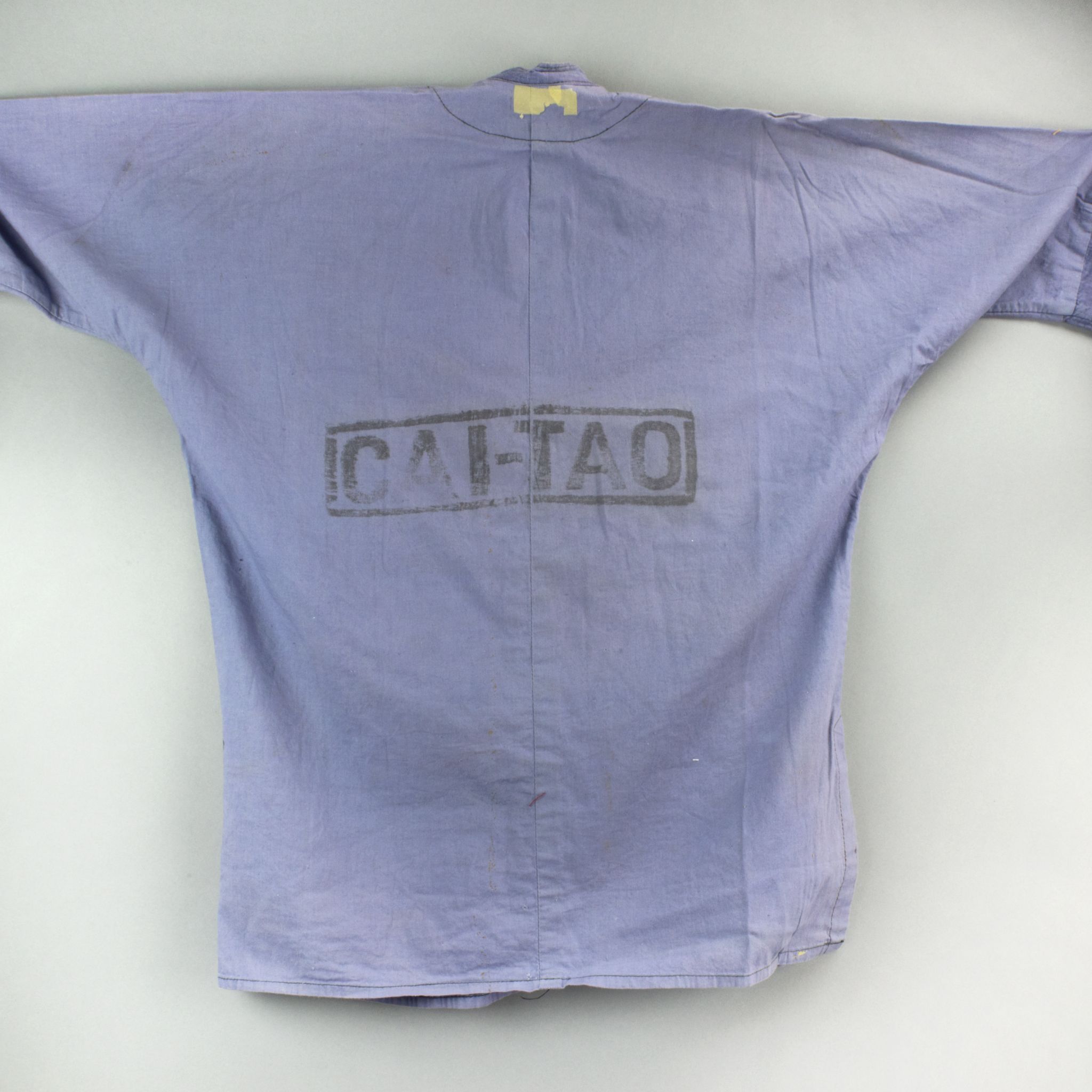
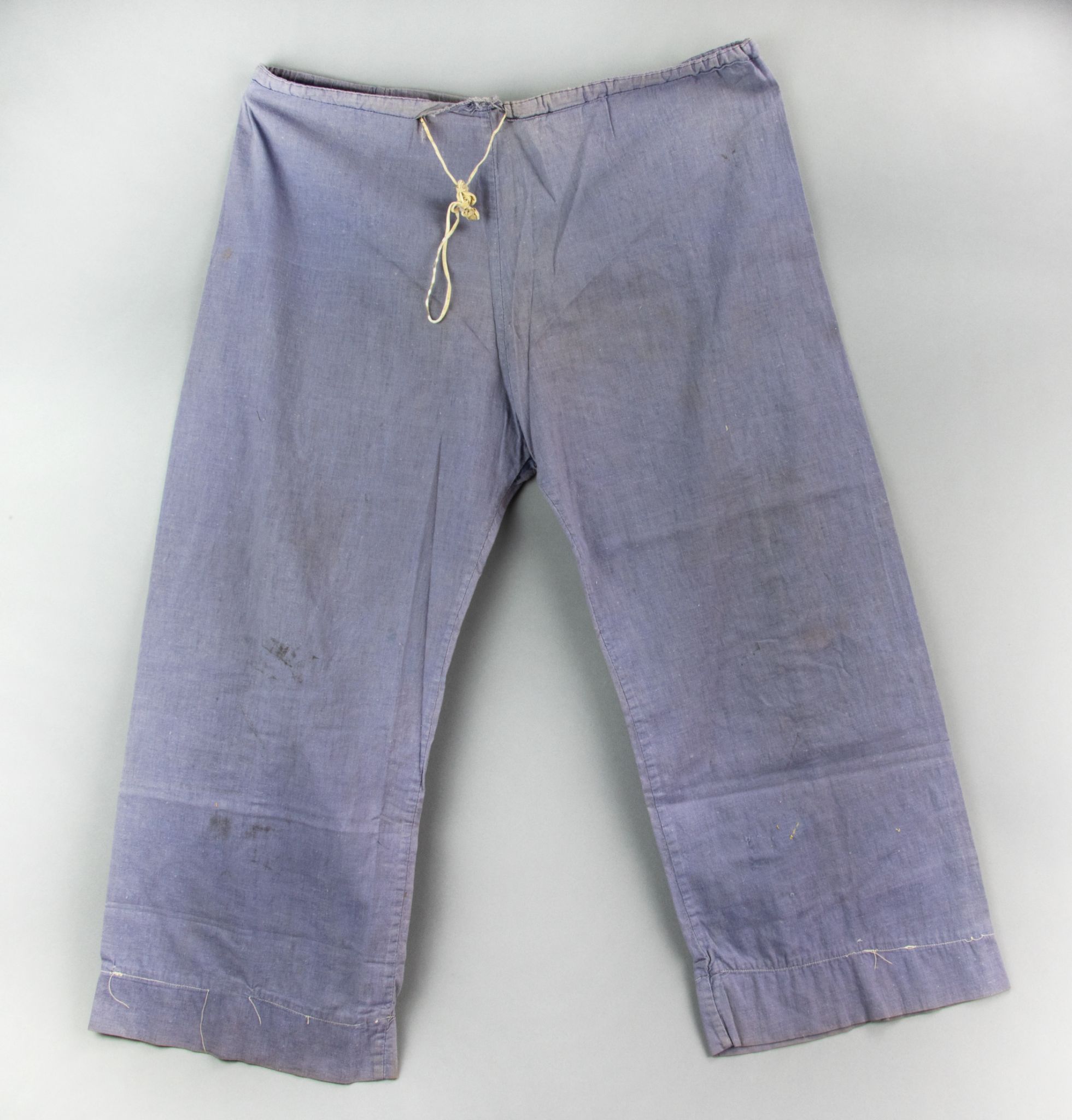
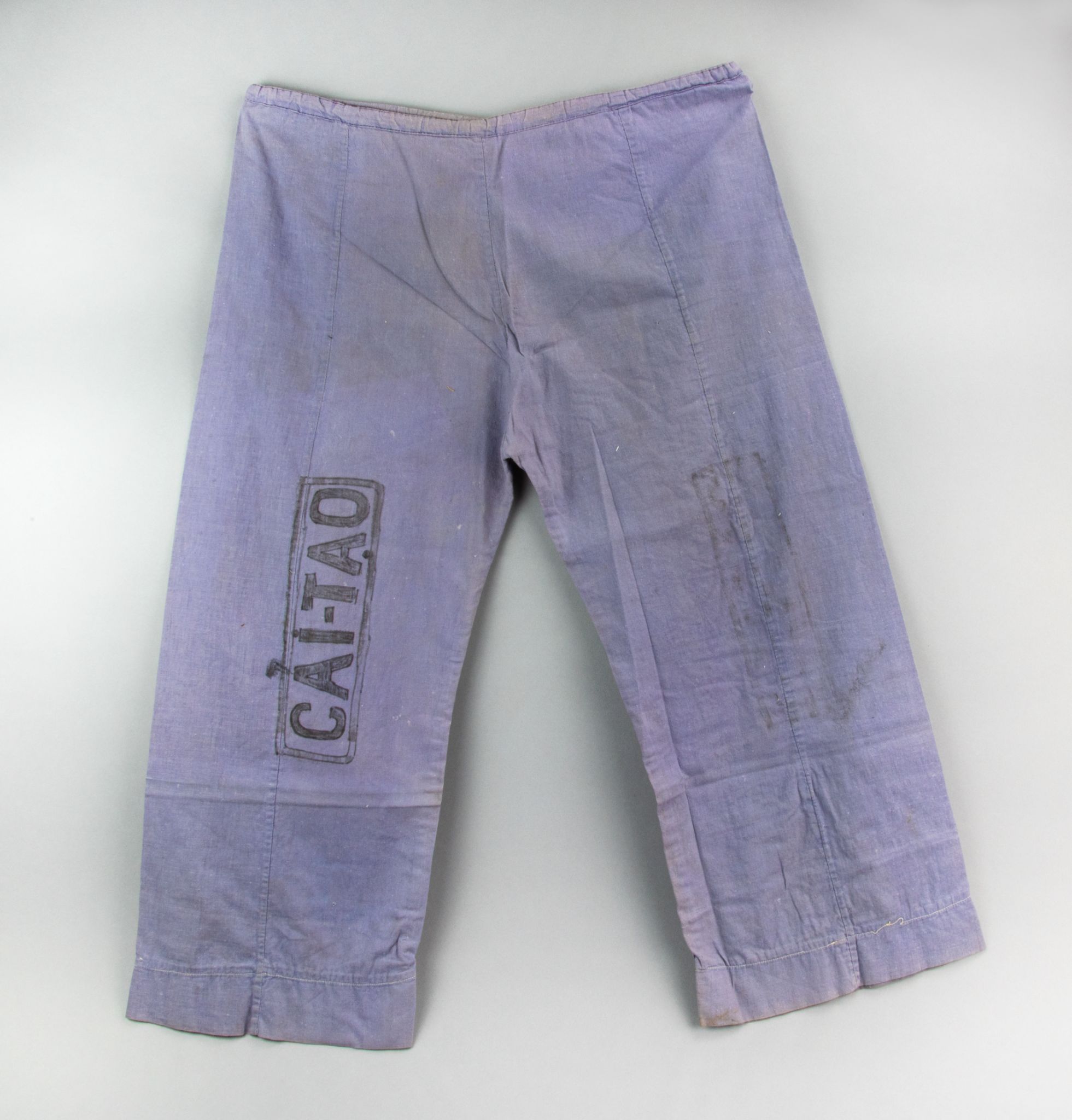
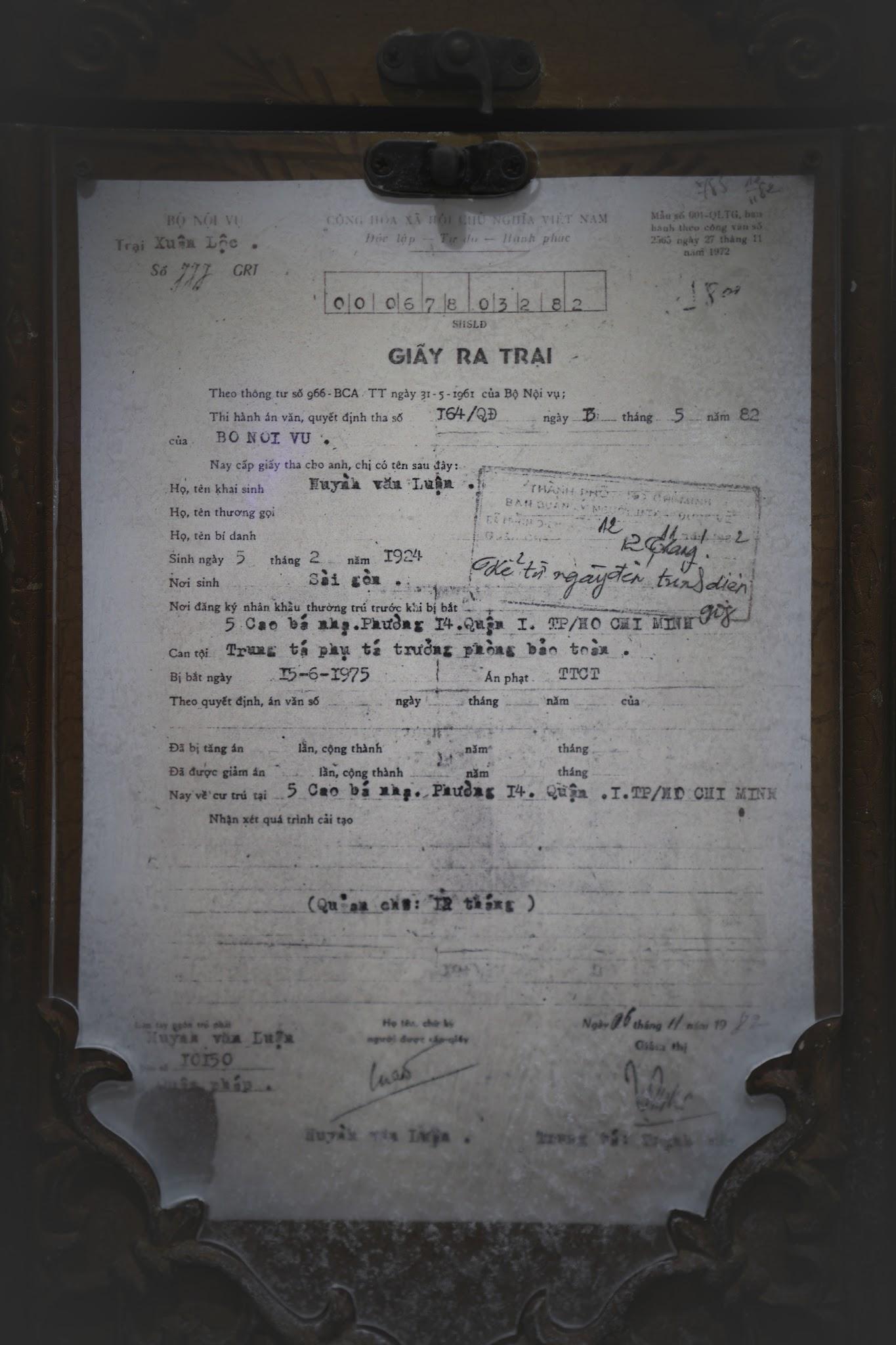
Re-Education Camp Prisoner Uniform
64.3 cm x 135.8 cm (shirt)
84.7 cm x 46.5 cm (pants)
While prisoners wore a variety of clothing, the set displayed is an example of the standard uniform provided within certain re-education camps. The back of the shirt and pants are stamped with the word “cai tao” (re-education).
The included paperwork provides insight into the experience of the man who wore this uniform: Huỳnh Văn Luận, an inmate who was found guilty of being a Lieutenant Colonel and Assistant Chief of the Safety Division for the Republic of Vietnam. Such information can be found on the included paperwork, which is a release document provided to Huỳnh Văn Luận upon release from a re-education camp. Huỳnh Văn Luận was born on February 5, 1924 in Saigon and was arrested when he was fifty-one years old. The inmate number of T64/QD was assigned to Huỳnh Văn Luận upon arrest on June 15, 1975. He was not pardoned until seven years later on May 3, 1982.
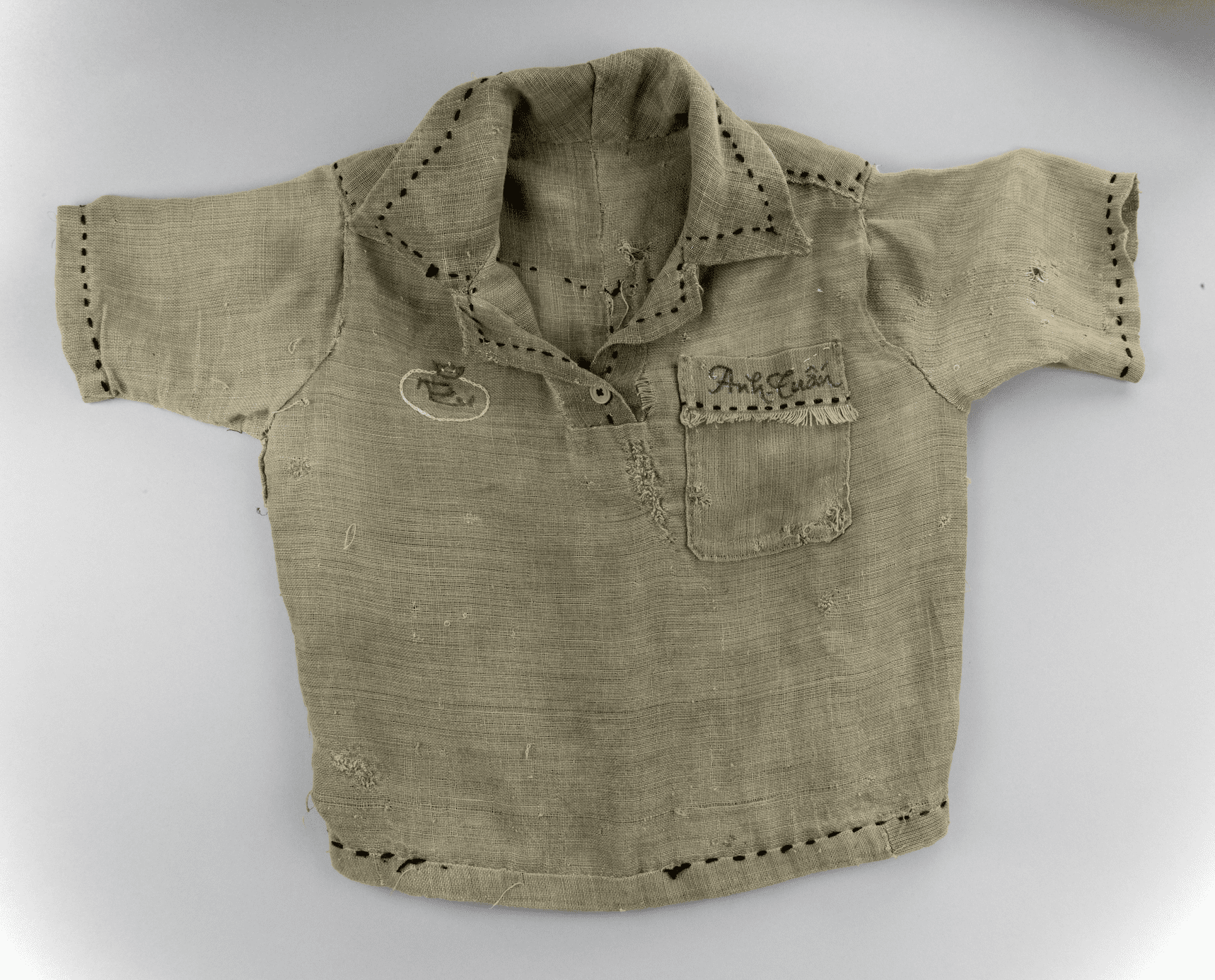
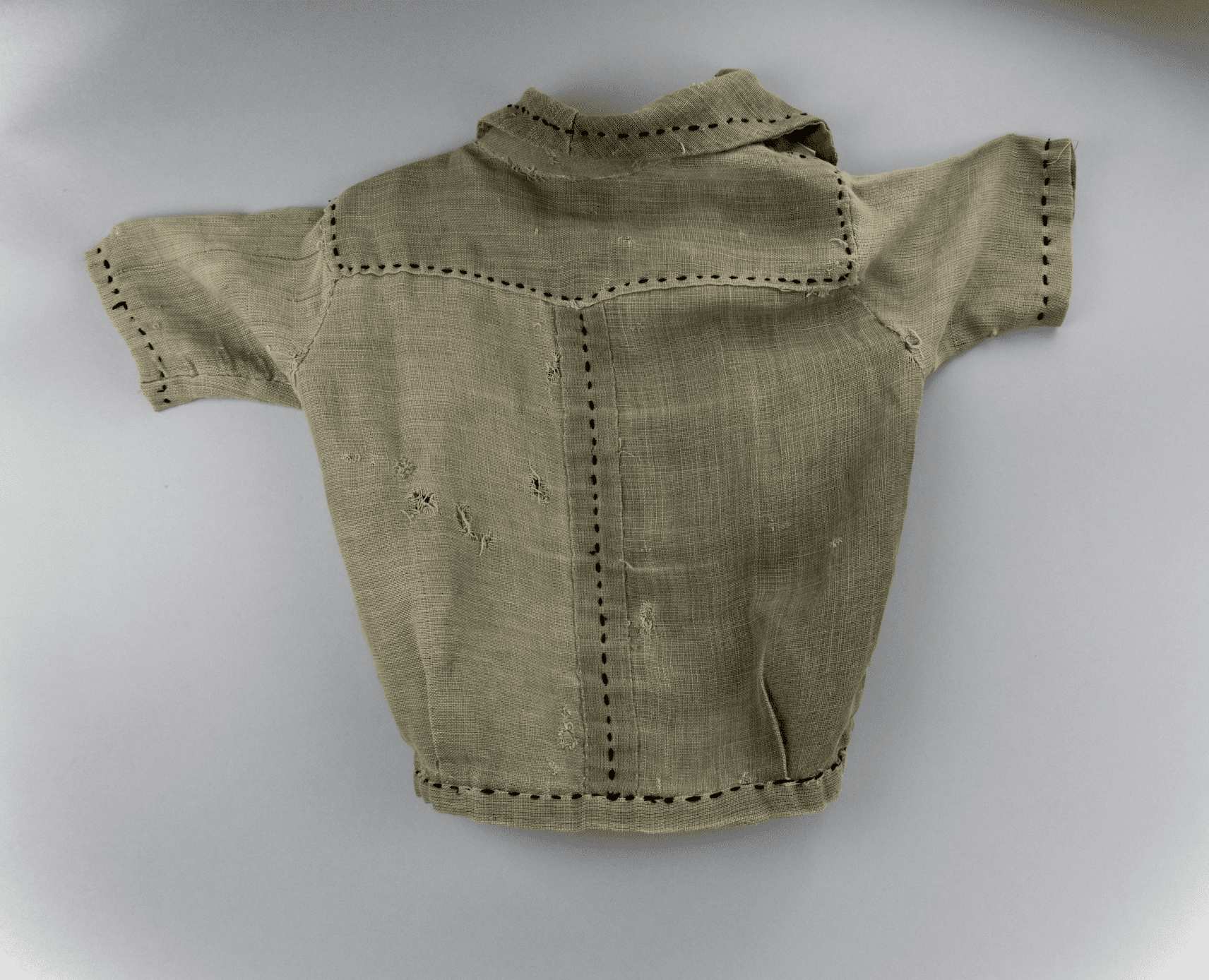
Handsewn Shirt
94 cm x 63 cm
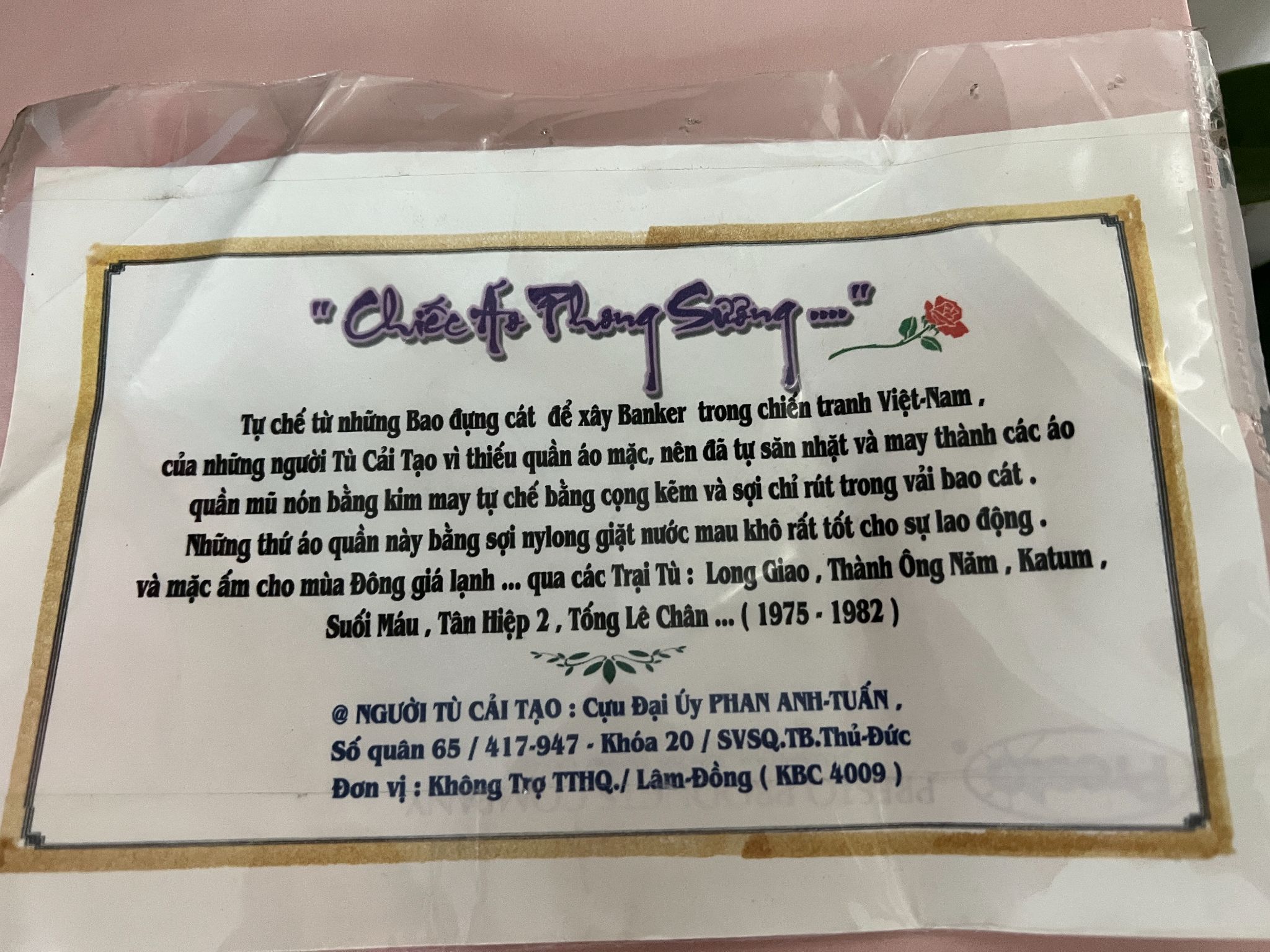
This shirt was handmade in a re-education camp from an old sandbag by Phan Anh Tuấn, a former Captain in the Army of the Republic of Vietnam. It has the name Anh Tuấn stitched into the front pocket. Accompanying the shirt is a note from Anh Tuấn upon donating his artifacts to the museum (see slide 2).
Translation of the note: "Because of the lack of clothes, inmates from the re-education camps had to make their own shirts, pants, and hats. This shirt was handmade from old sandbags that had been used to build bunkers during the war. The needle used to sew was made from small metal wire and the threads were pulled out from the sandbag material. Since the sandbags were made of nylon, a material that is quick-drying, it was very good to wear during hard labor work, as well as for warmth during the winter.
Re-education camps: Long Giao, Thành Ông Năm, Katum, Suối Máu, Tân Hiệp 2, Tống Lê Chân, 1975-1982
Re-Education Inmate: Former Captain Phan Anh Tuấn
Military ID 65/417-947 – Class 20 / SVSQ.TB.Thủ Đức."
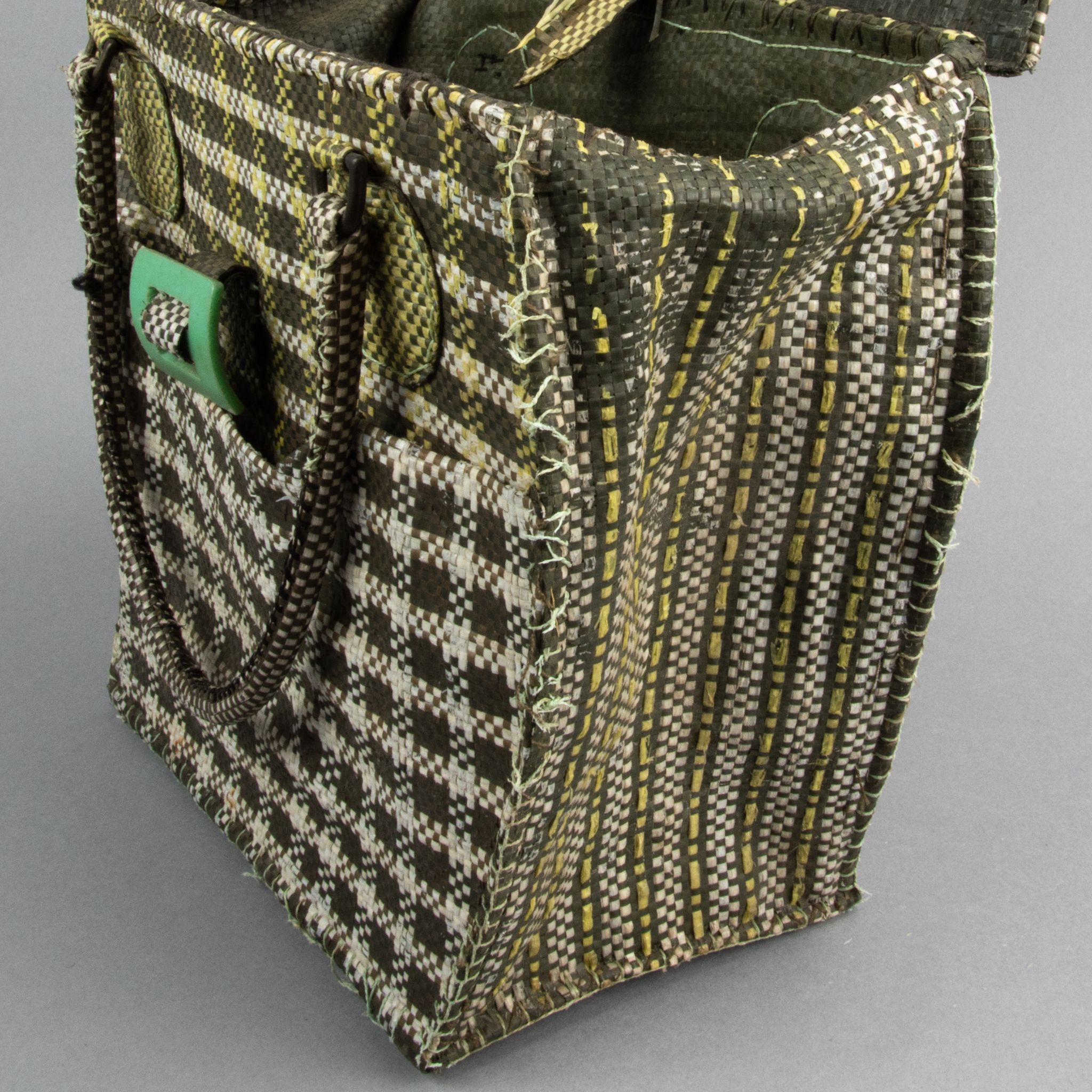
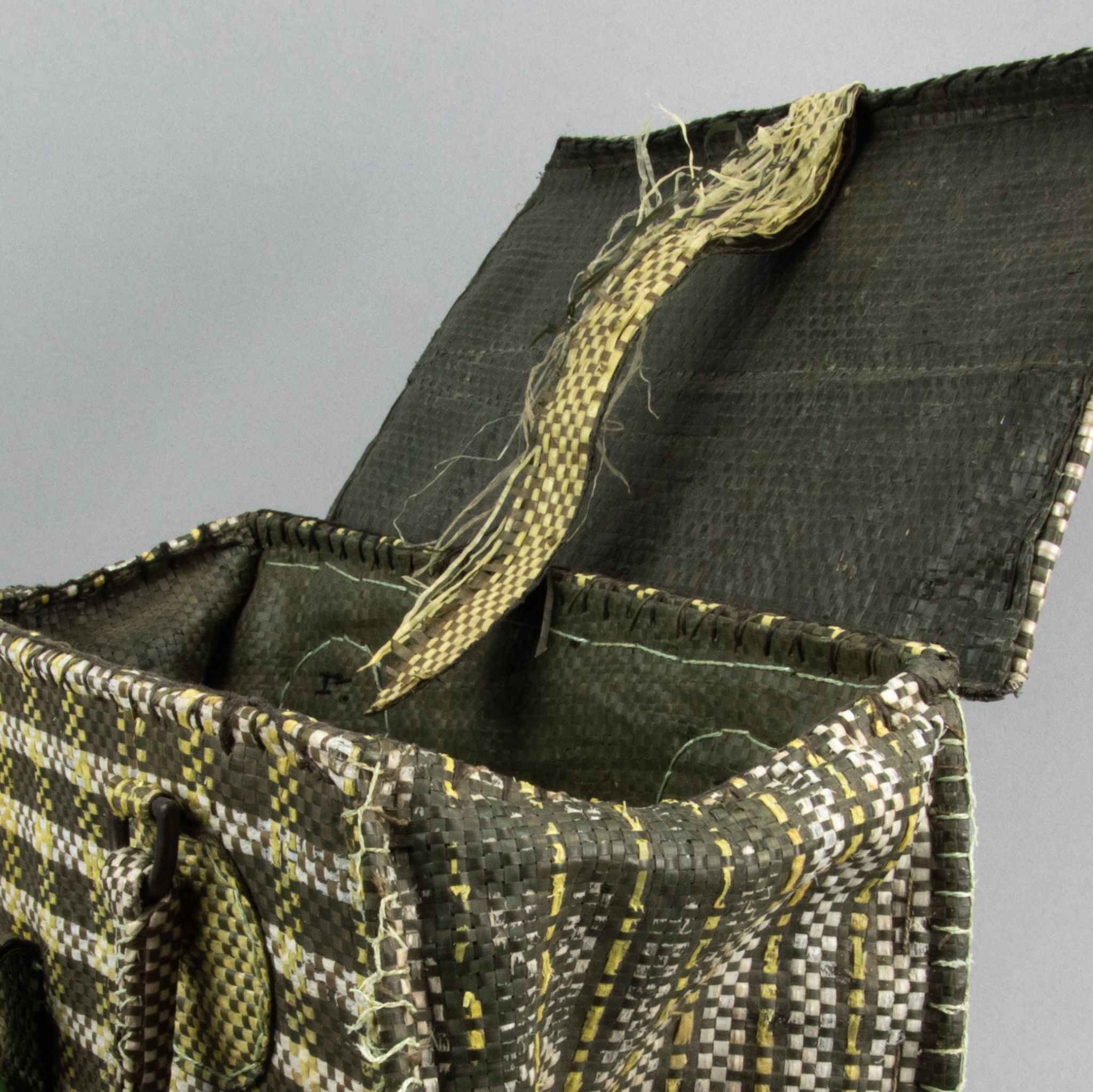
Handmade Bag
94 cm x 63 cm
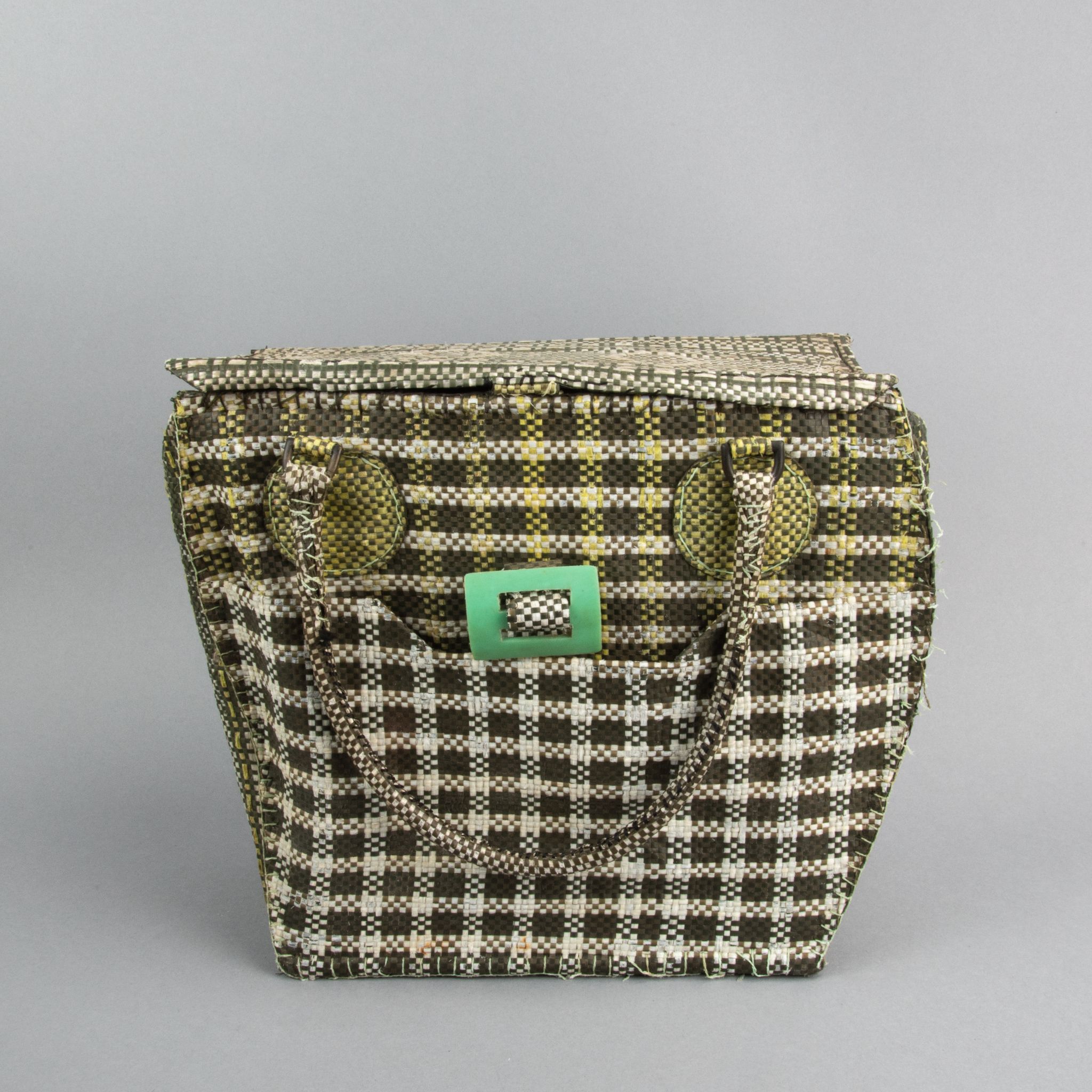
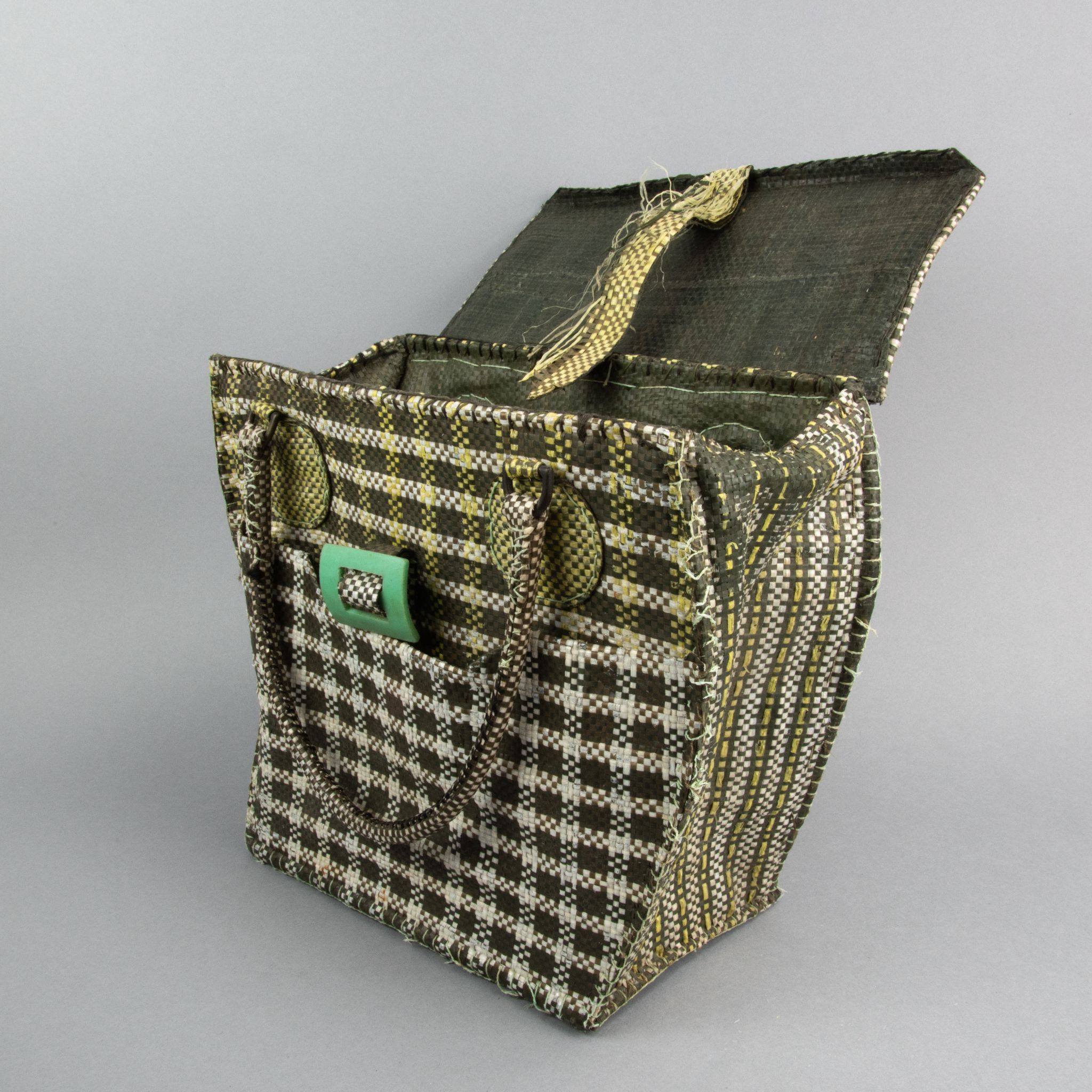
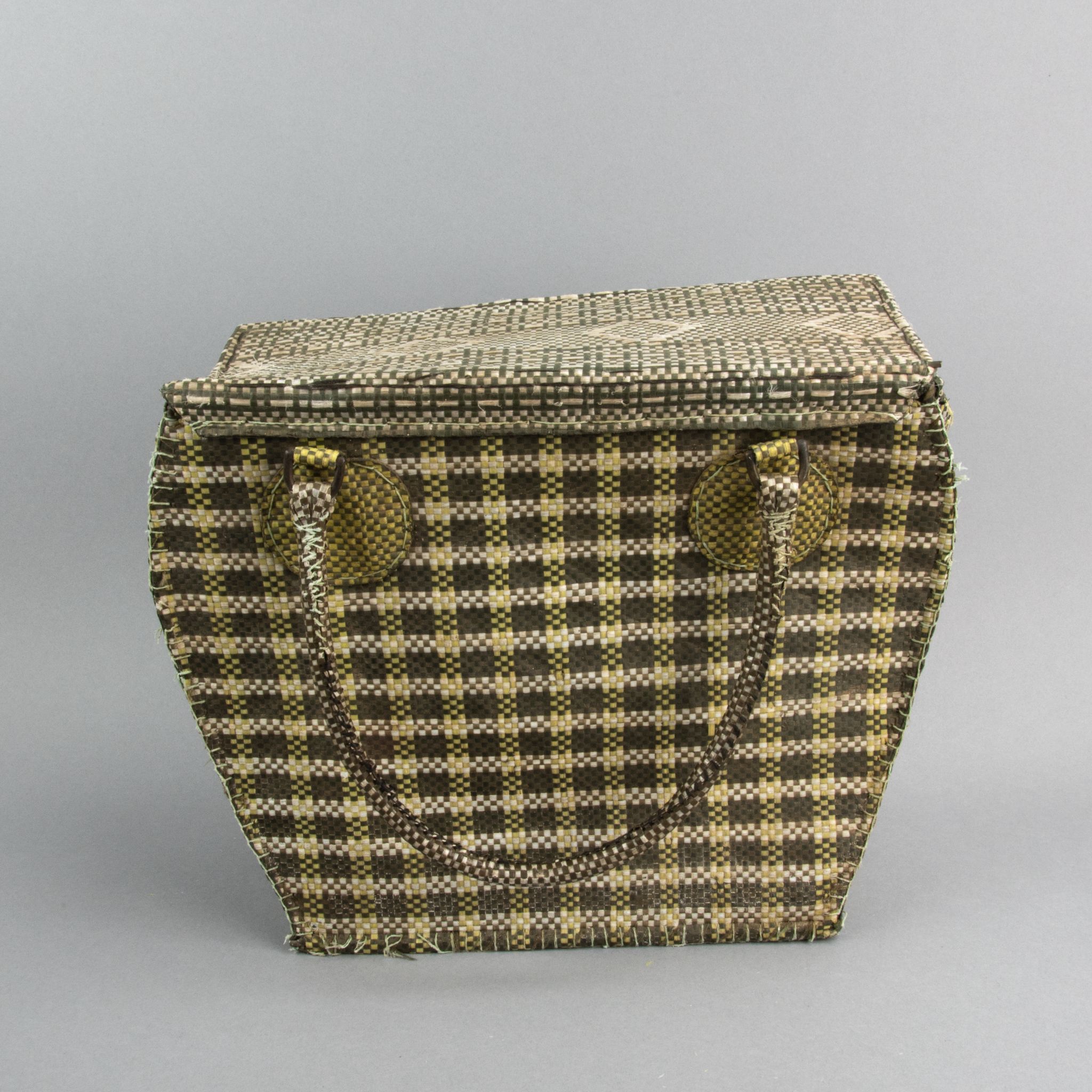
This shirt was handmade in a re-education camp from an old sandbag by Phan Anh Tuấn, a former Captain in the Army of the Republic of Vietnam. It has the name Anh Tuấn stitched into the front pocket. Accompanying the shirt is a note from Anh Tuấn upon donating his artifacts to the museum (see slide 2).
Translation of the note: "Because of the lack of clothes, inmates from the re-education camps had to make their own shirts, pants, and hats. This shirt was handmade from old sandbags that had been used to build bunkers during the war. The needle used to sew was made from small metal wire and the threads were pulled out from the sandbag material. Since the sandbags were made of nylon, a material that is quick-drying, it was very good to wear during hard labor work, as well as for warmth during the winter.
Re-education camps: Long Giao, Thành Ông Năm, Katum, Suối Máu, Tân Hiệp 2, Tống Lê Chân, 1975-1982
Re-Education Inmate: Former Captain Phan Anh Tuấn
Military ID 65/417-947 – Class 20 / SVSQ.TB.Thủ Đức."
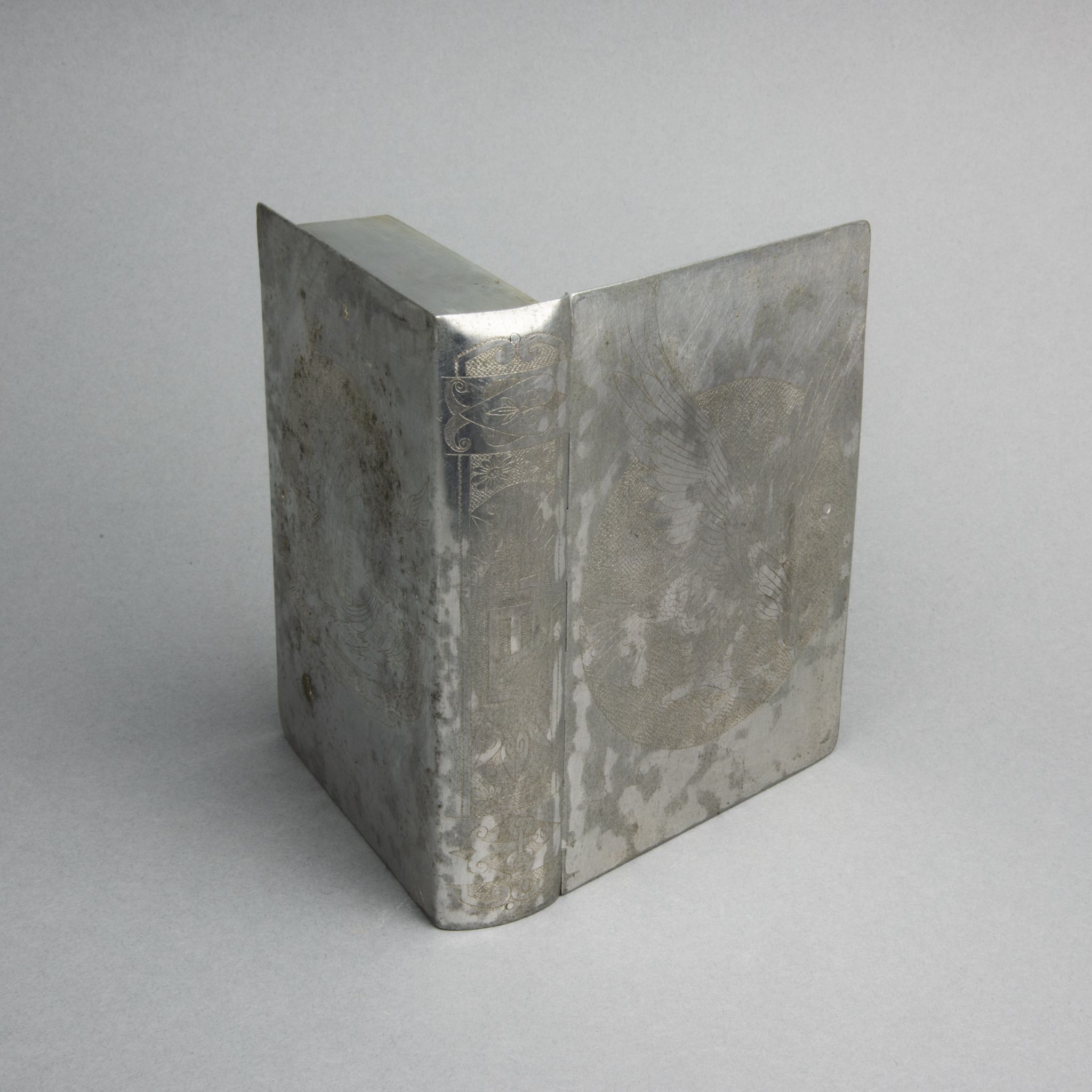
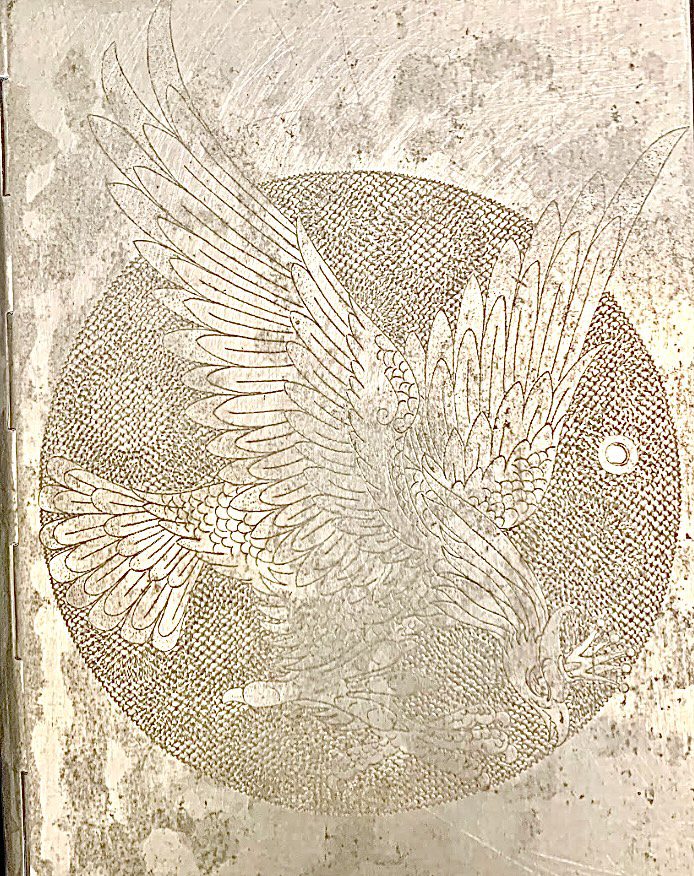
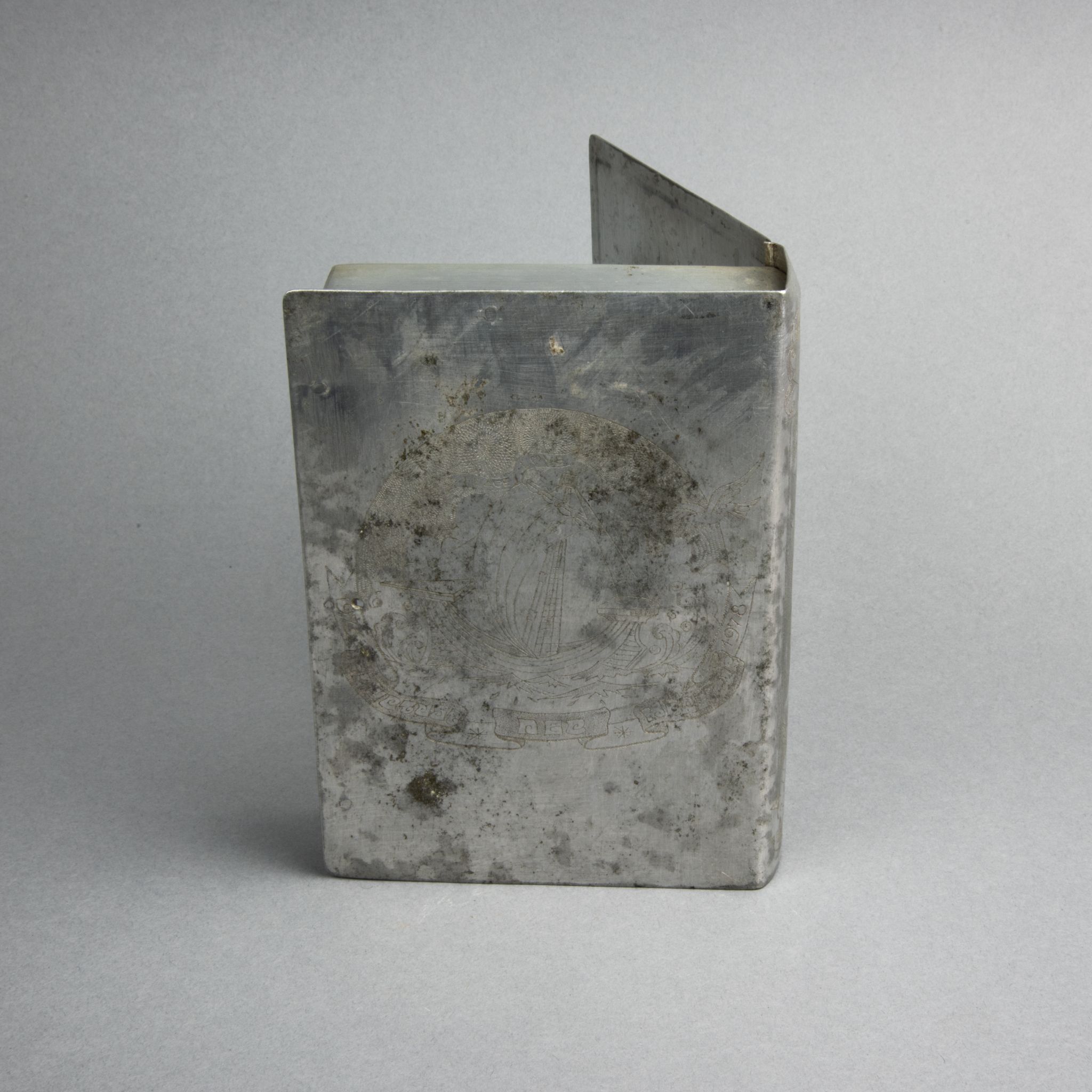
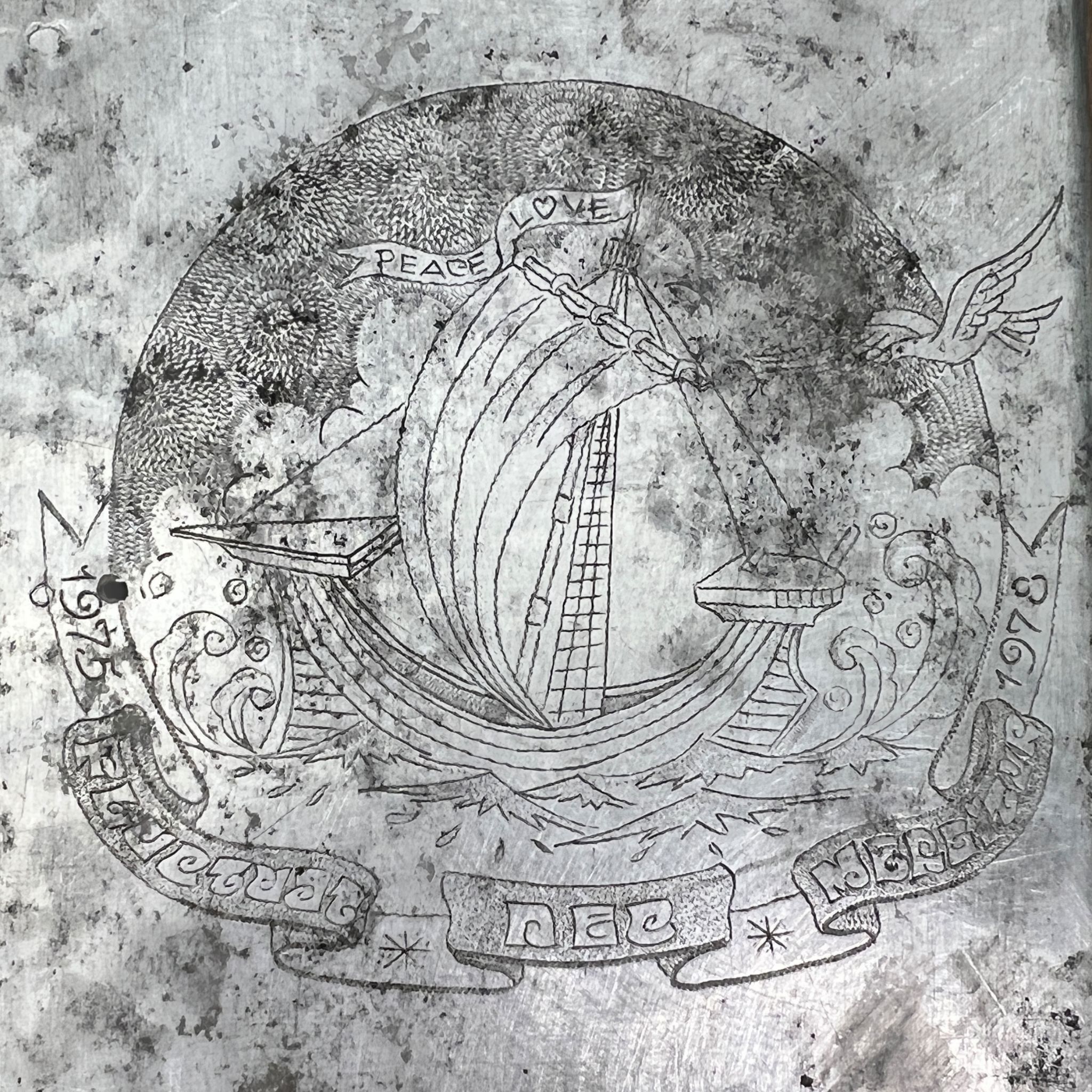
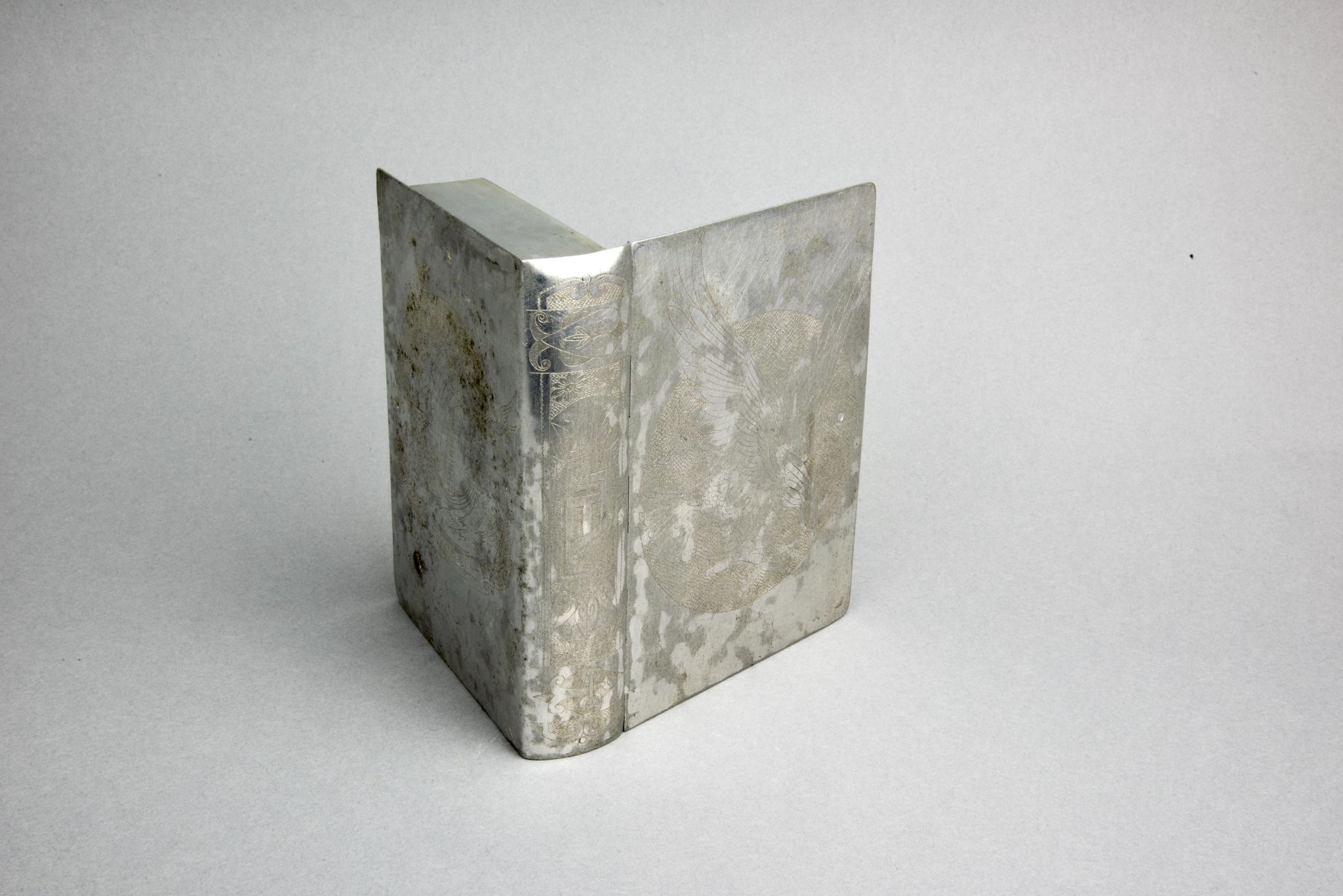
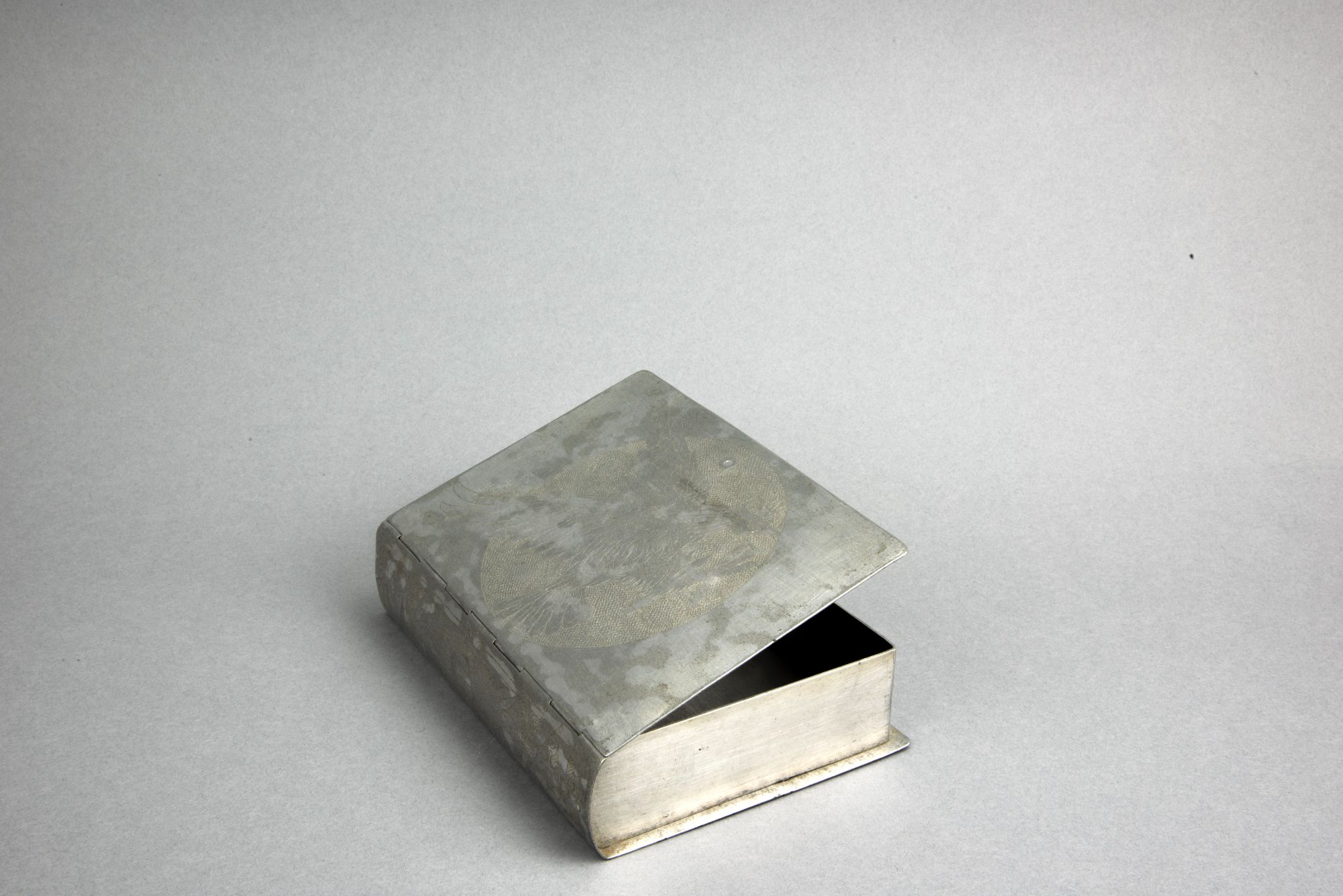
Metal Book Box
11.6 cm x 16.9 cm base, 3.6 cm tall
Made from scrap metal, this box has been forged to look like a book. A crowned phoenix in mid-flight is engraved on the front, while the coat of arms of the City of Paris (a sailing ship on the waves of the sea with the motto Fluctuat nec Mergitur, “She is tossed by the waves, but does not sink”) is engraved on the back. The years 1975 and 1978 are engraved on the ends of the banner featuring the motto, marking the period of imprisonment for the box's creator.
Tin Box
16.5 cm x 6 cm x 3 cm
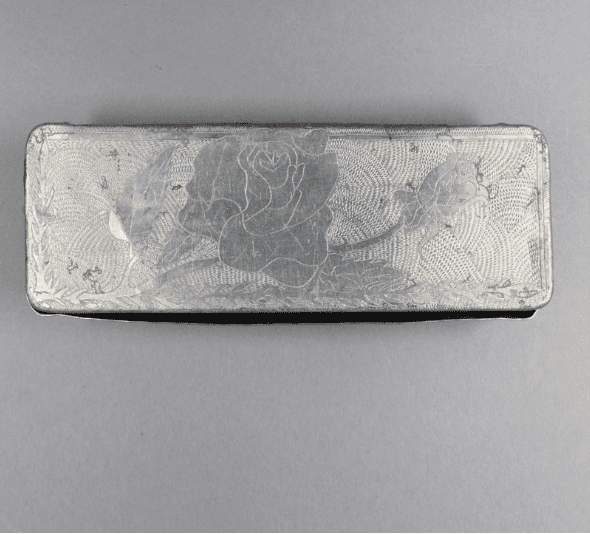
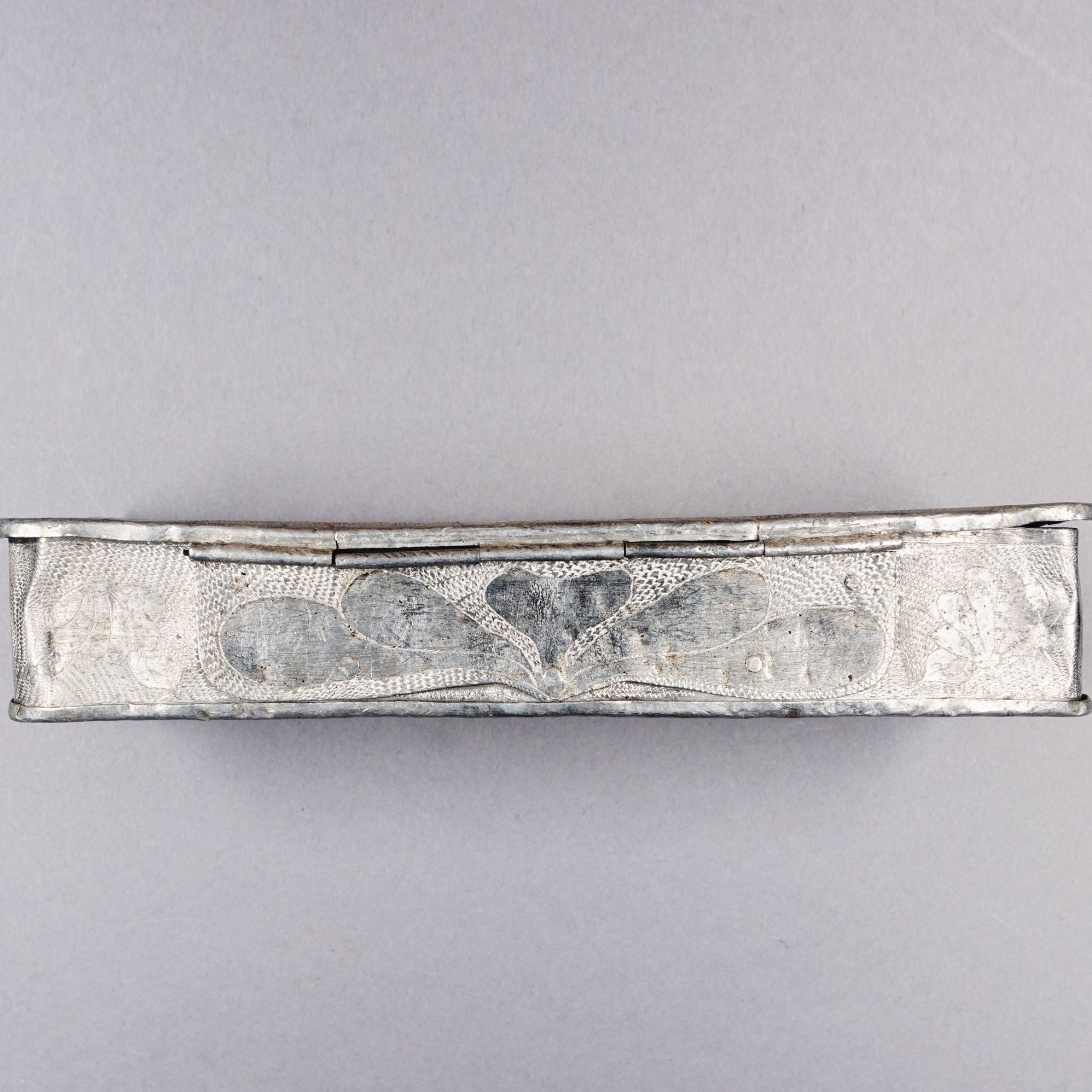
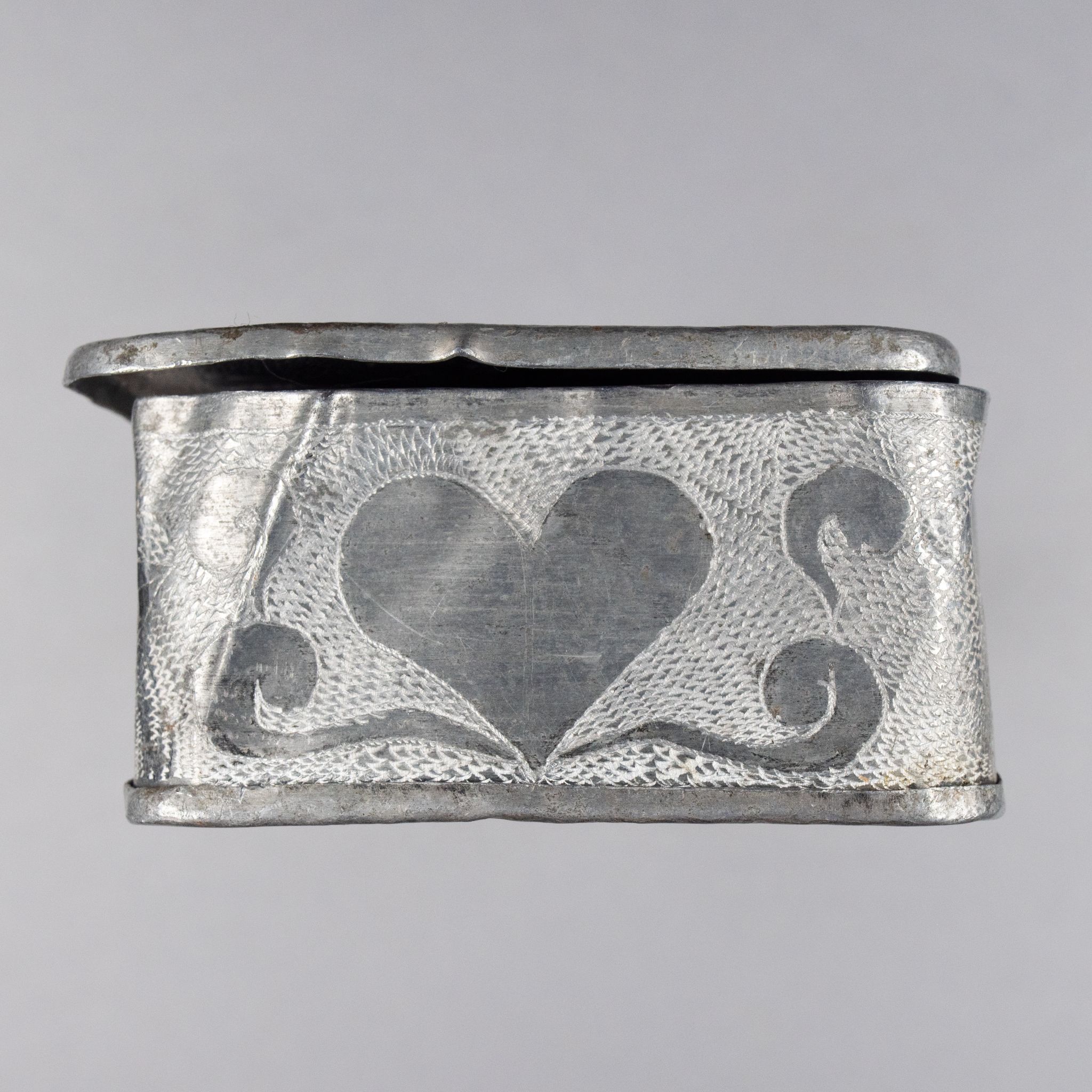
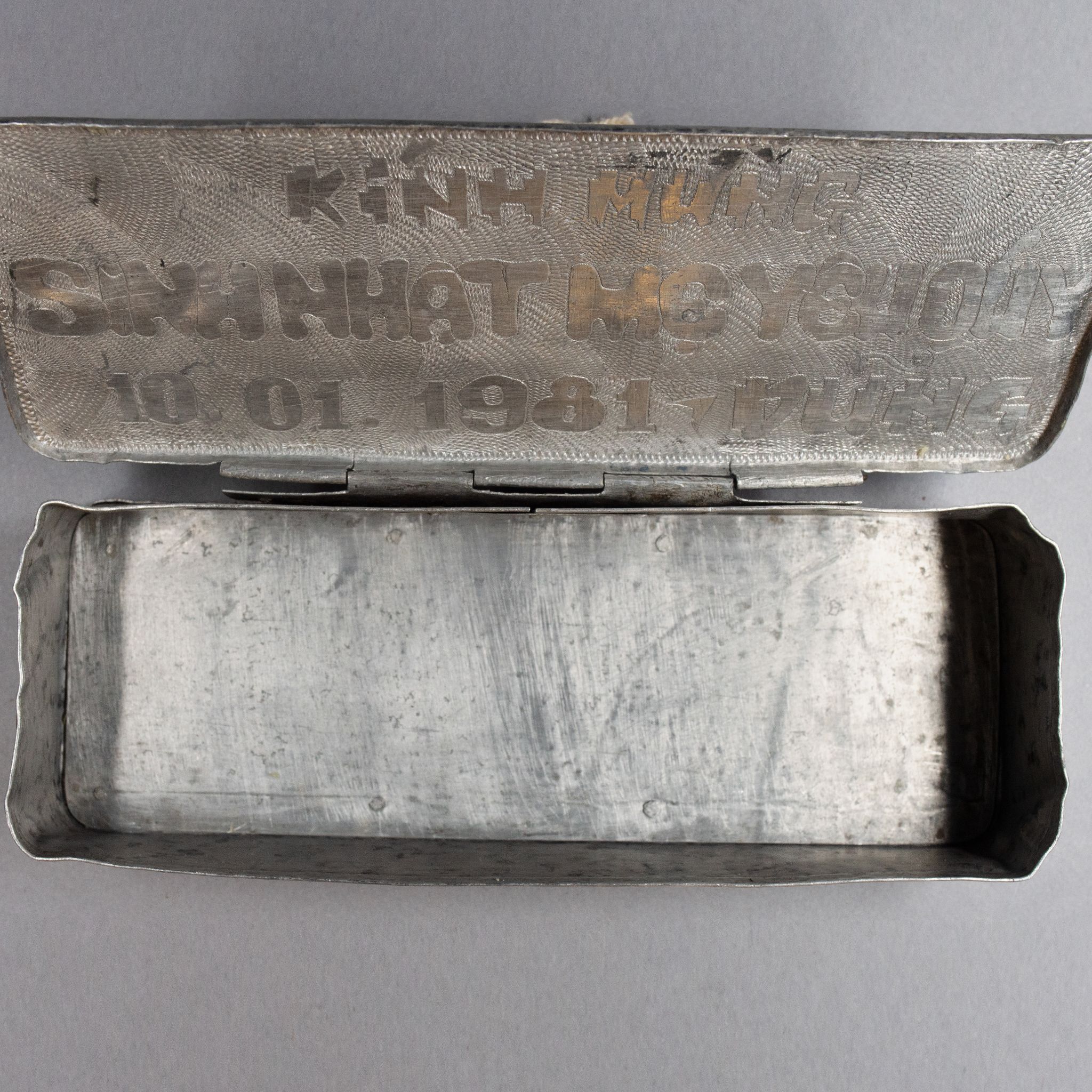
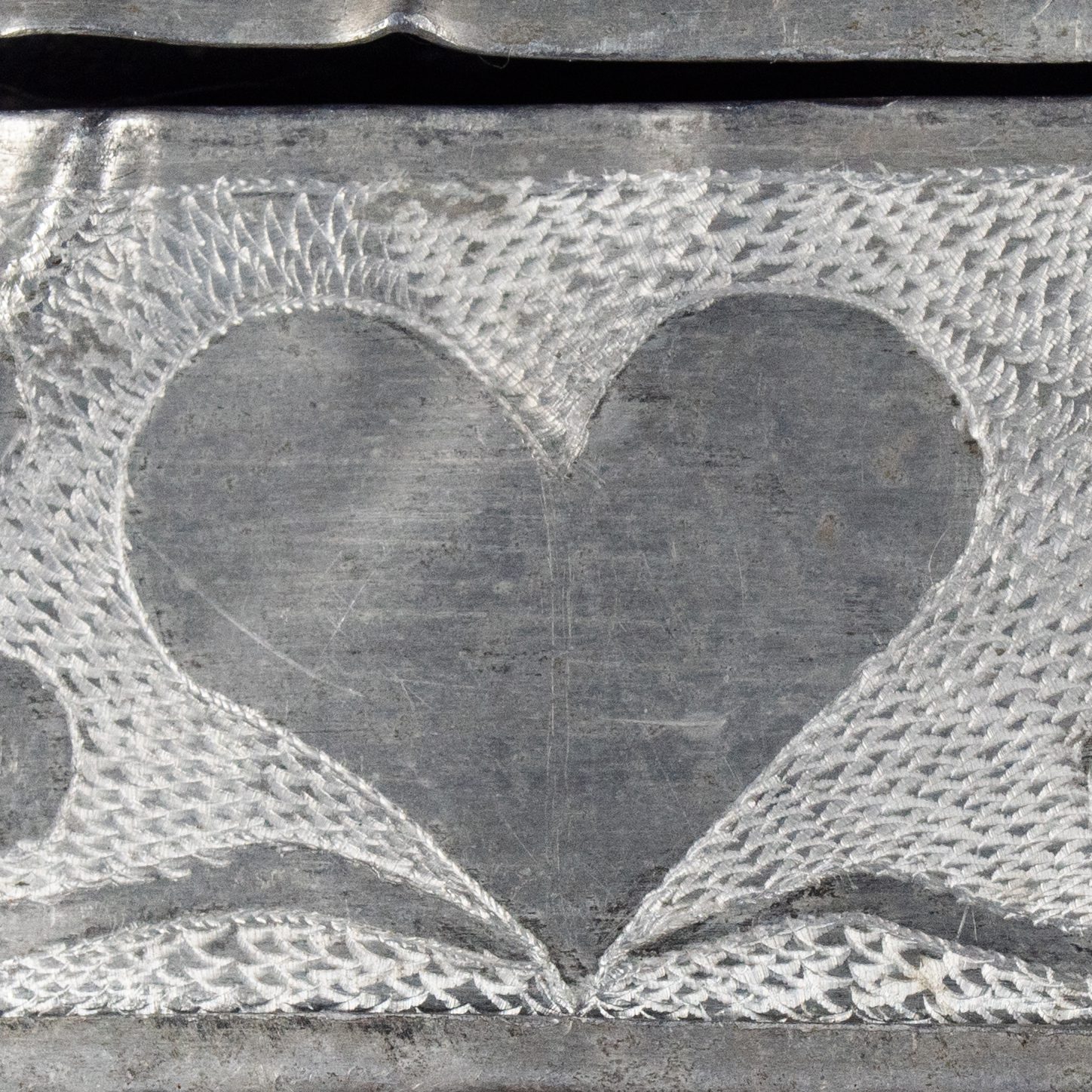
This box was created entirely out of tin. Engraved on the top lid are two roses, one in full bloom and another just budding, with leaves, set among a textured background. The posterior side of the box features more floral shapes with a textured background similar to the top lid. The side of the box displays a heart framed by abstract curves, also set among a textured background. The inside of the top lid contains two lines of inscriptions: the top reads "Kính mừng sinh nhật mẹ yêu quý" ("happy birthday to my beloved mother"), while the bottom reads “10.01.1981 Dũng,” the dedication date of the box and the name of the dedicator.
Hair Clip
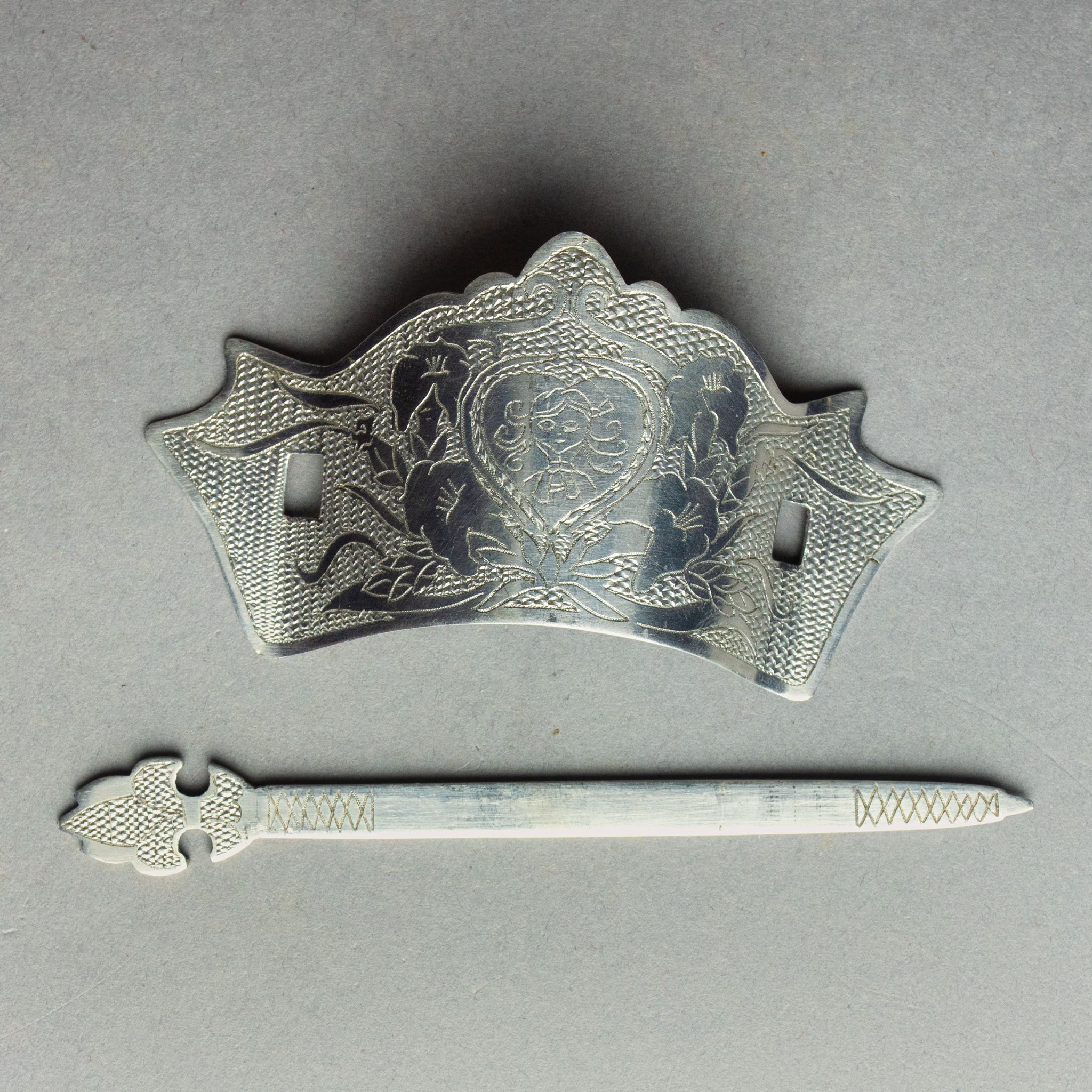
9 cm x 4 cm (clip), 9.5 cm x 0.5 cm (pin)
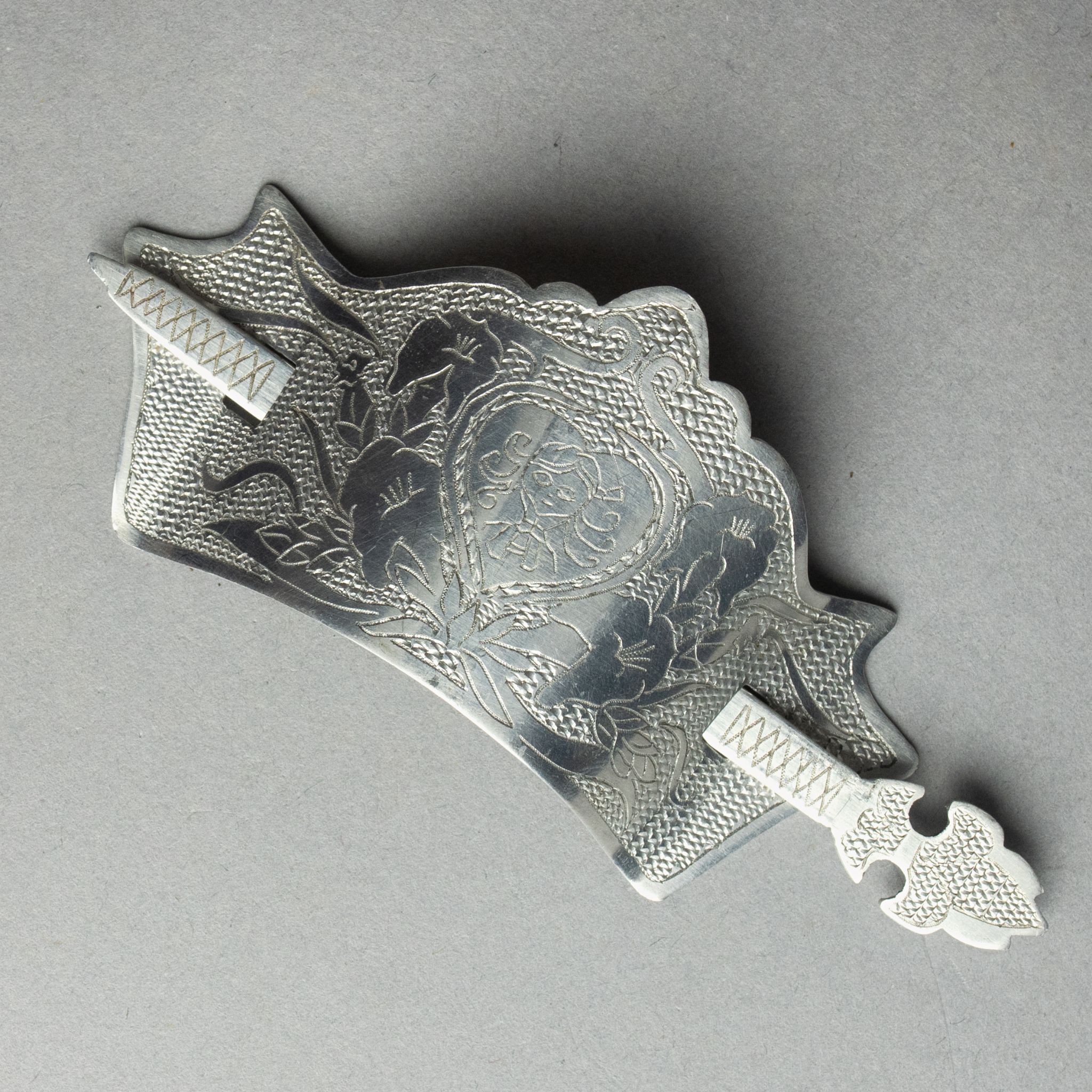
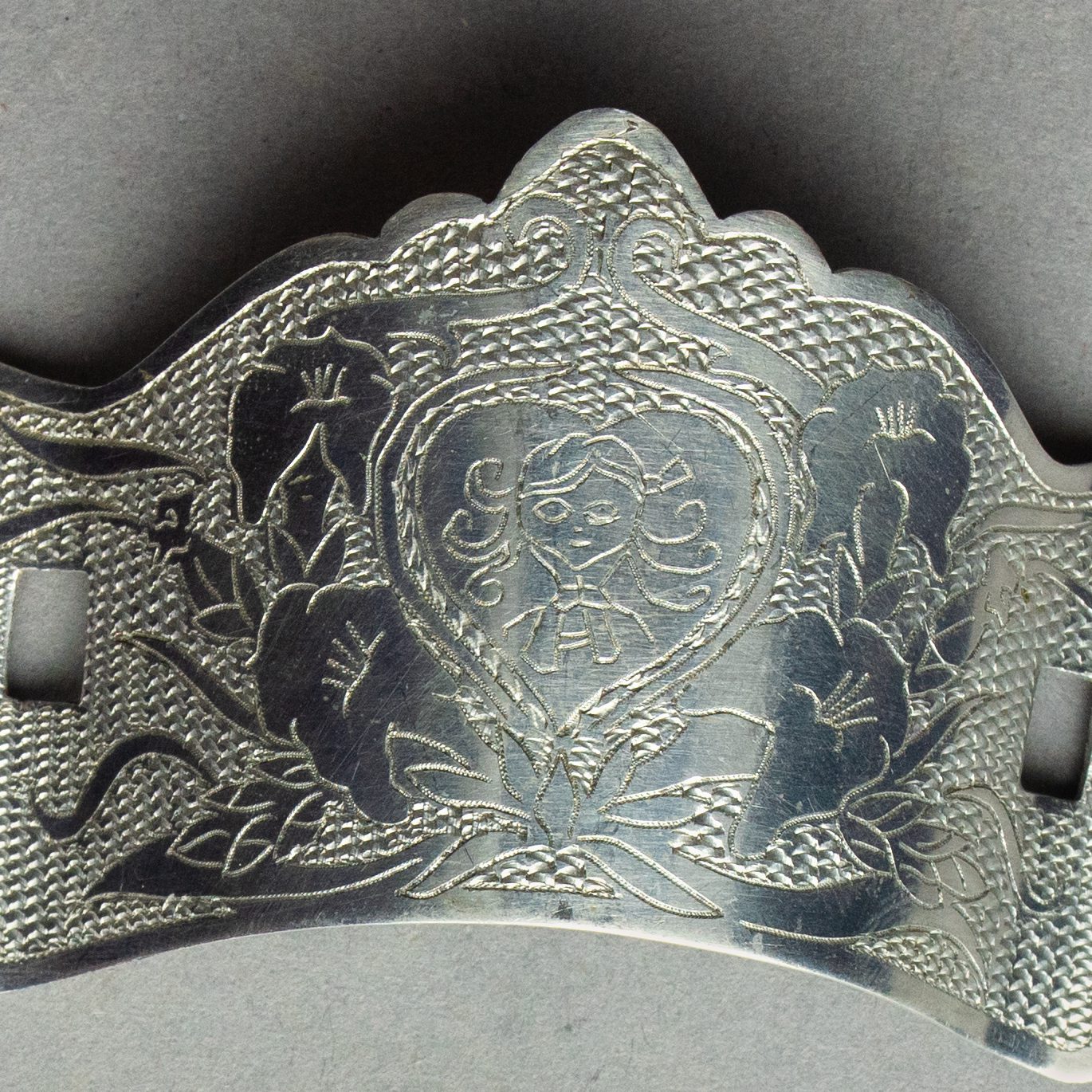
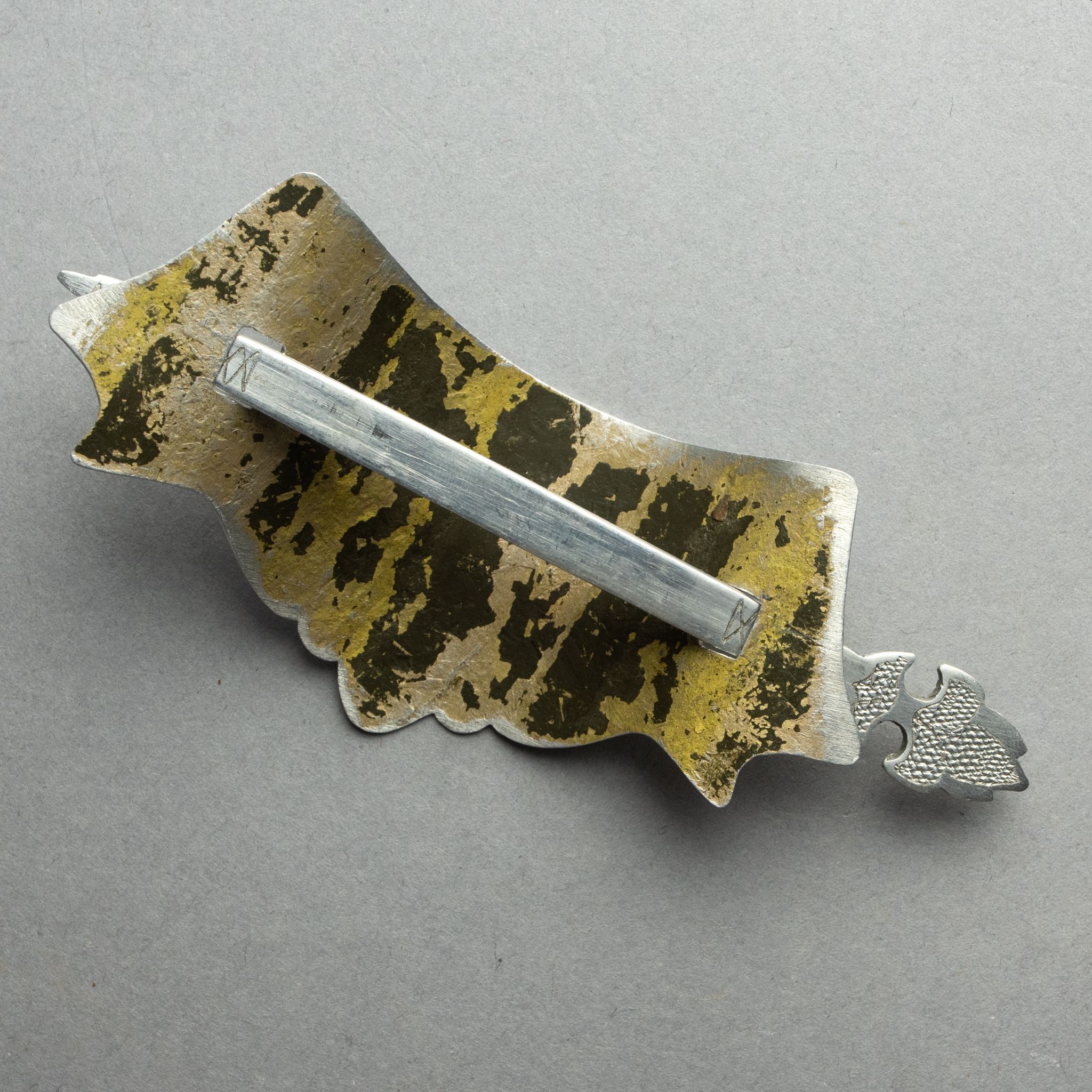
The engraved hair clip is made from scrap metal. Engraved on the front is a female figure framed by a heart emerging from a lotus and surrounded by other floral designs. The main image is set among a textured background. The pin features crisscrossed carvings on both ends and has a handle in the shape of the fleur de lis with engravings in the style of the textured background of the clip.
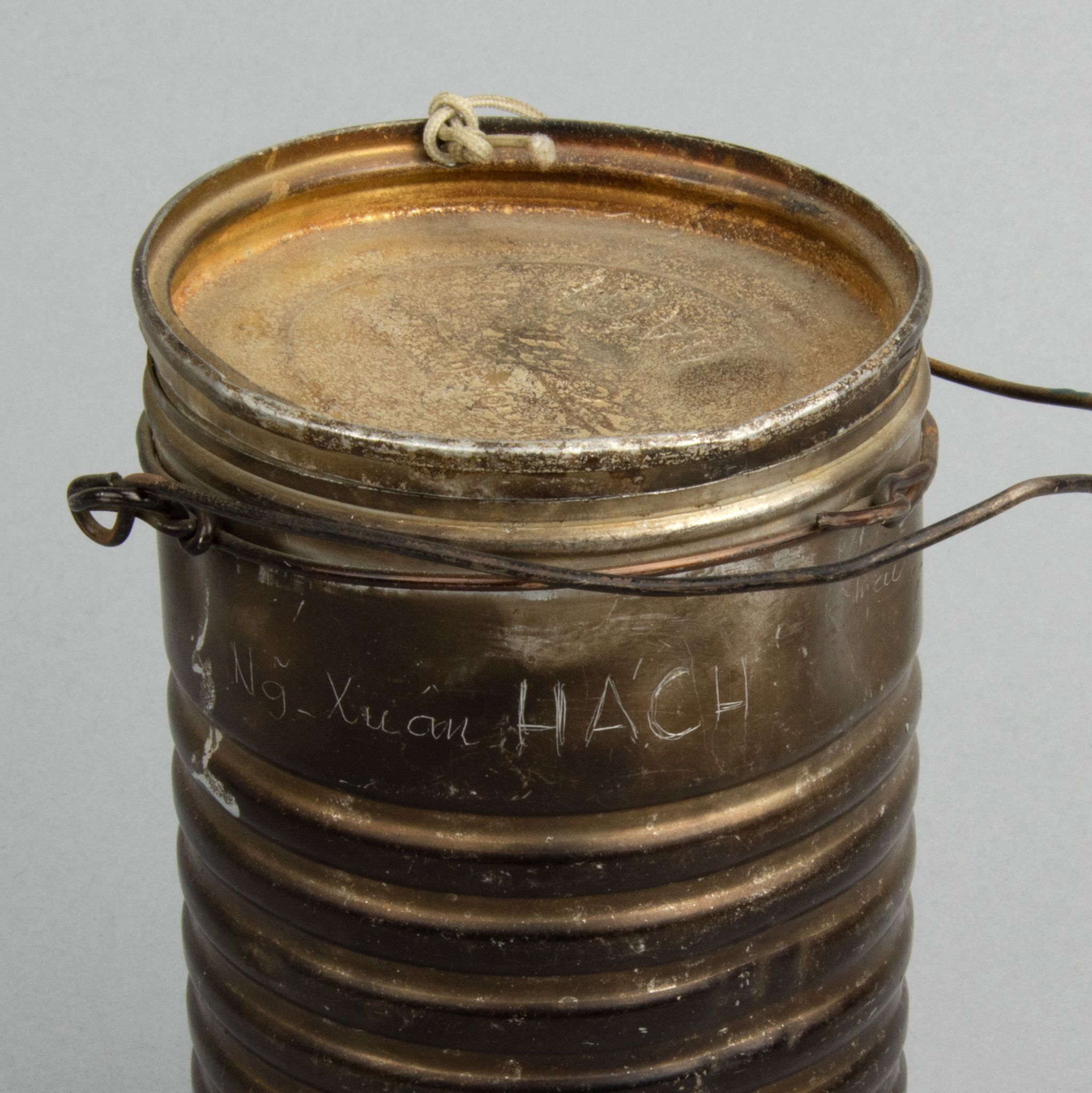
Tin Can
9 cm x 9 cm x 16 cm
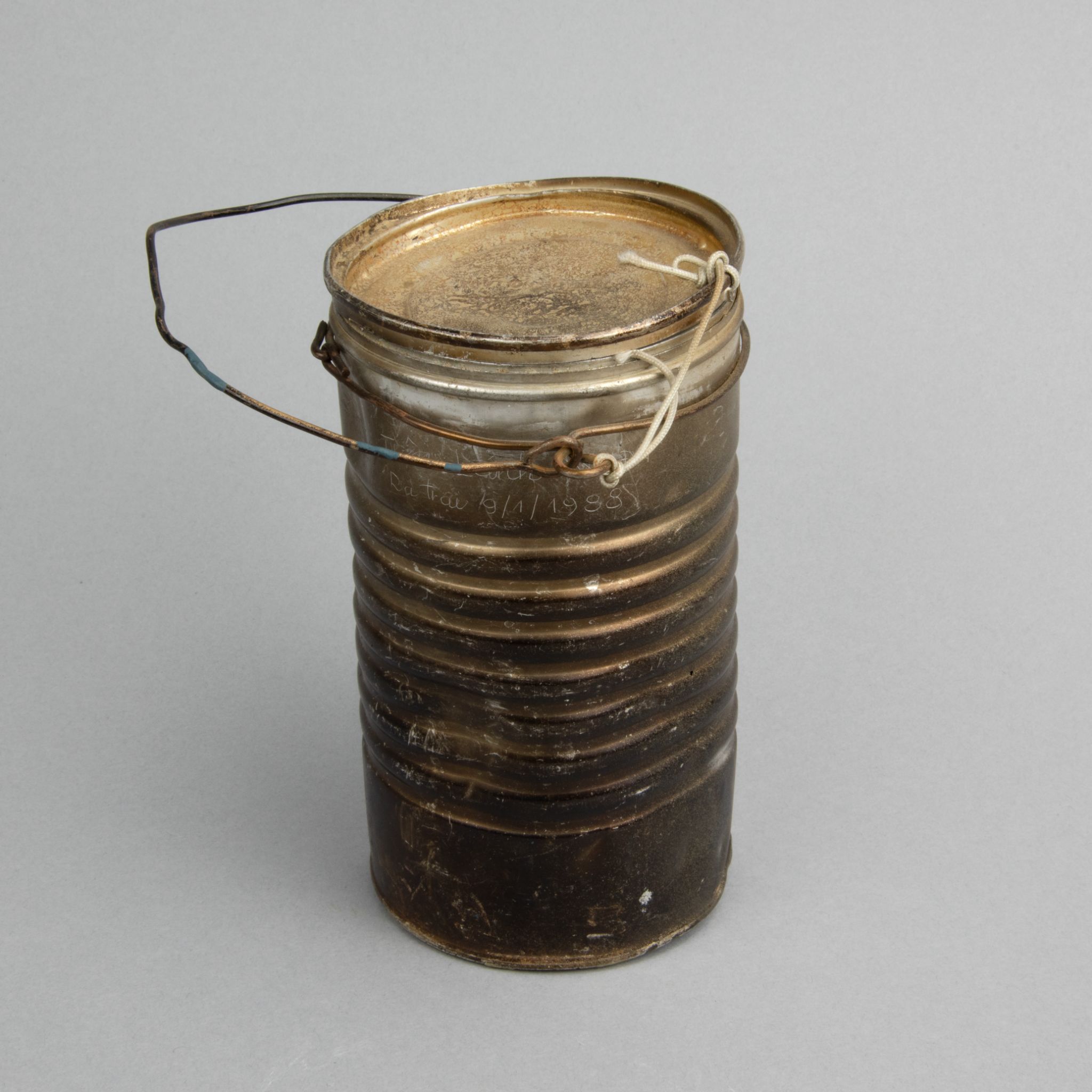
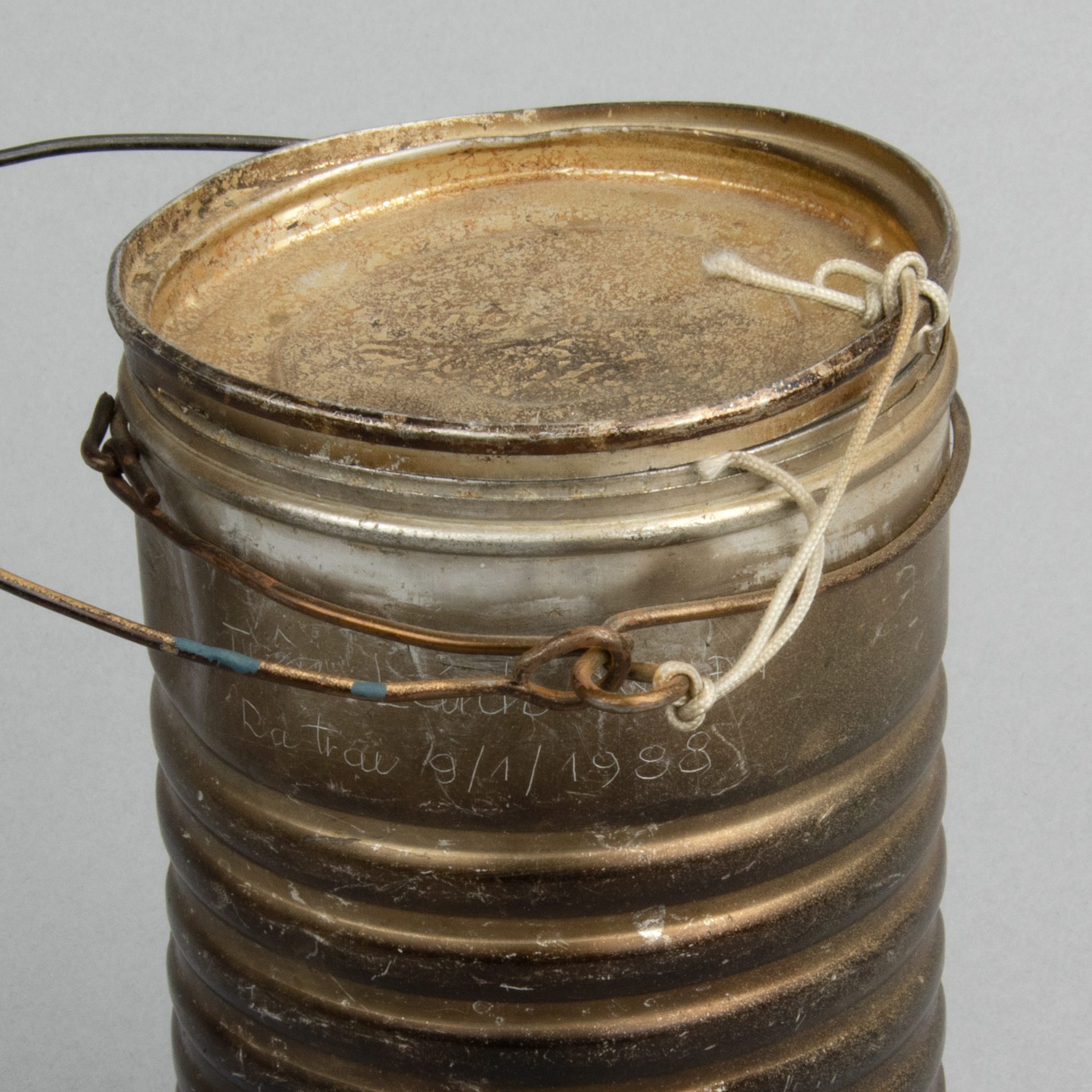
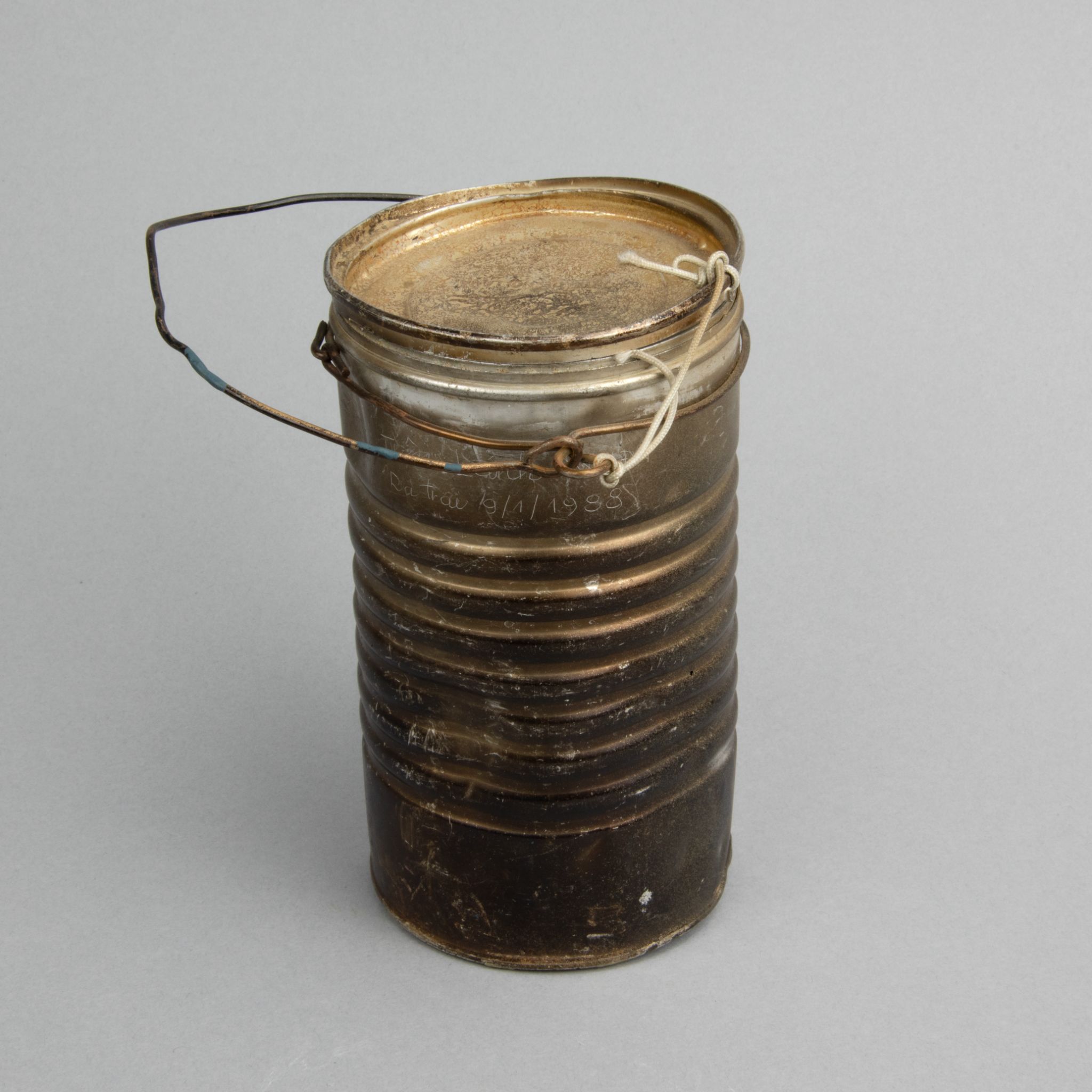
The tin can shown was a common tool used by those imprisoned in re-education camps for a variety of purposes including cooking, eating, and drinking. Etched on the can is the name Nguyễn Xuân Hách. The top line reads: Trại Tiên Lảnh QNĐN (Camp Tien Lanh, City Quãng Nam, Đà Nẳng). The bottom line reads: Ra trại 9/1/1988 (released from camp on January 9th, 1988).
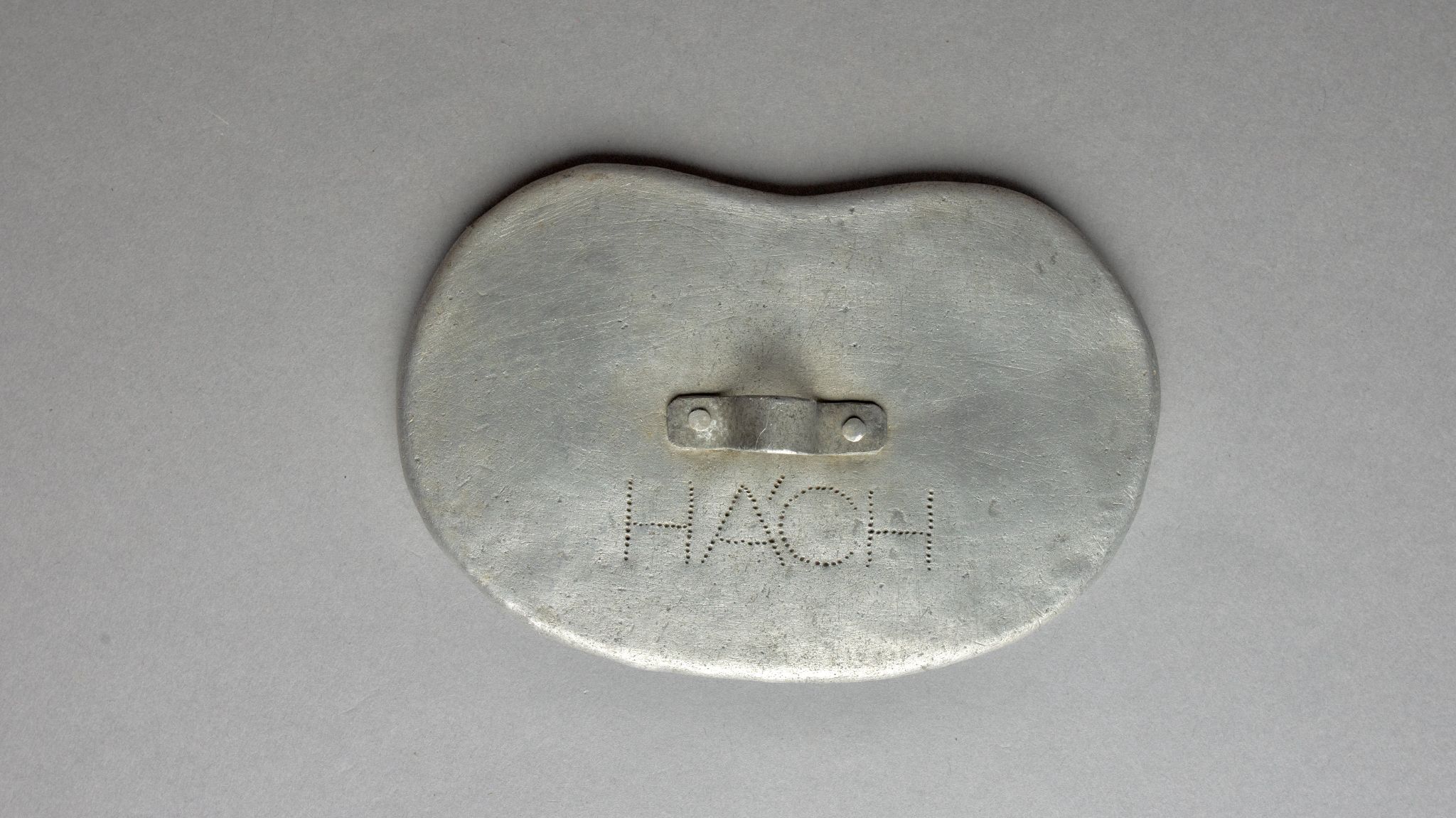
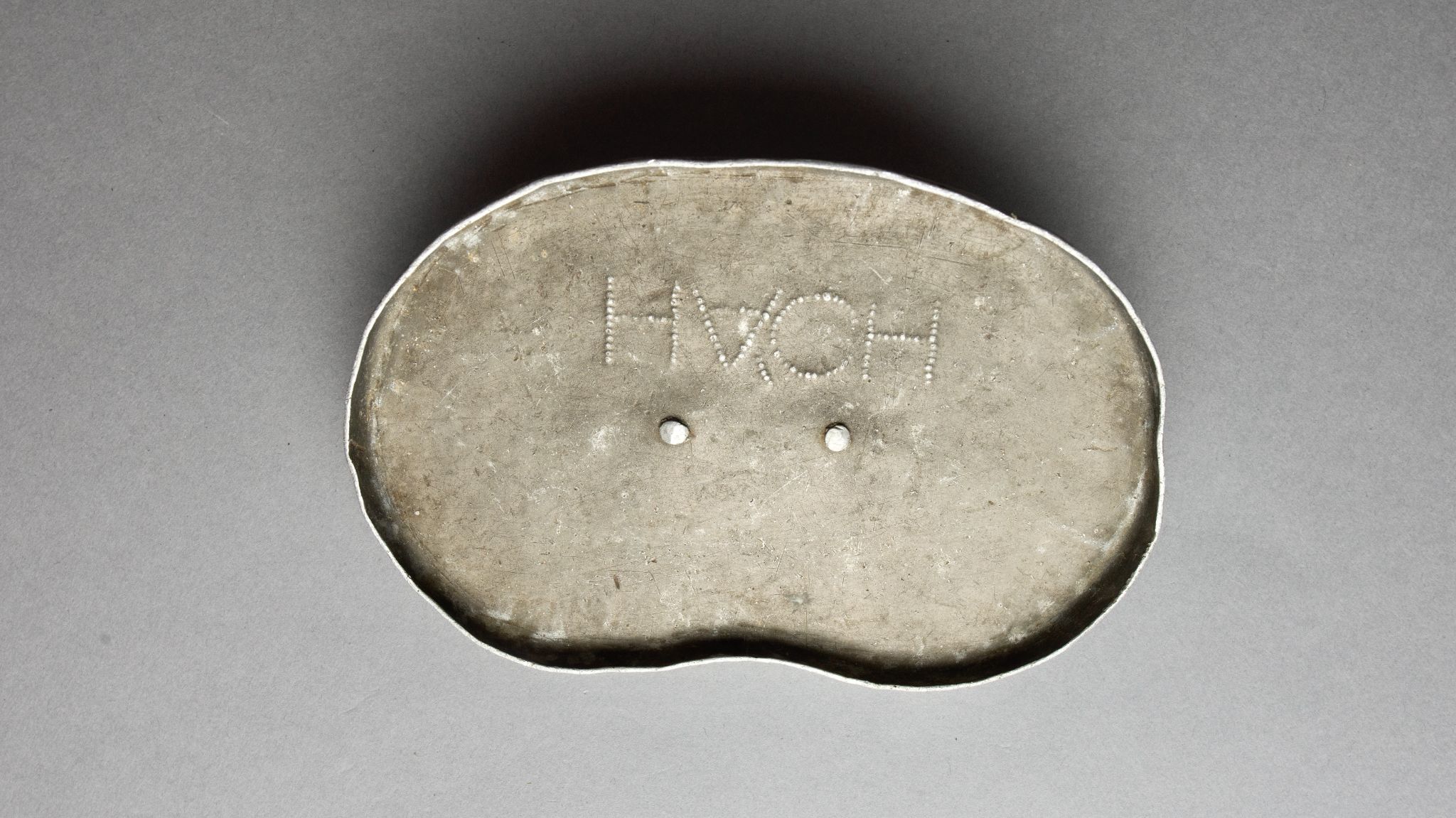
Metal Lid
9 cm x 14 cm
The tin lid features HÁCH written in punctured holes. This also belonged to Nguyễn Xuân Hách, the owner of the tin can above. The corresponding container is missing.
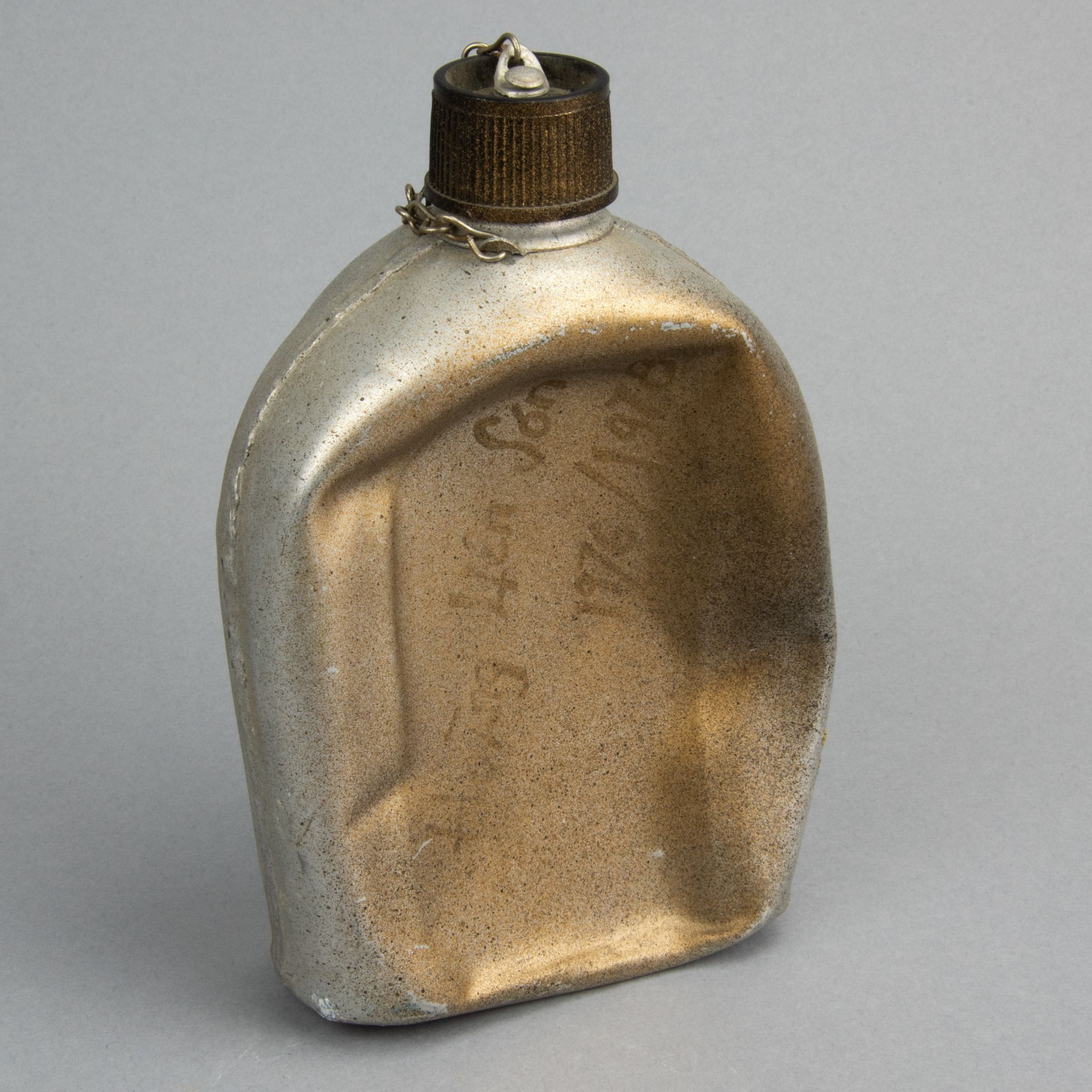
Metal Canteen
10.7 cm x 4.5 cm
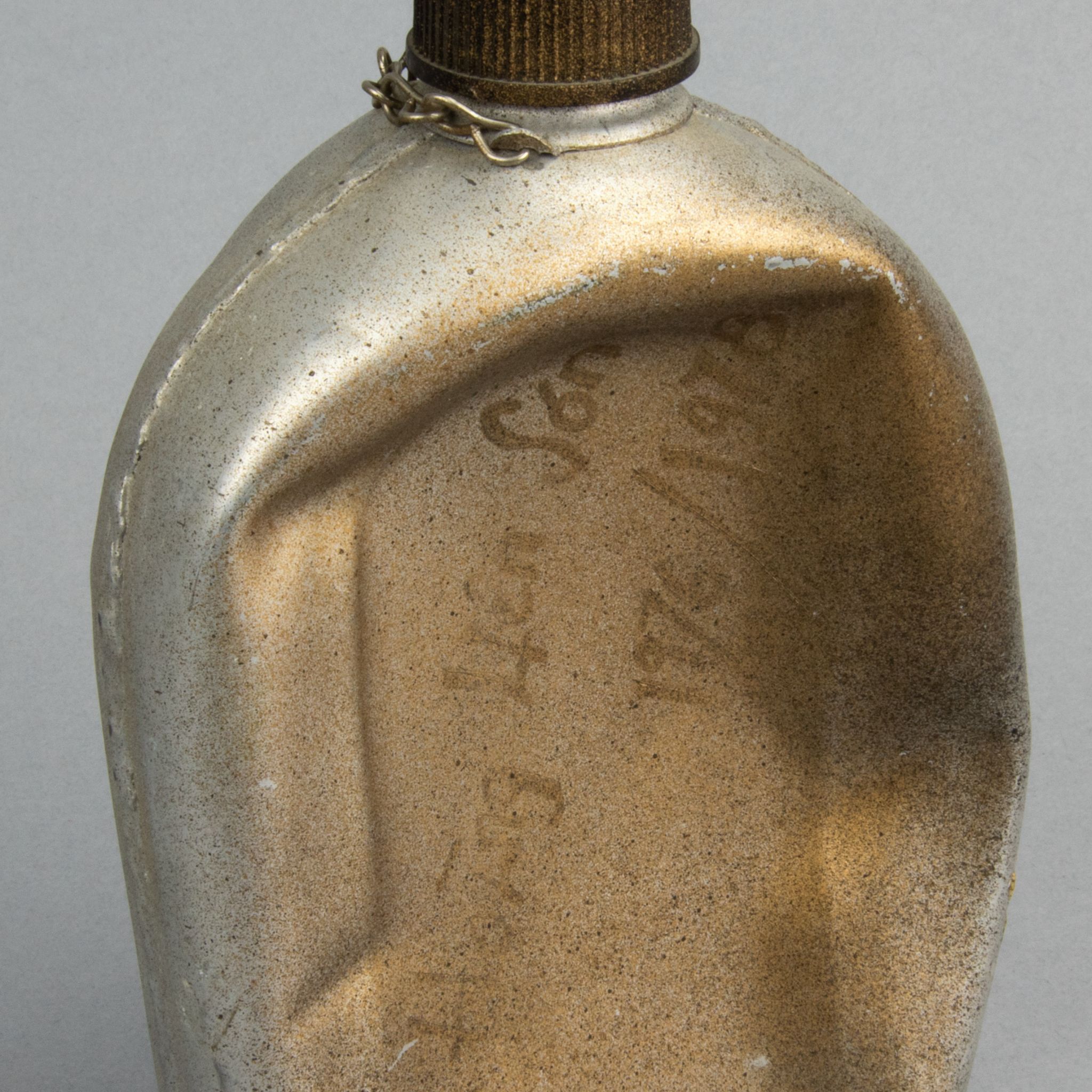
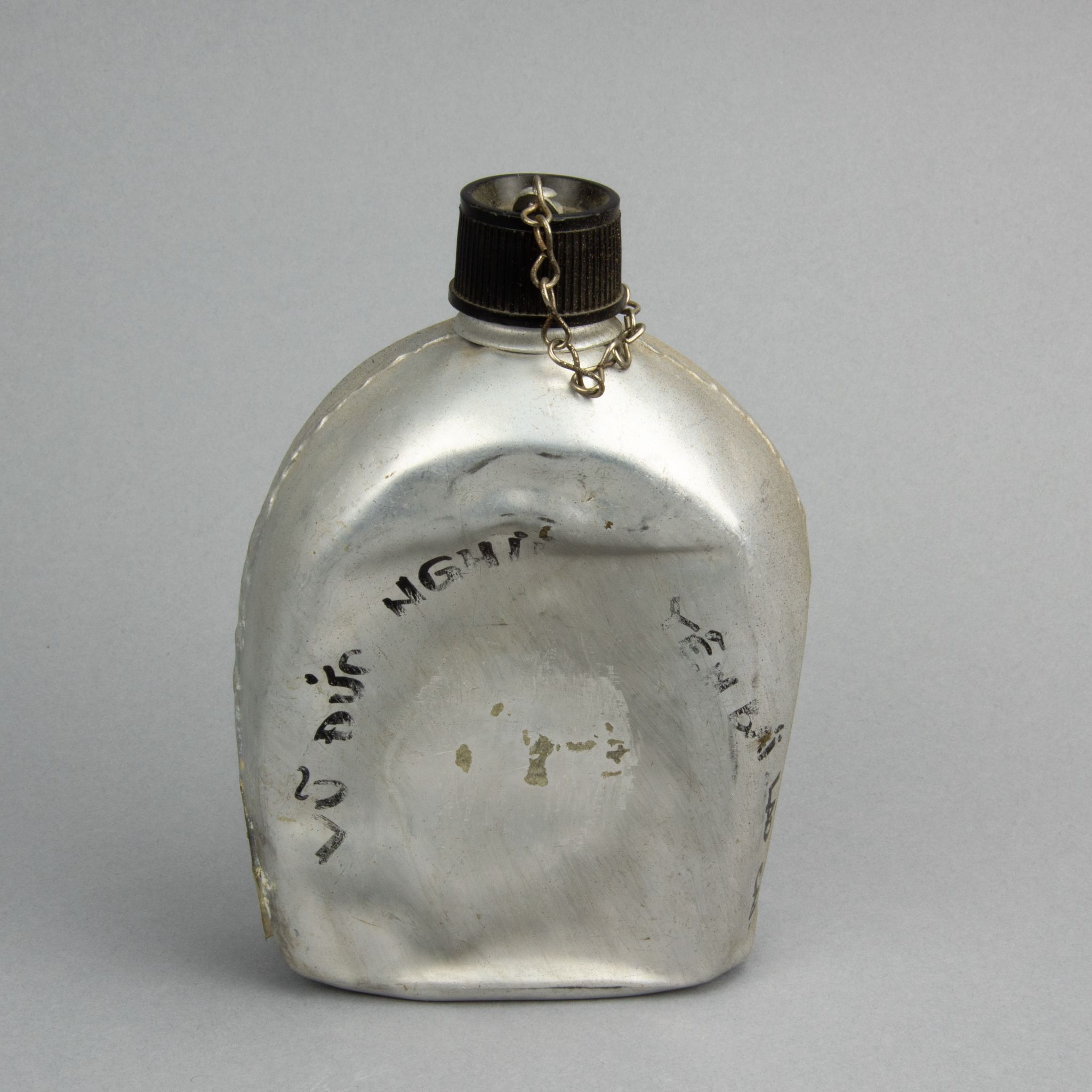
This metal canteen was used as a drinking container and as a means of documentation. It is heavily weathered, with discoloration and dents on the front and back sides. The canteen features writings documenting where its owner had been imprisoned in re-education camps: on one side of the canteen (slide 1 and 2) are the words “Hoàng Liên Sơn,” a mountain range in the north of Vietnam, with the years “1976/1978,” while on the other side (slide 3) are the words “Yên Bái” and “Lào Cai,” provinces in the north-east region of Vietnam near Hoàng Liên Sơn. The name of the canteen’s owner is written on the same side as the provinces, though part of it is worn away: "Vũ Đức Nghi-".
To see this in 3D, click here
Metal Protractor
12 cm x 9 cm x 15 cm
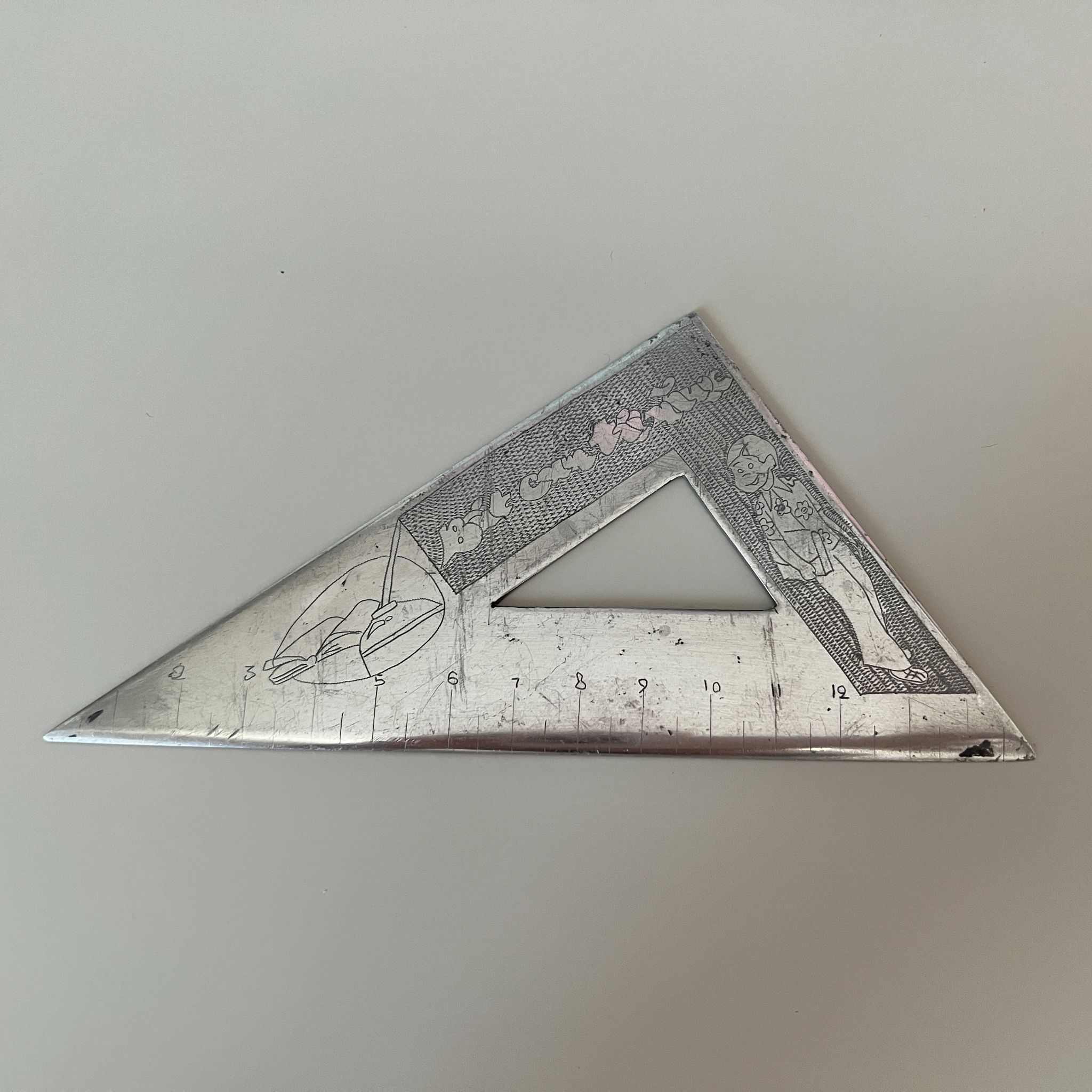
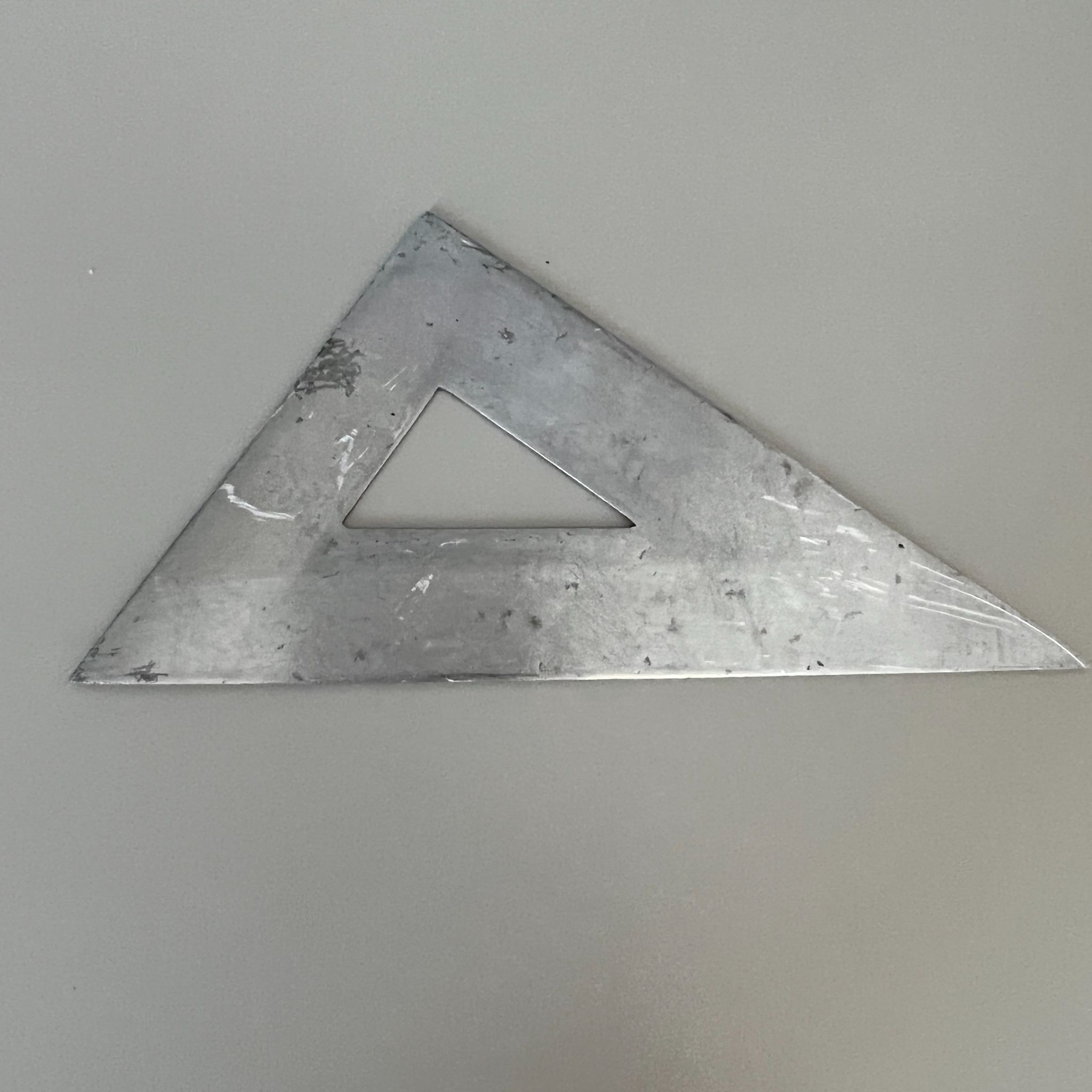
This protractor is made from scrap metal and includes a twelve-inch ruler of almost perfect accuracy. Engraved on one side is a figure of a young man wearing a shirt with a flower pattern and carrying a book bag. On the opposite side is an engraving of an opened book and an inkwell and pen. On the top side is an inscription that reads “bất cam tử nhược” (rather die and be free than suffer).
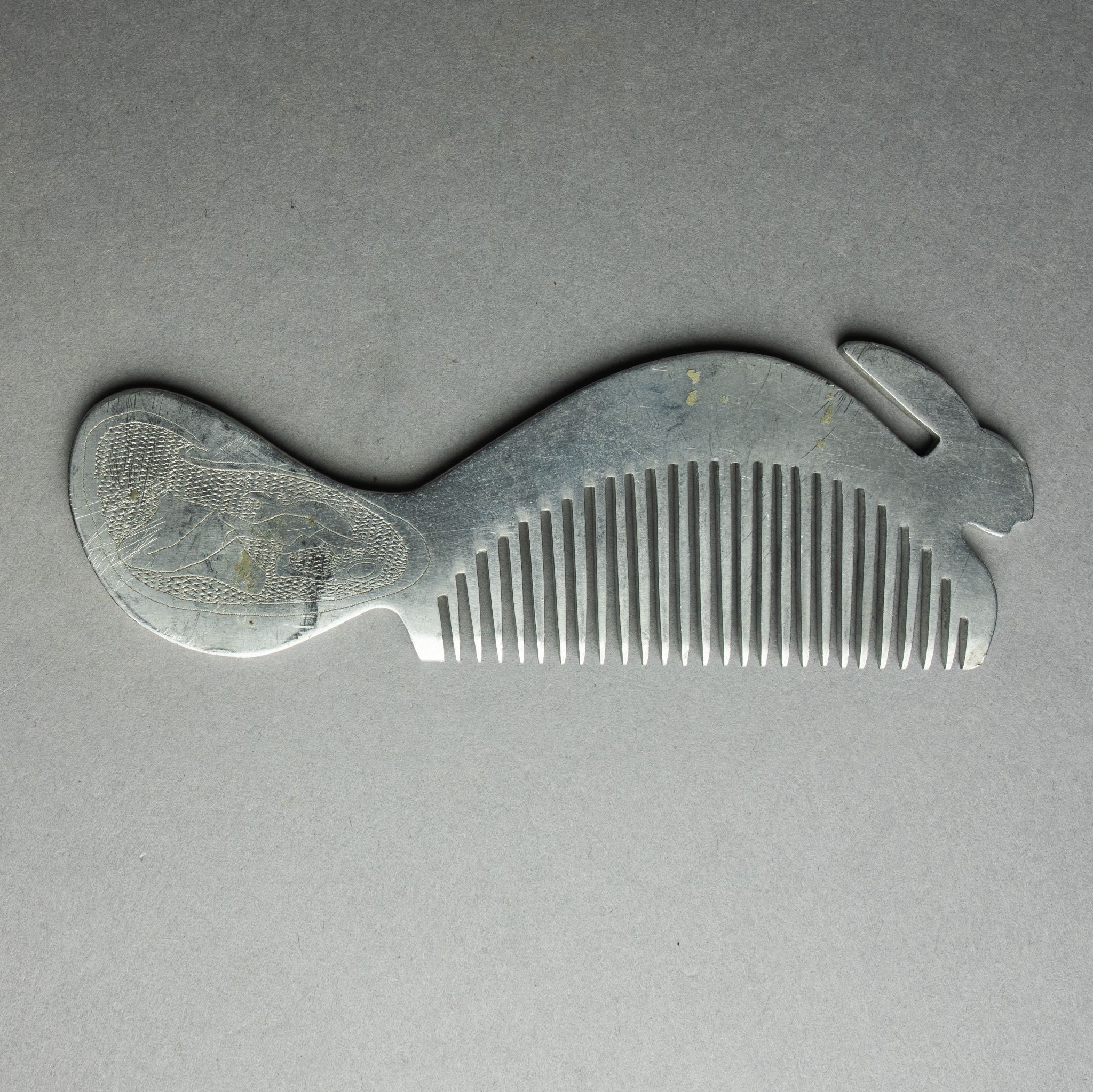
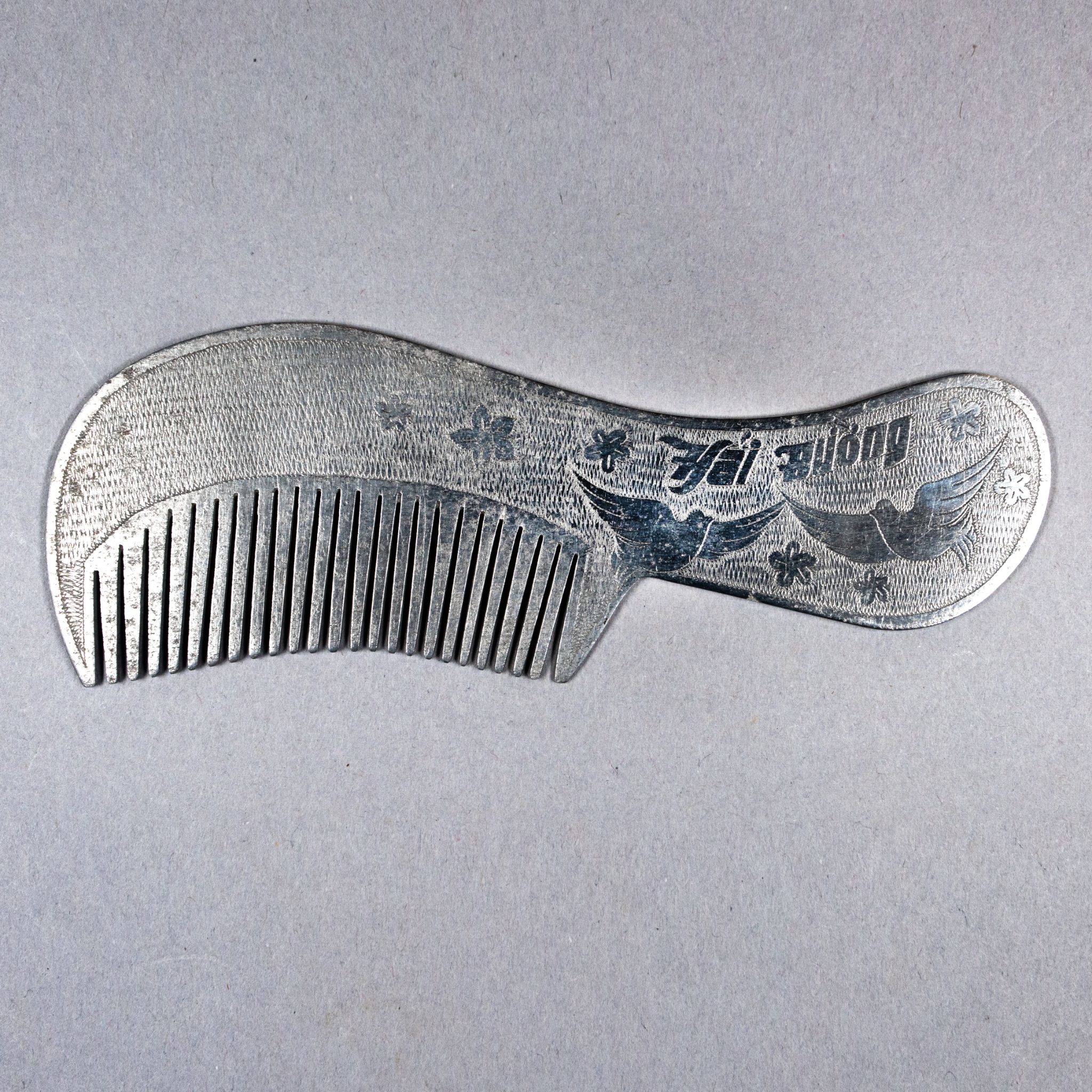
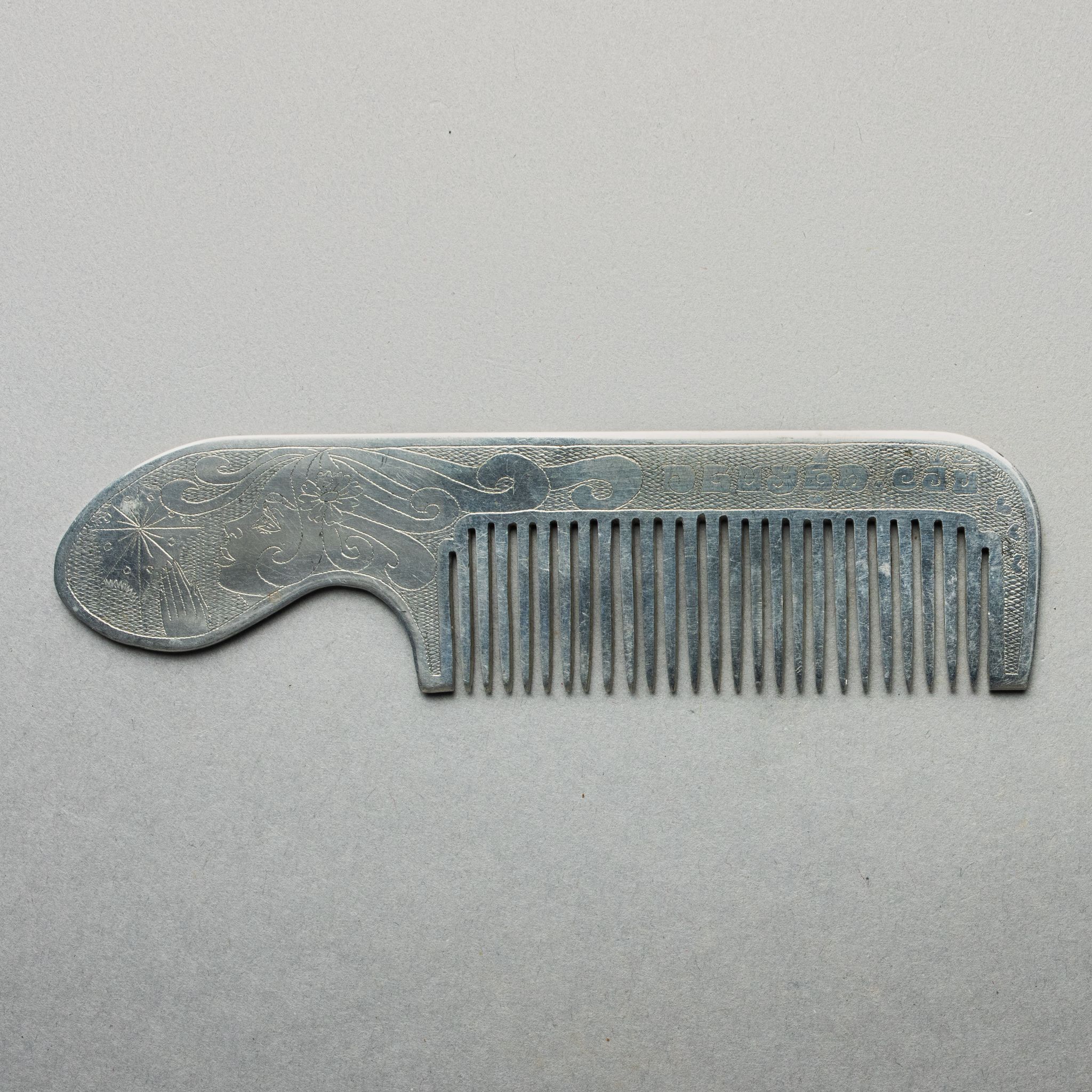
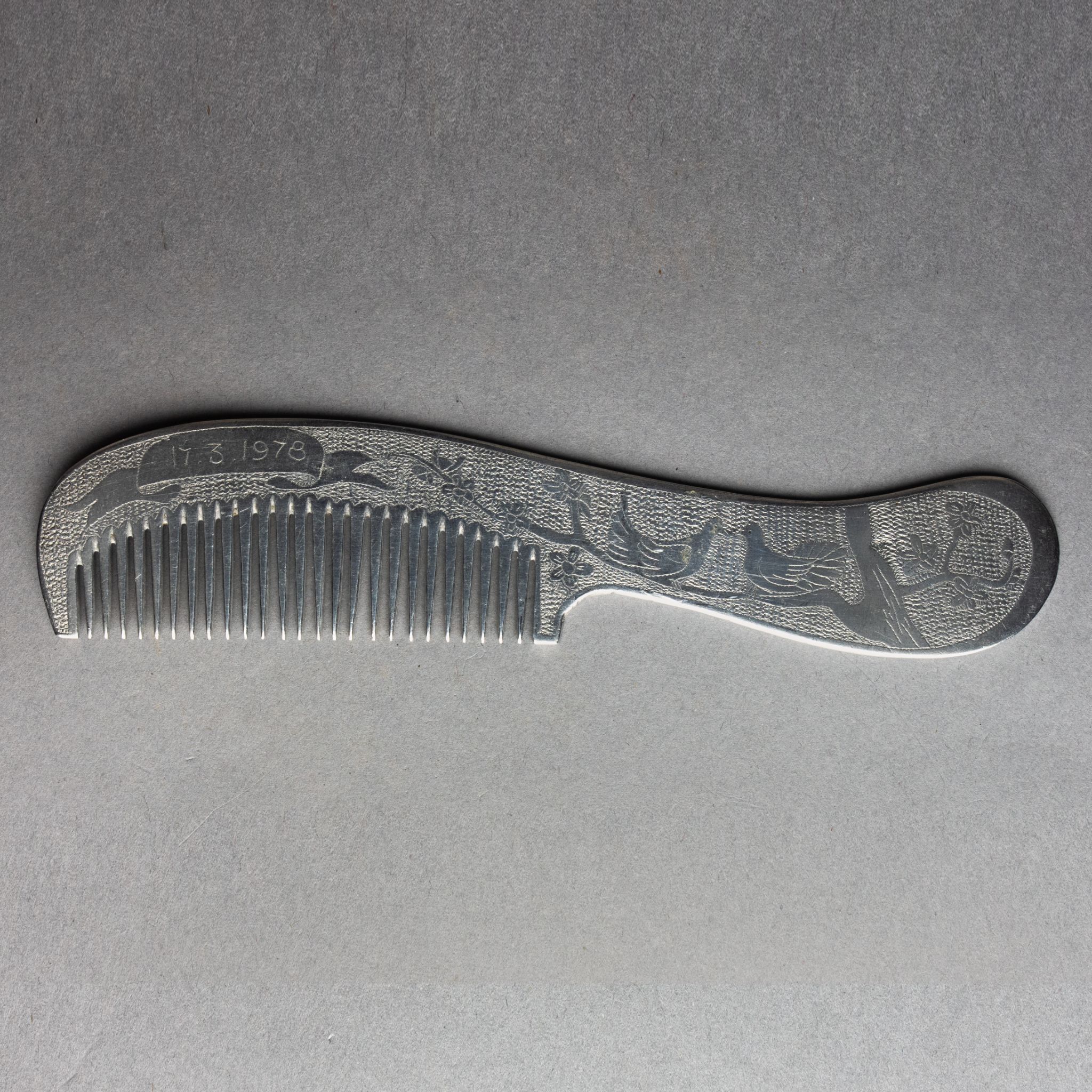
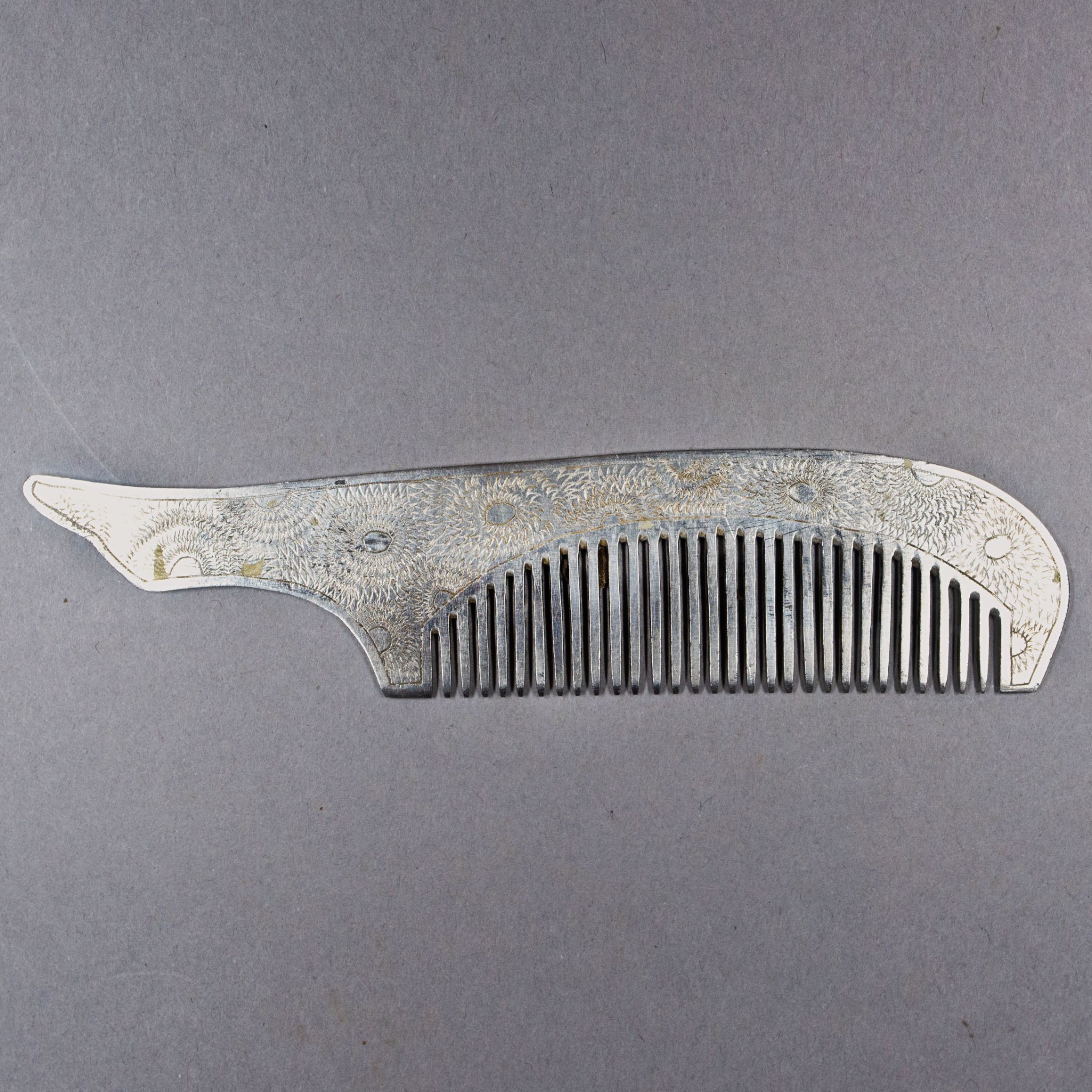
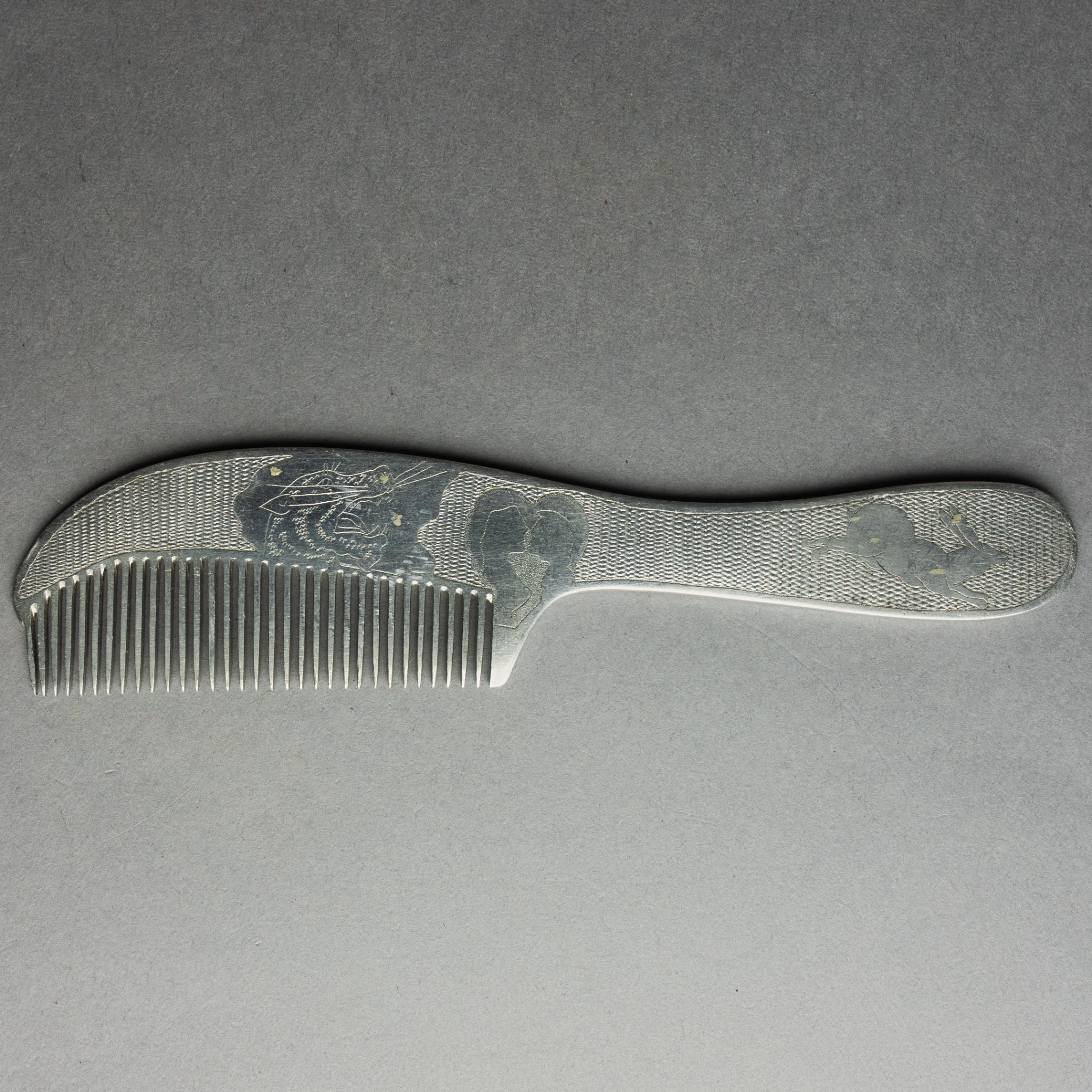
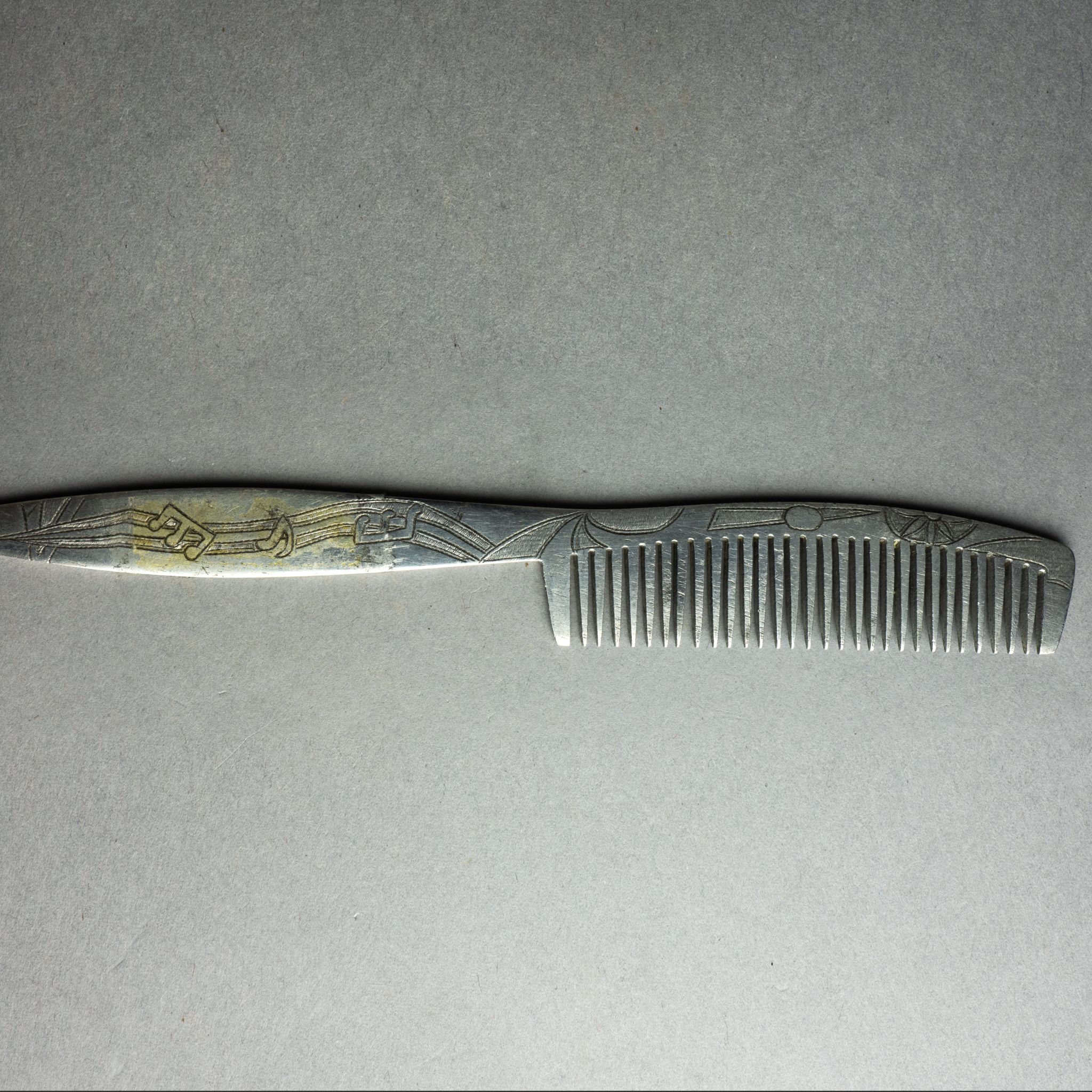
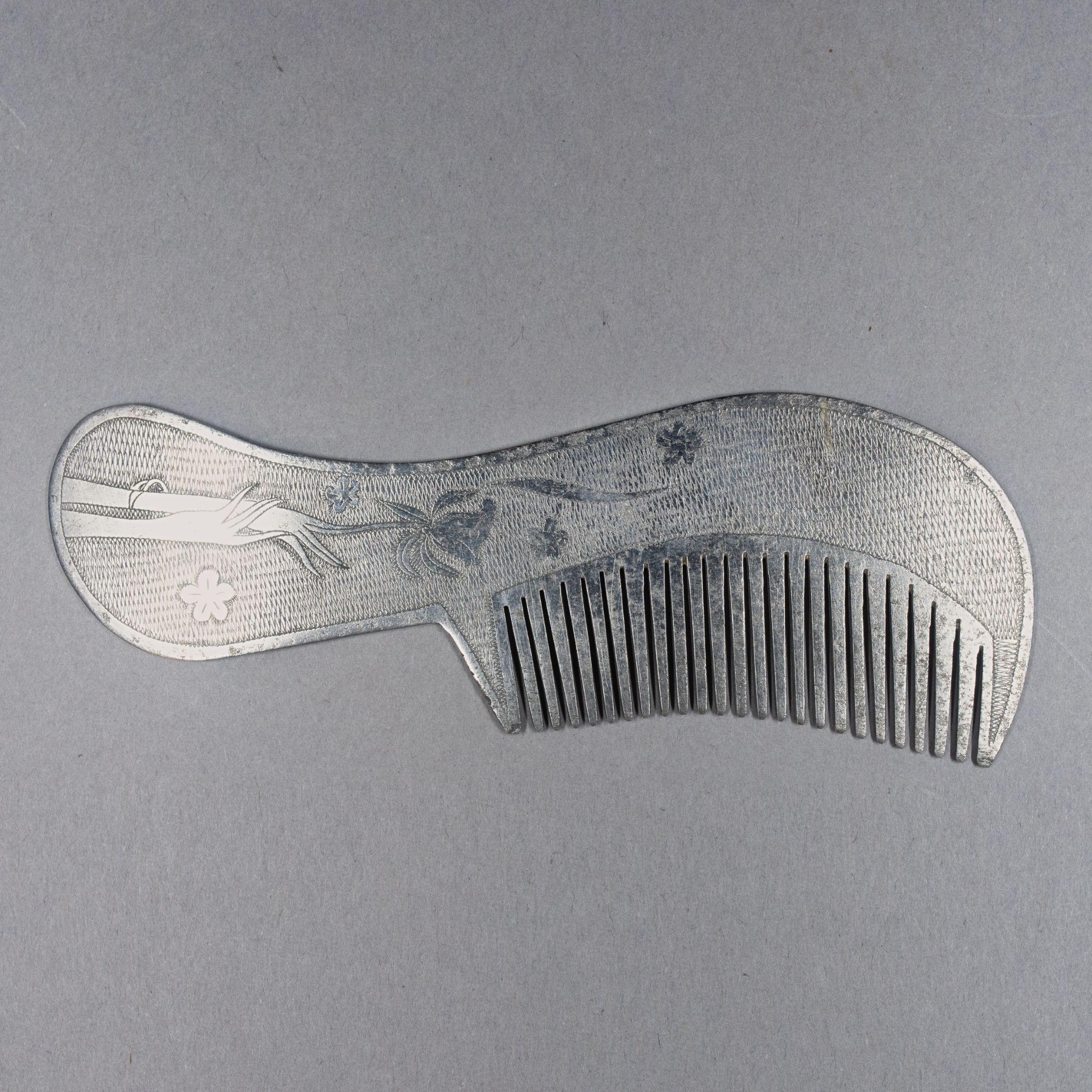
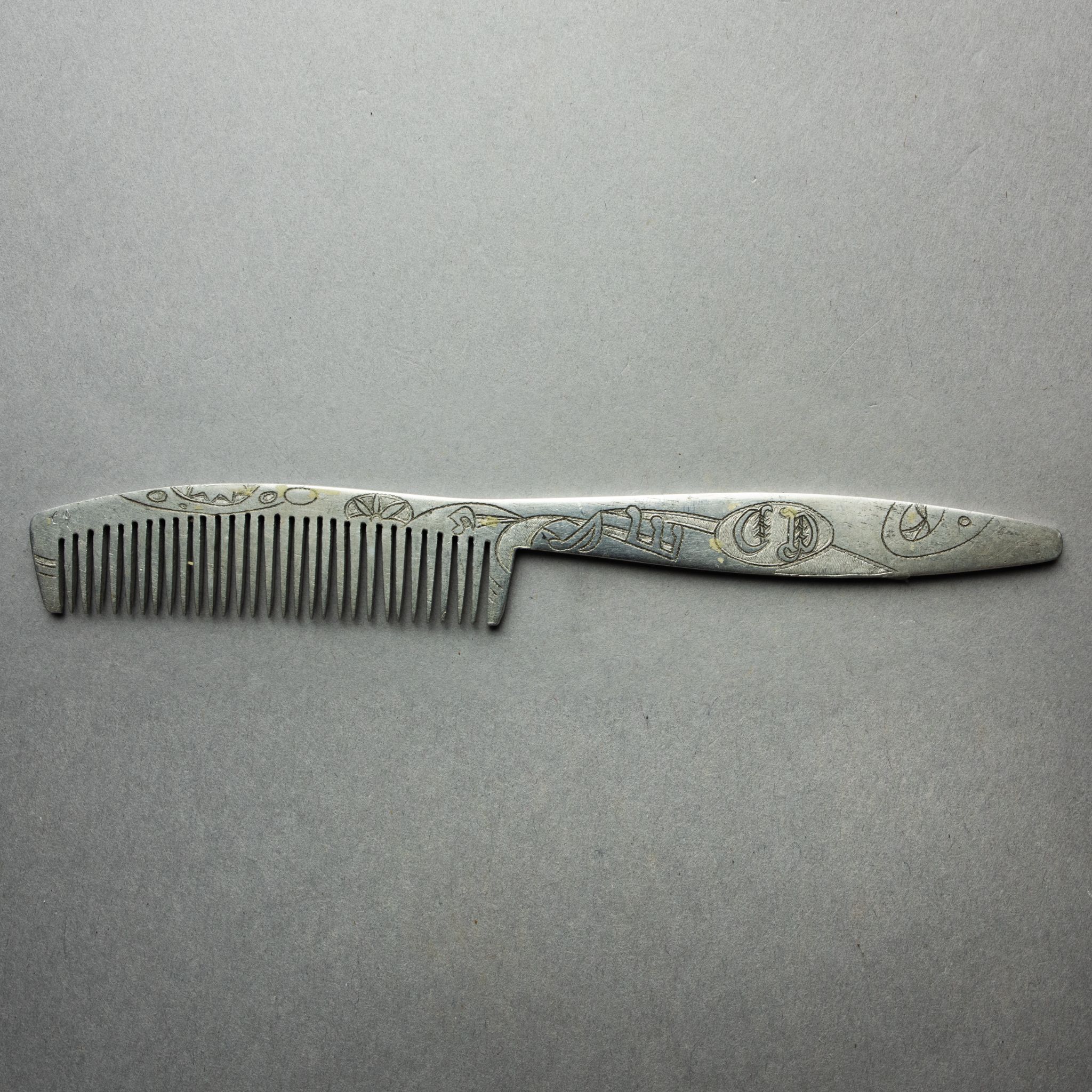
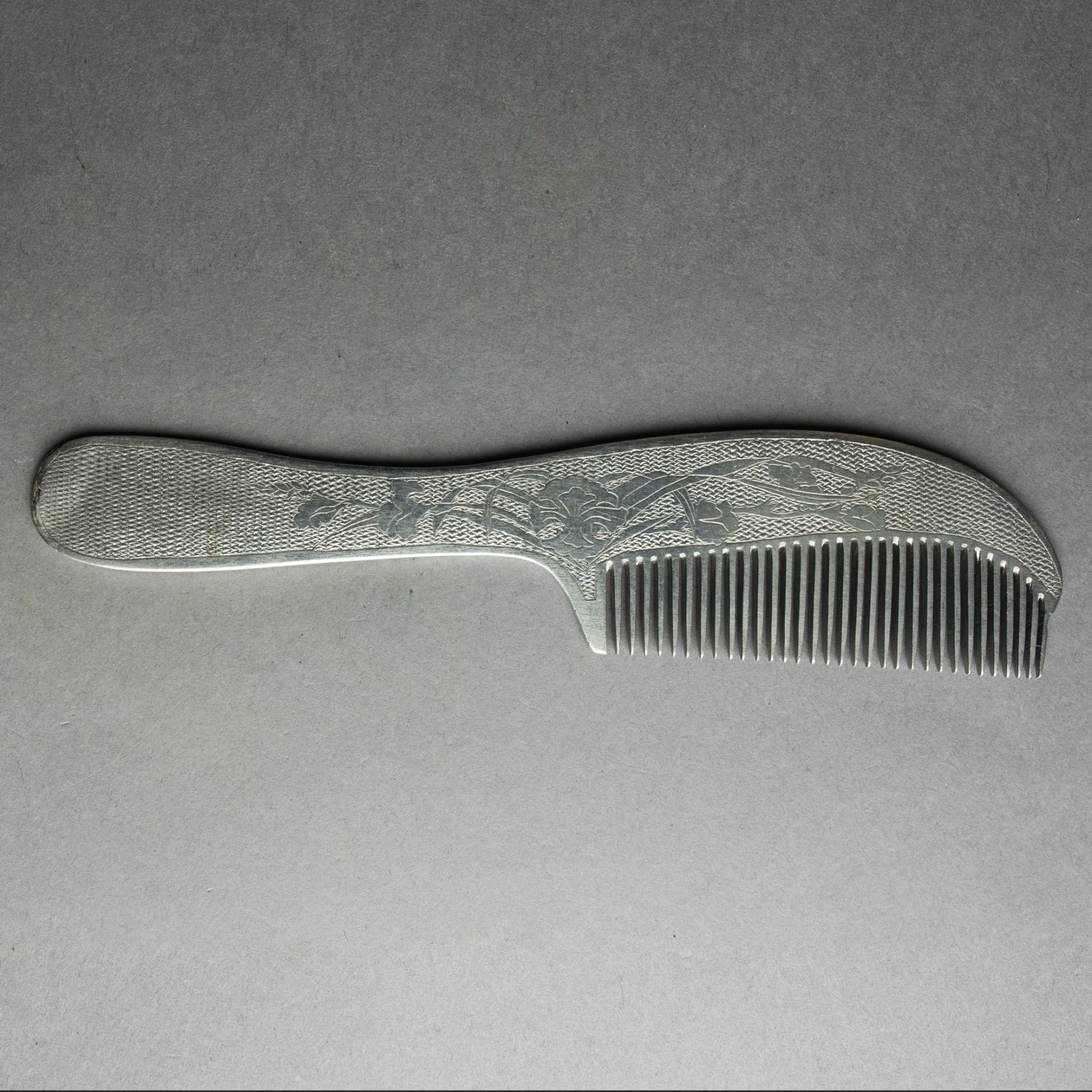
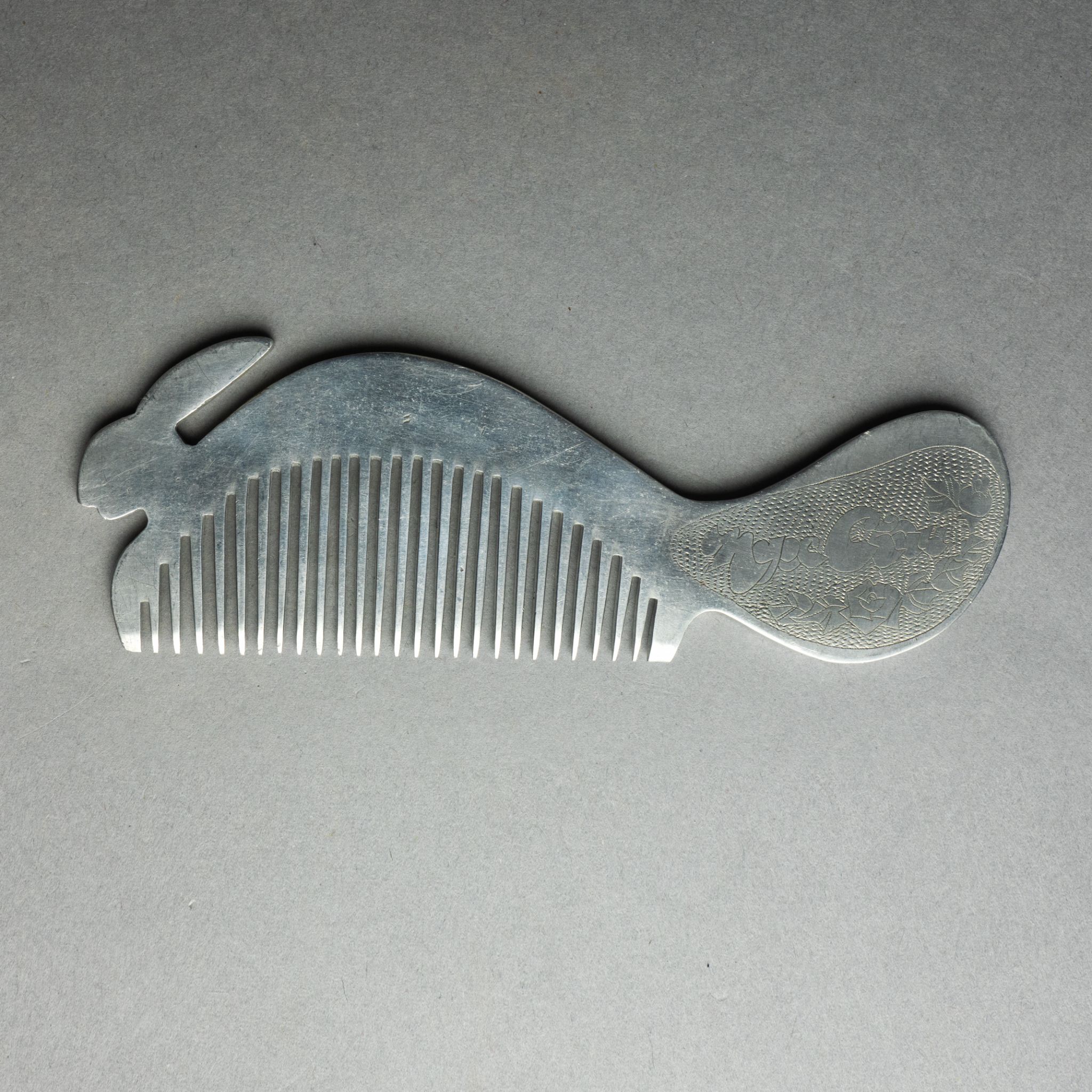
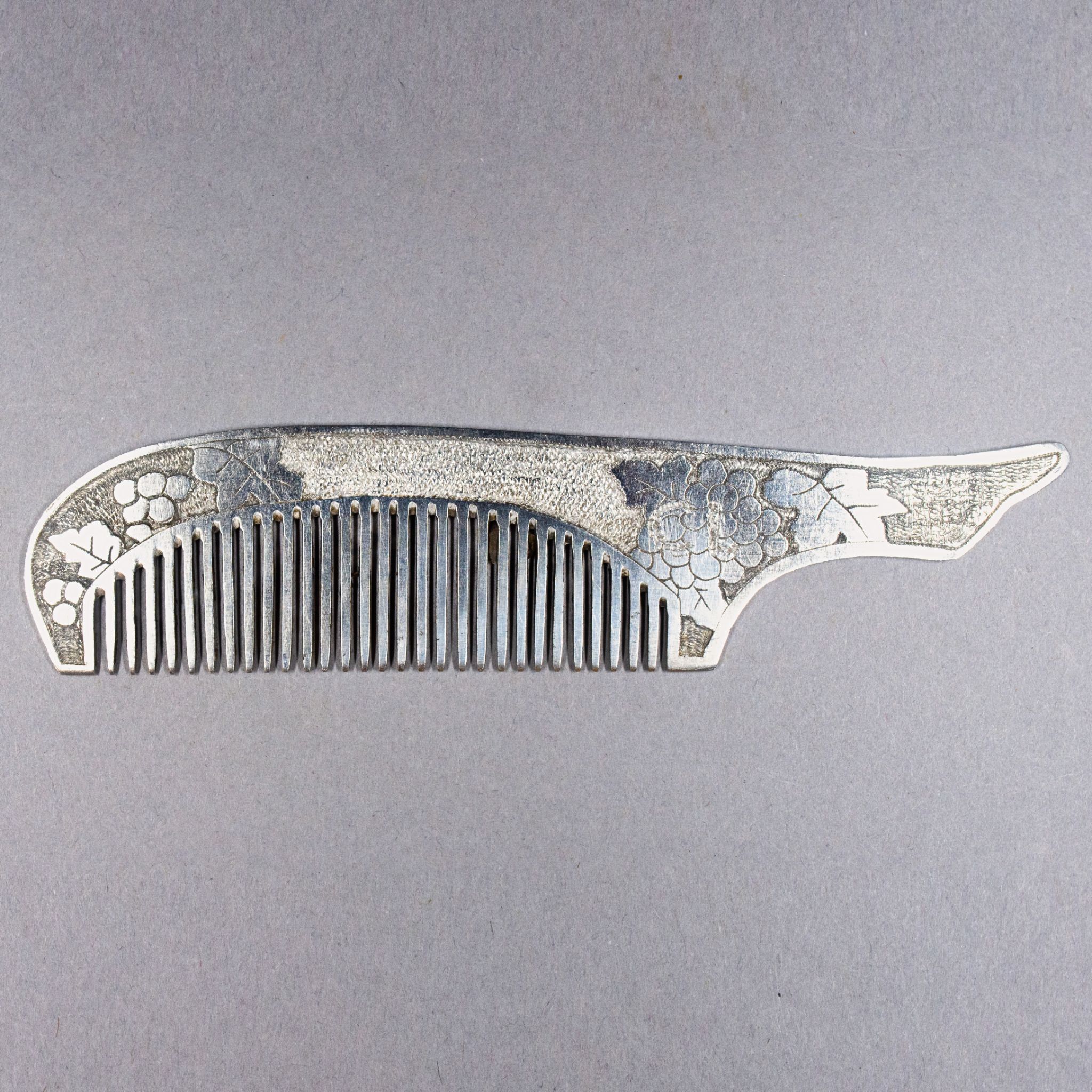
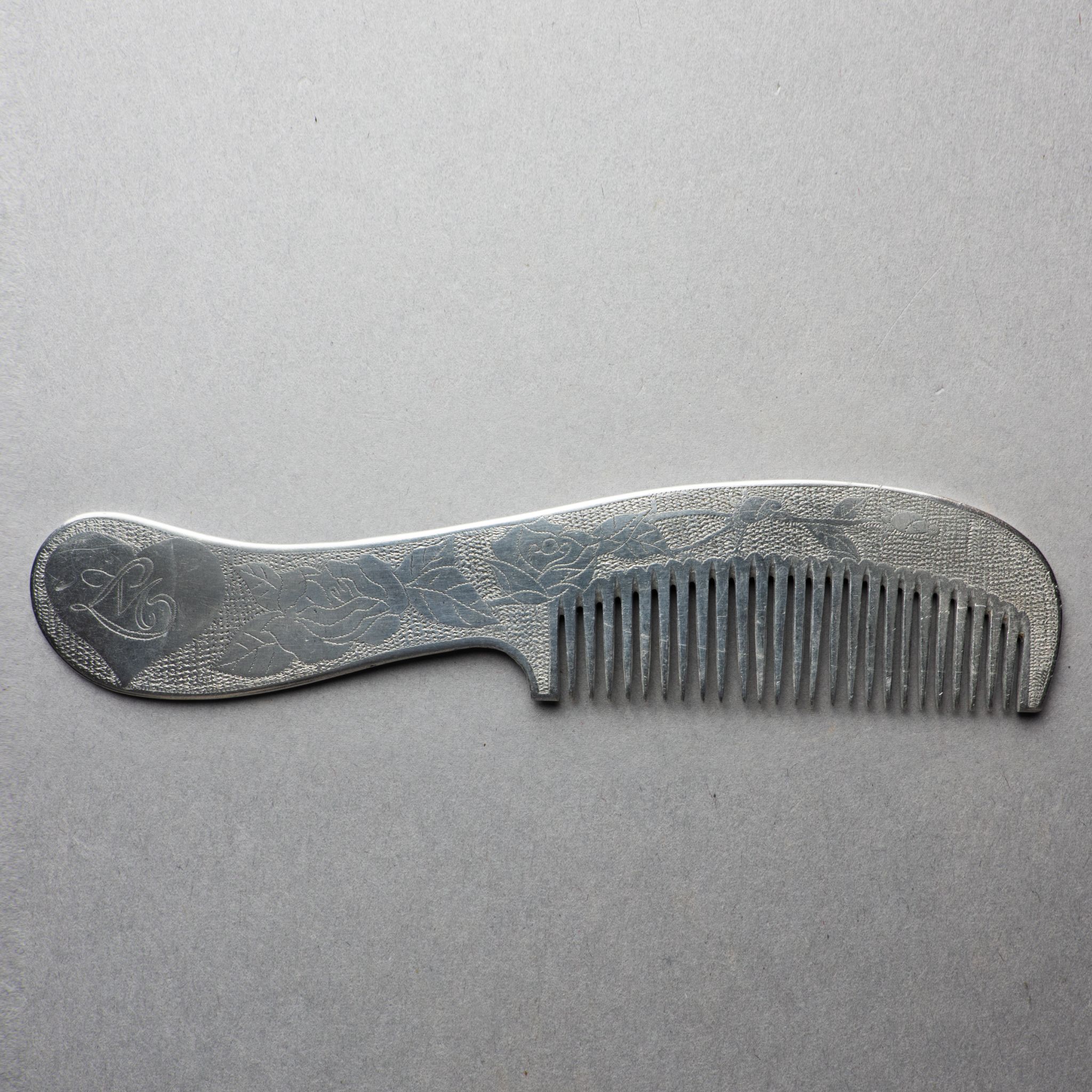
Metal Combs
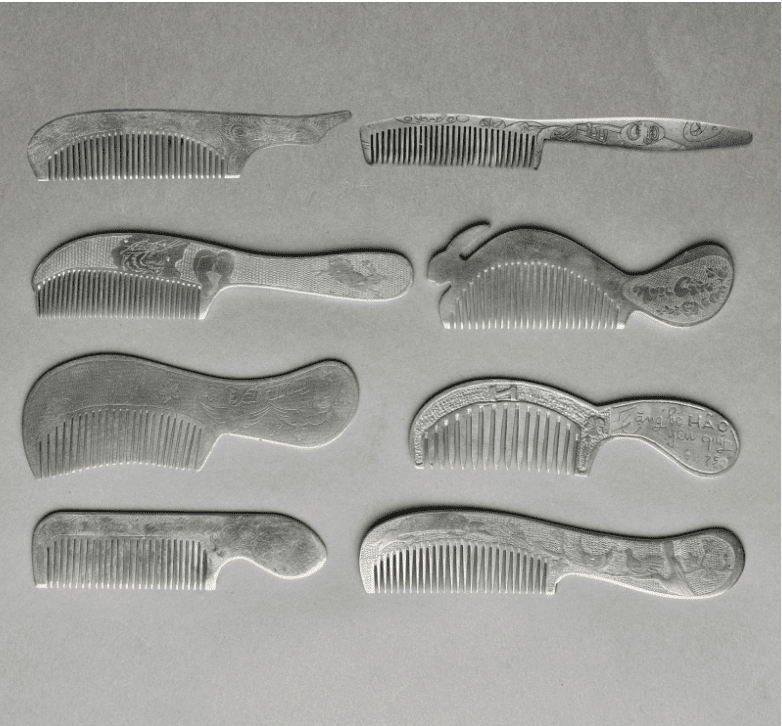
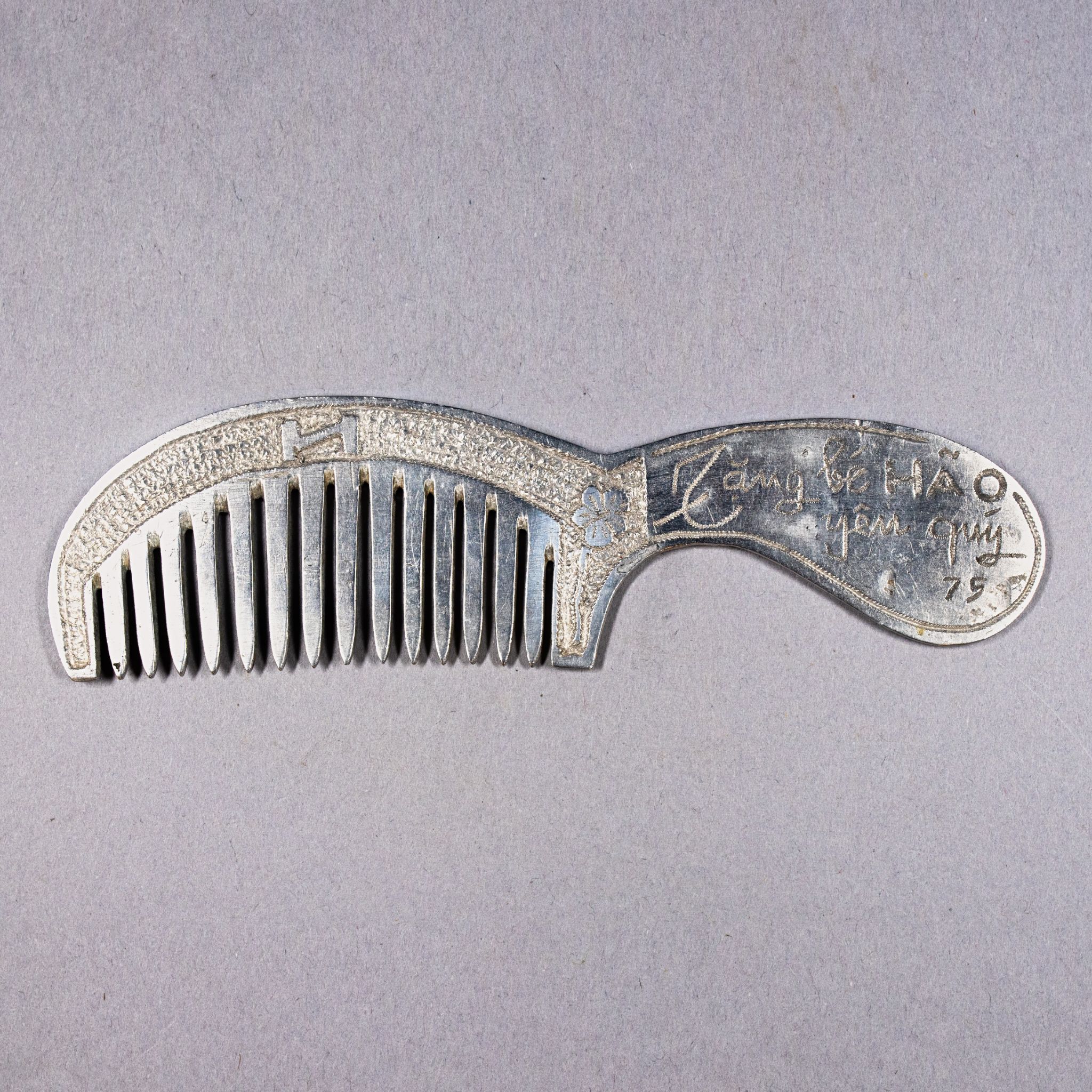
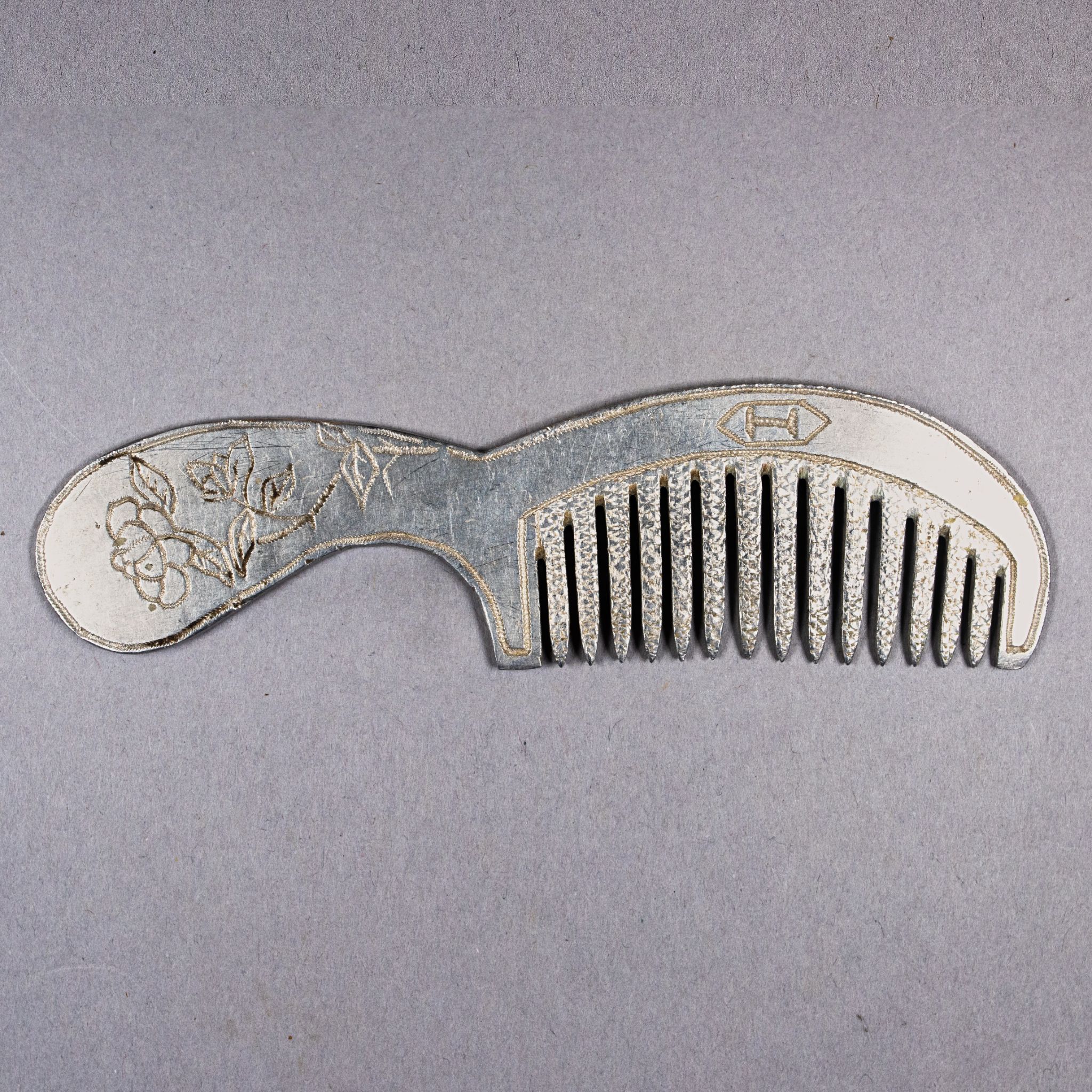
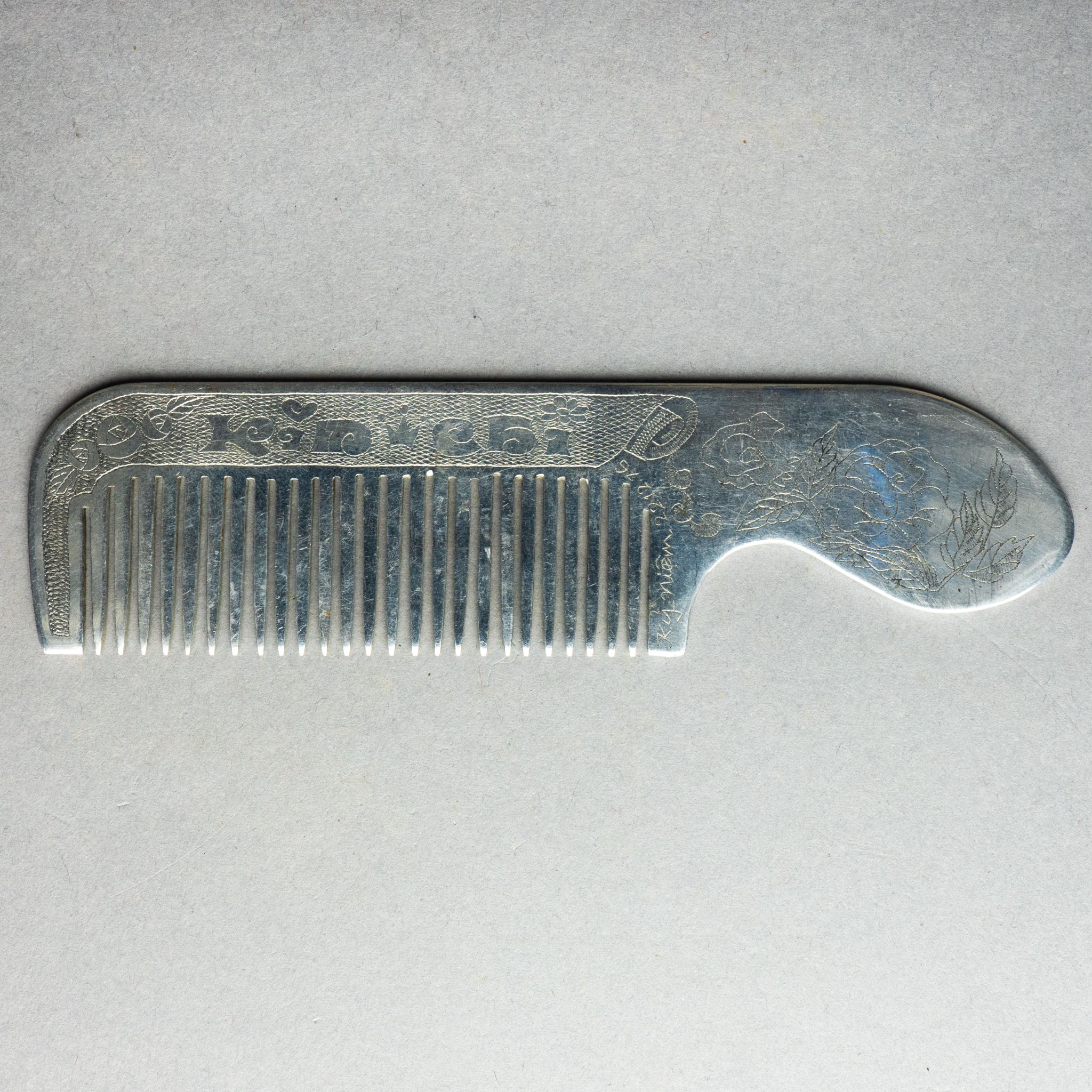
A variety of engraved combs of various shapes were made from scrap metal by people imprisoned in the reeducation camps. The first slide shows all eight combs, and the subsequent slides show the front and back of each comb. These combs were made from repurposed tin and were meant as gifts for loved ones. For example, Comb 2 (slides 4-5) includes the inscription "tặng bé Hảo yêu quý" (to beloved little Hao) and Comb 5 (slides 10-11) includes an etching that reads “kỷ niệm 22.12.76” (souvenir 22.12.76).
Slide 2-3: Comb 1 (14.7 x 3.5 cm)
Slide 4-5: Comb 2 (15 x 4cm)
Slide 6-7: Comb 3 (15.3 x 5 cm)
Slide 8-9: Comb 4 (17.4 x 3.8 cm)
Slide 10-11: Comb 5 (13.3 x 3.5 cm)
Slide 12-13: Comb 6 (14.2 x 4.8 cm)
Slide 14-15: Comb 7 (17.4 x 4 cm)
Slide 16-17: Comb 8 (21 x 2.8 cm)
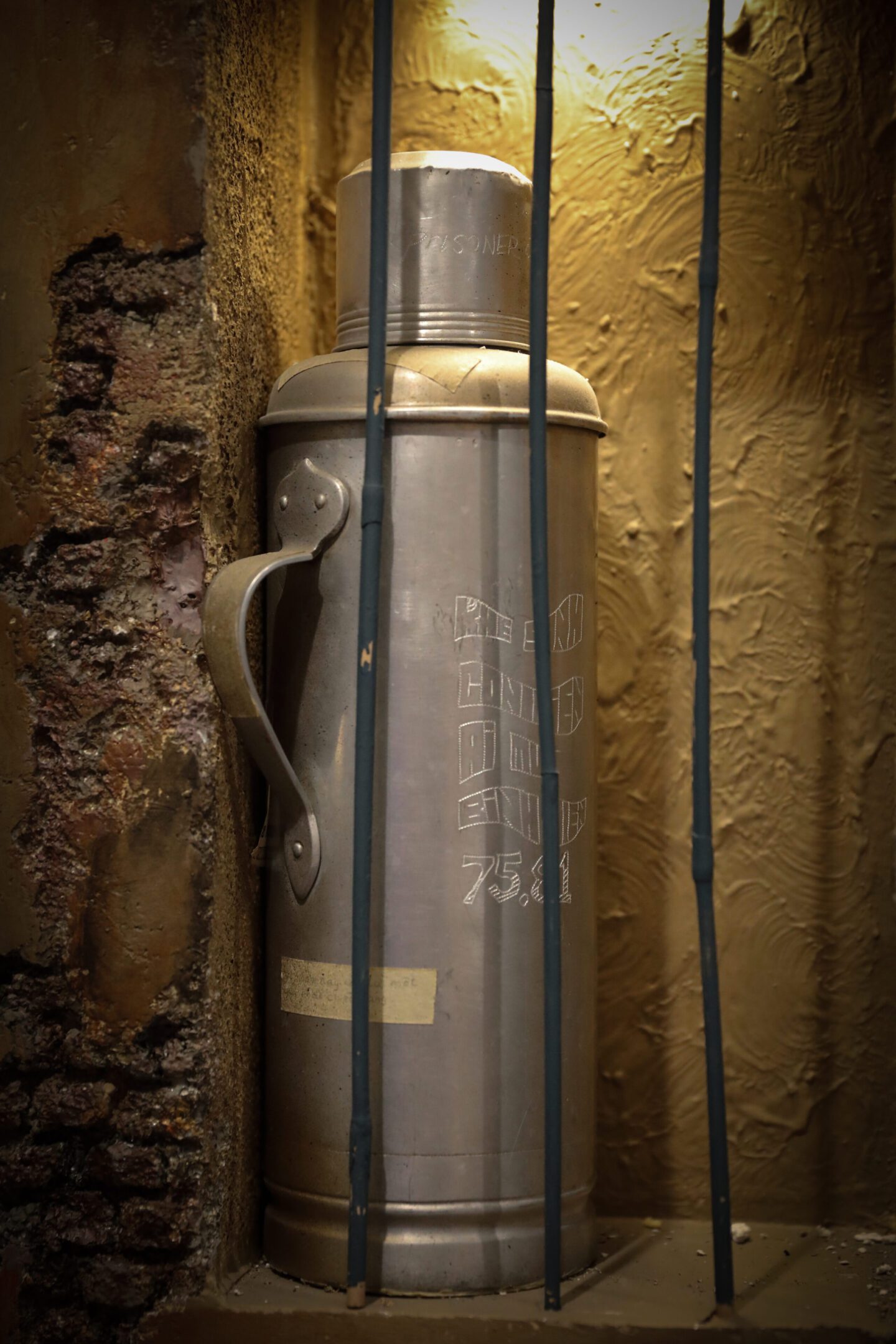
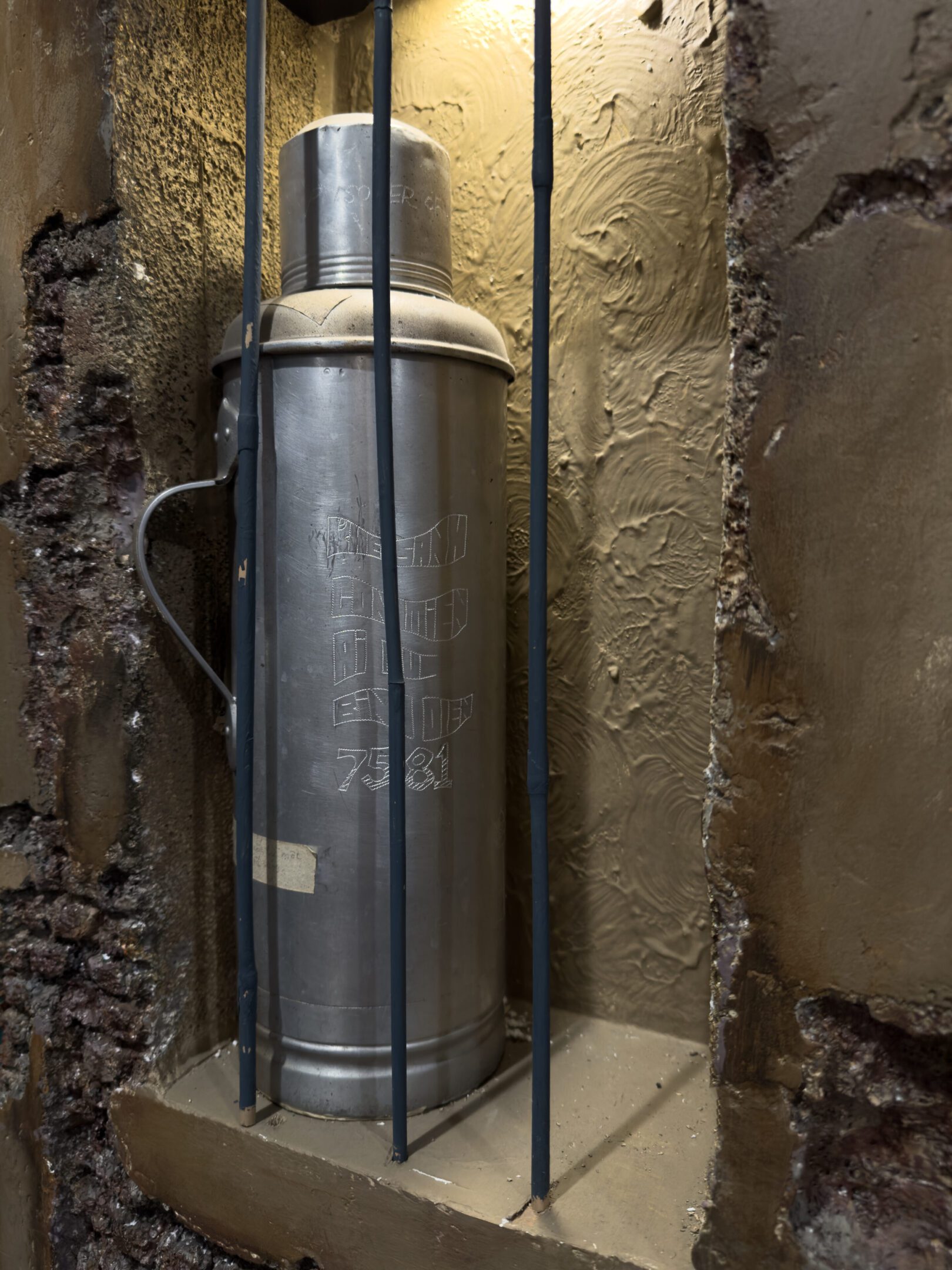
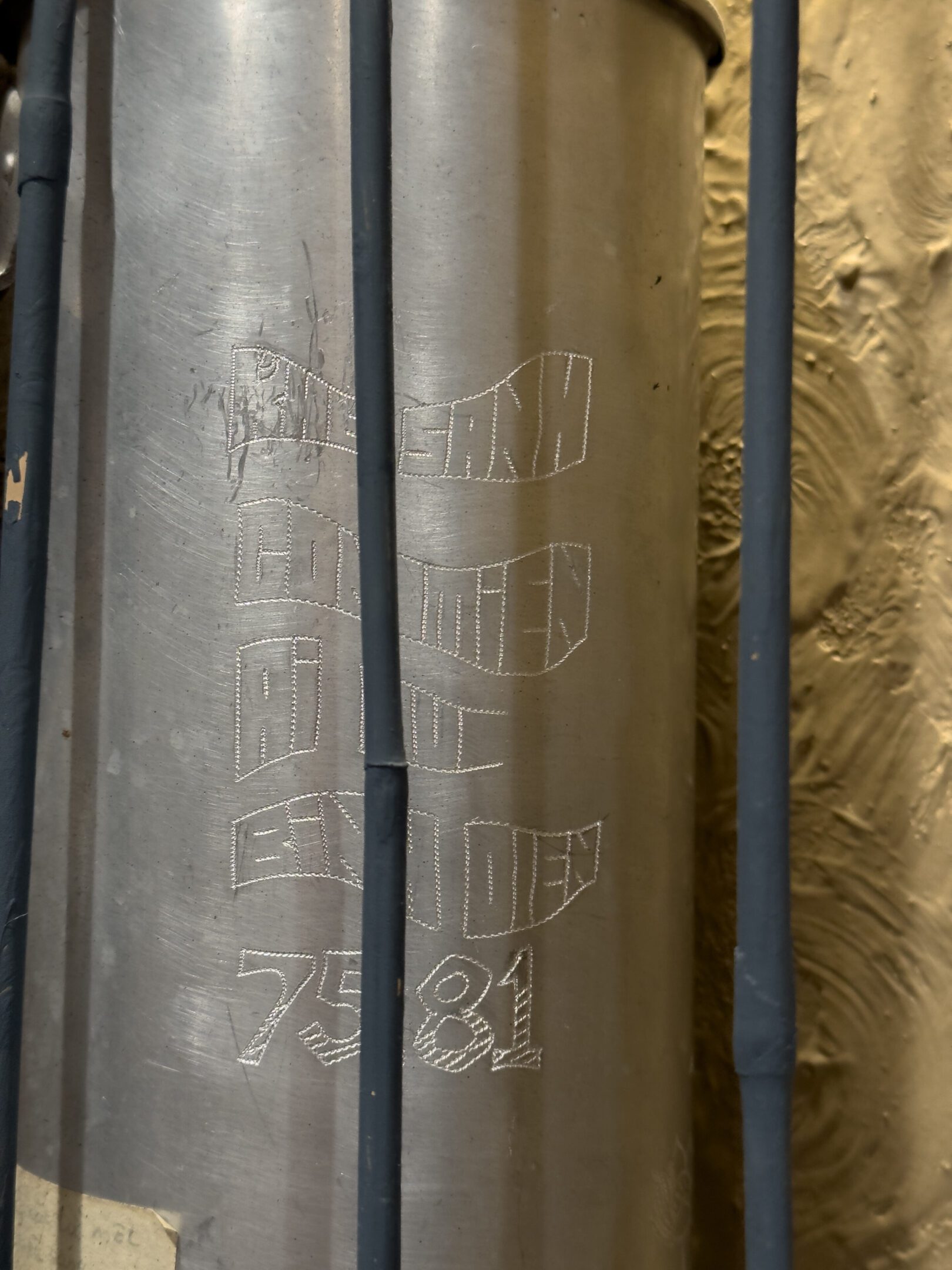
Tin Thermos
13cm x 40cm
This tin thermos is a utilitarian object marked by hardship and survival rather than comfort or leisure. Made of lightweight metal with a screw-top lid and side handle, it was designed for durability and repeated use in austere conditions. Scratched into its surface are hand-engraved markings—including the word “PRISONER” and a number—suggesting it was once a personally claimed or officially identified item, likely belonging to a detainee or captive. The rough, uneven etching contrasts with the thermos’s mass-produced form, transforming an ordinary container into a deeply personal artifact. Its worn surface, dents, and discoloration speak to prolonged use, scarcity, and the human need to hold onto identity and routine under conditions of confinement. As an artifact, this thermos stands as quiet testimony to imprisonment, resilience, and the everyday objects through which people endure extraordinary circumstances.
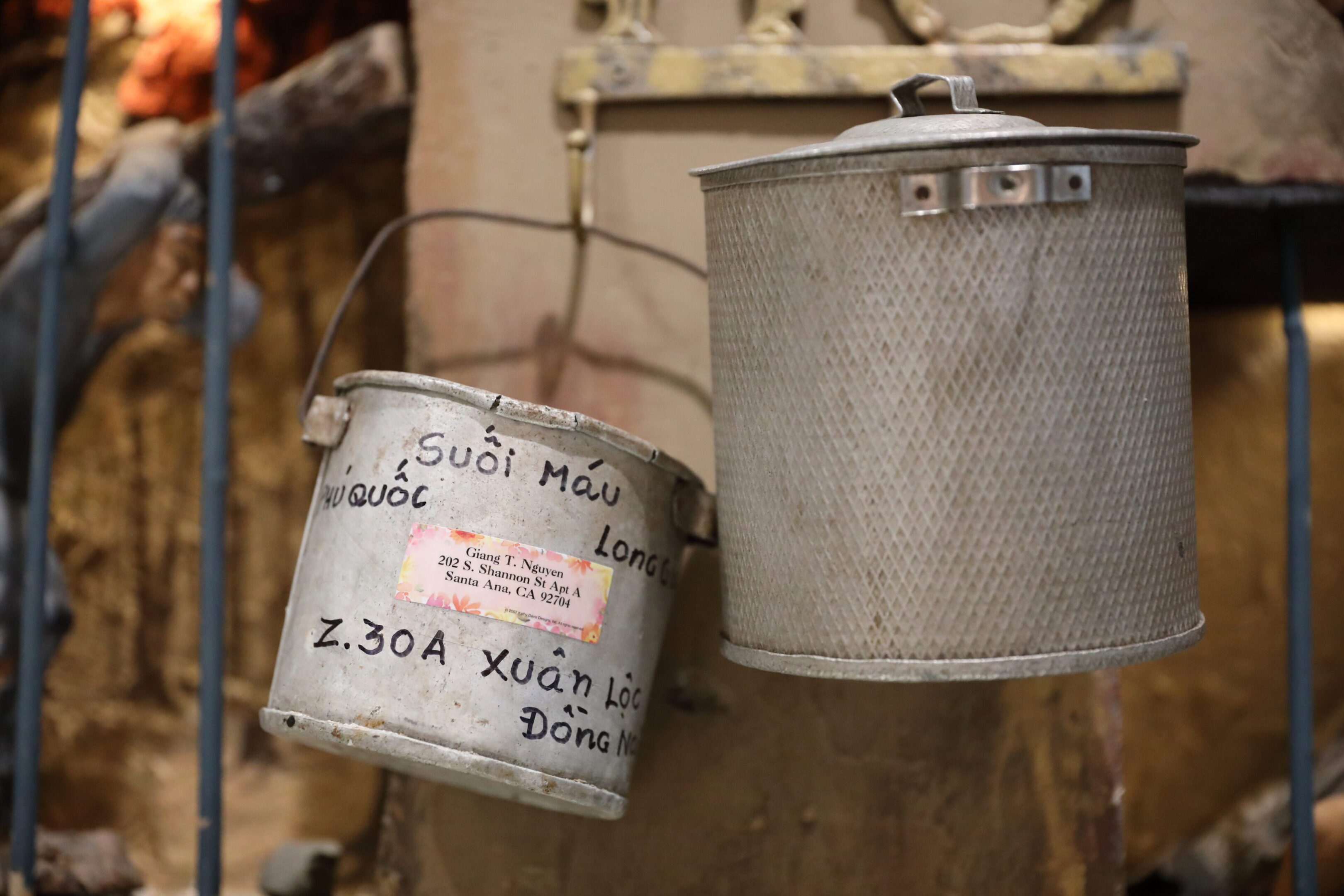
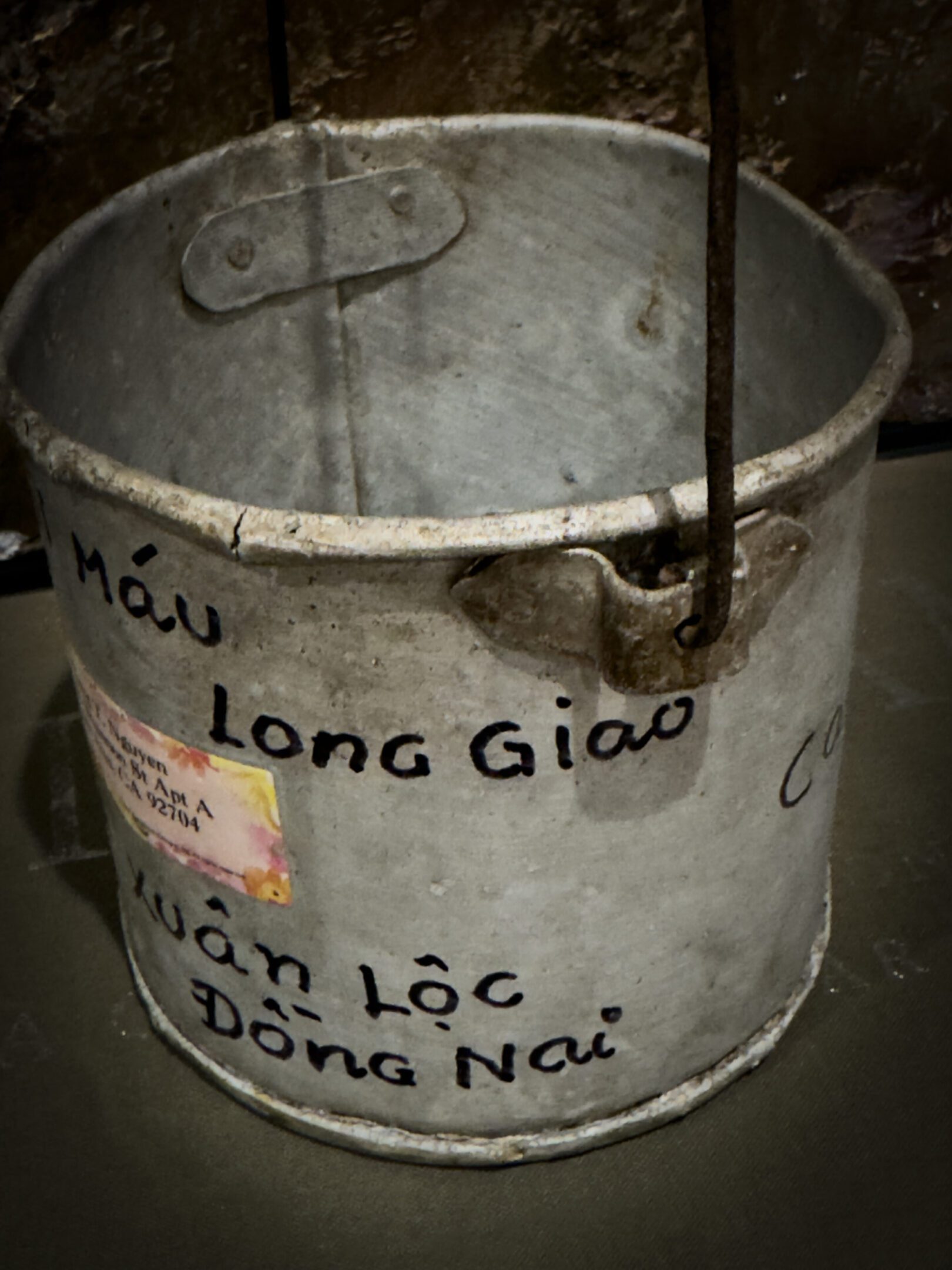
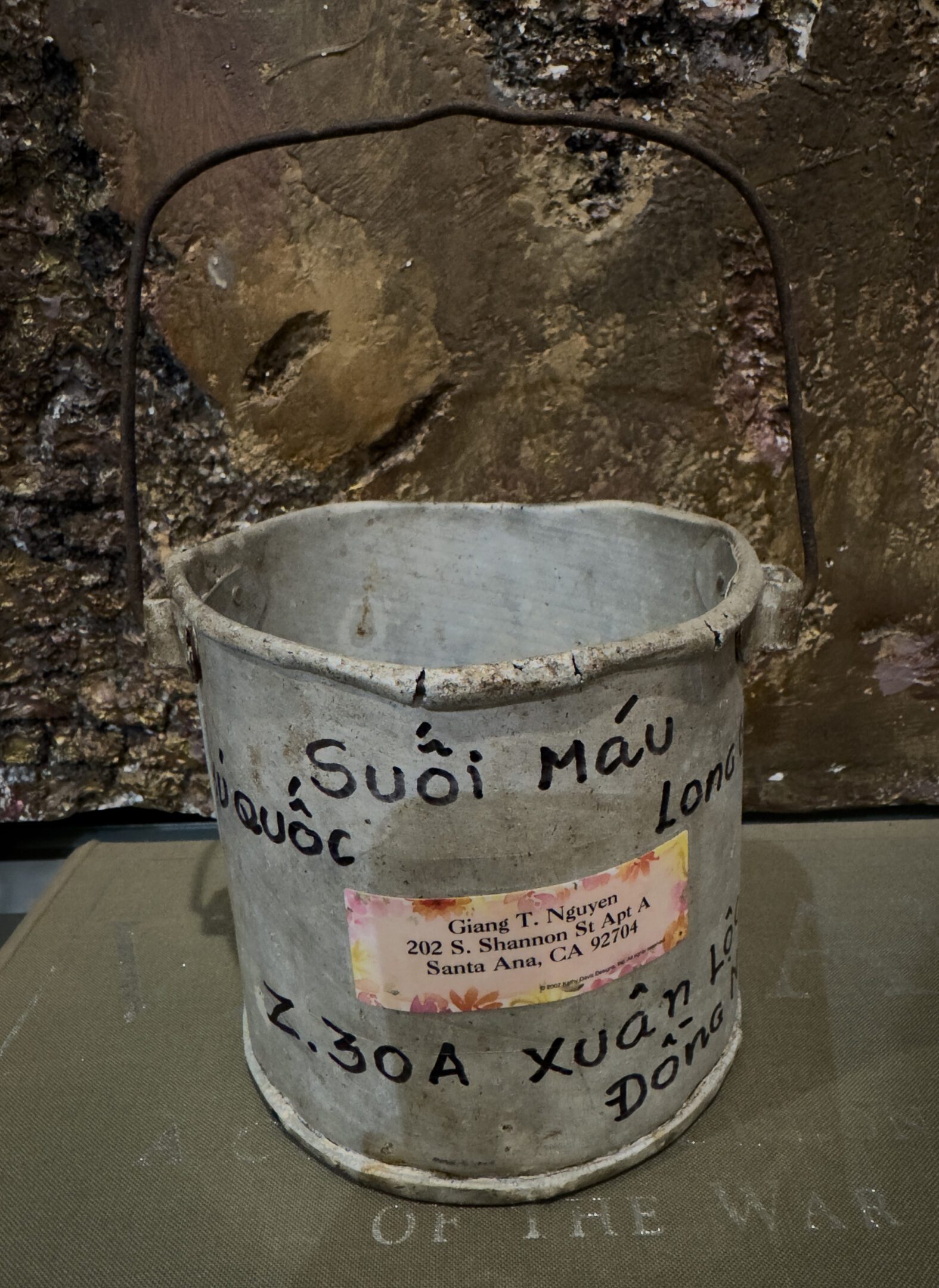
Tin Can Suoi Mau
11cm x 11cm
This simple tin can was an invaluable possession for those sent to “re-education camps” or forced resettlement zones after 1975. In conditions of extreme deprivation, it served multiple purposes: holding food, functioning as a drinking cup, and, when necessary, meeting basic personal needs. More than a utilitarian object, the tin can became a silent companion, accompanying its owner through years of hardship, suffering, scarcity, and harsh living conditions inside prison camps.
Engraved on the surface of the can are the names of various locations, bearing witness to the many places where its owner was imprisoned. These include Suối Máu Prison Camp (Biên Hòa), which held large numbers of former South Vietnamese military officers, civil servants, and intellectuals arrested after 1975 and classified as “political prisoners” or “re-education detainees.” He was also imprisoned at Phú Quốc Prison and at Xuân Lộc Detention Camp Z30A.
This can accompanied its owner through many years of imprisonment, quietly witnessing loss, endurance, and the struggle to survive. Today, it stands as a museum artifact—small in size, yet carrying the immense weight of memory and history.
The owner of this artifact is Nguyễn T. Giang, now residing in Santa Ana. He later resettled in the United States under the HO Program, which allowed former Vietnamese political prisoners to immigrate and rebuild their lives.