An Irony of Other People’s Wars
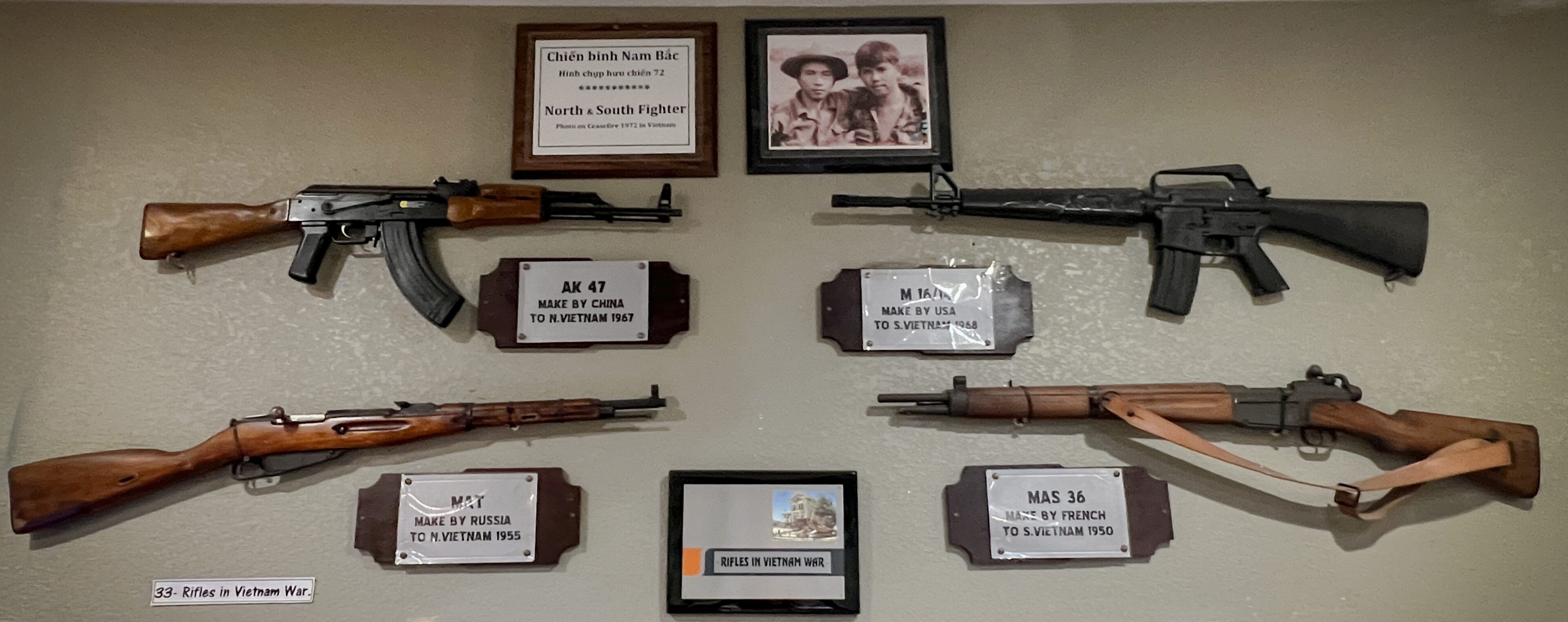
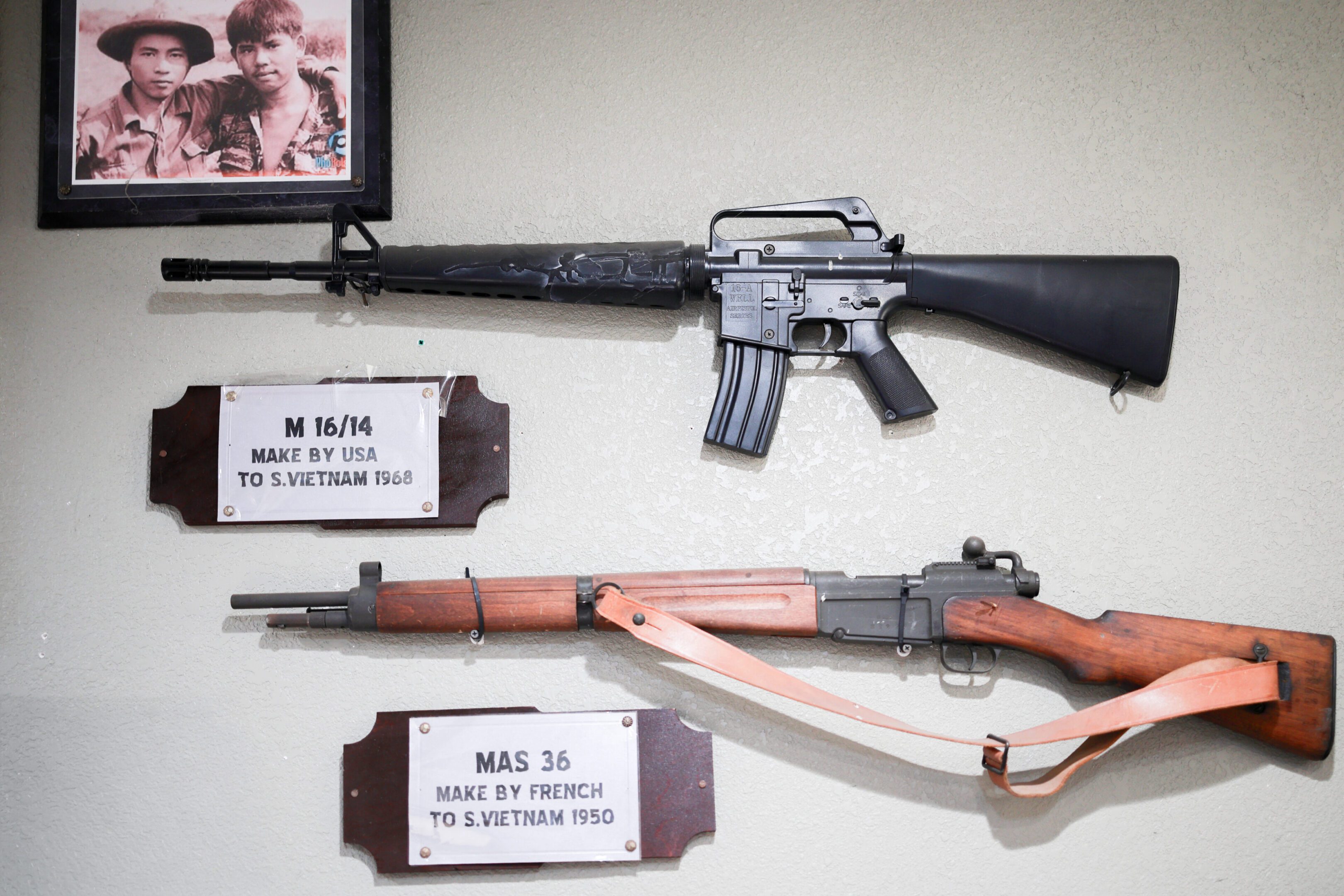
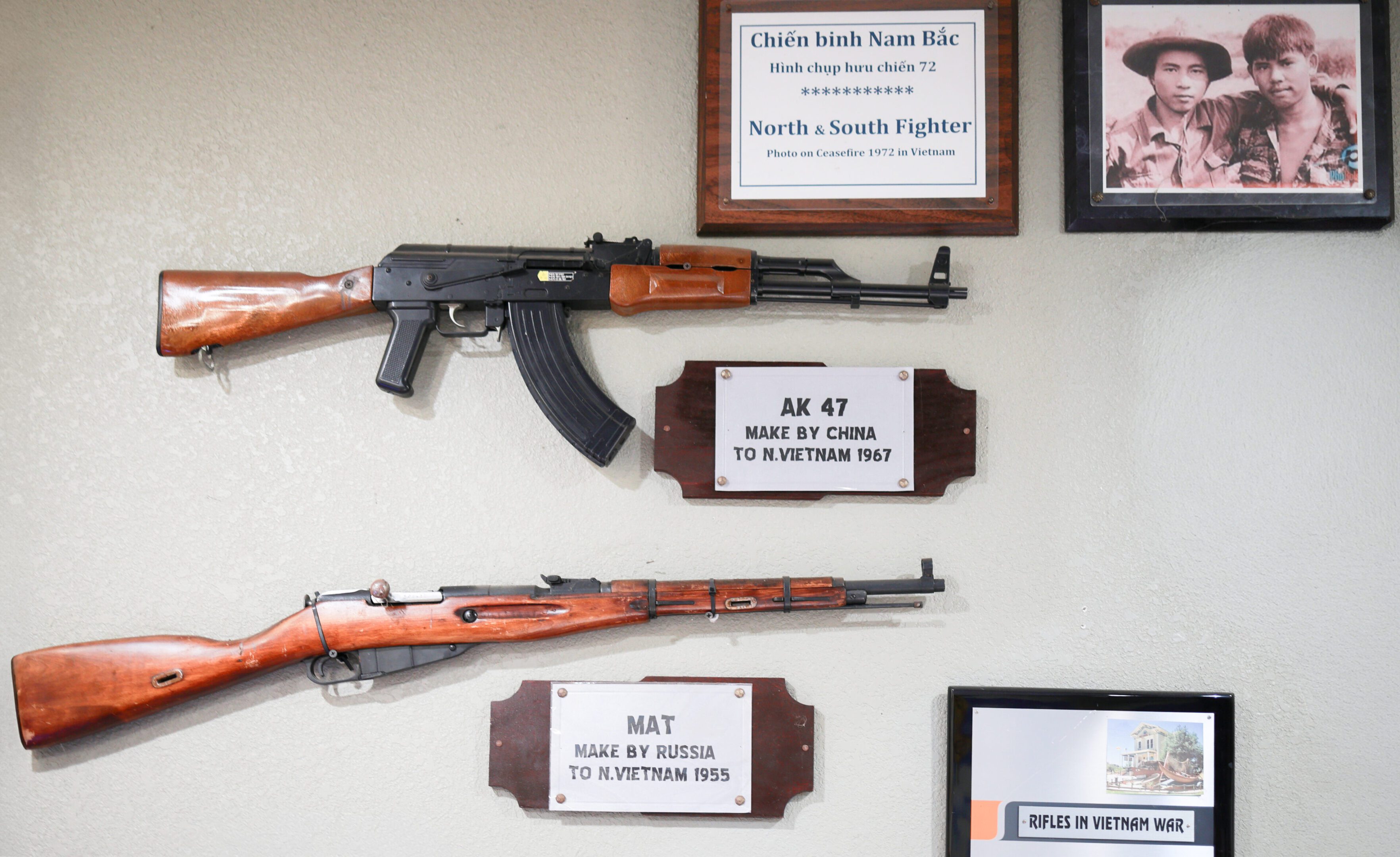
These rifles came from four nations—China, Russia, France, and the United States. They arrived in Vietnam stamped with different flags, ideologies, and promises. In Vietnamese hands, they were turned against other Vietnamese.
This wall tells an uncomfortable truth: global powers supplied the tools, but Vietnamese bodies paid the price. Competing visions of the world—communism, colonialism, containment—were argued not in distant capitals, but in villages, jungles, and city streets. Brothers, cousins, and neighbors fought one another with weapons made far away, for causes often decided elsewhere.
When the guns finally fell silent, the war did not truly end. Its aftermath filled the seas with small boats carrying families who had lost homes, futures, and faith in protection by any great power.
In the Boat People Museum, these weapons stand not as trophies, but as evidence—of how international ambition fractures nations, and how ordinary people are left to survive the consequences.
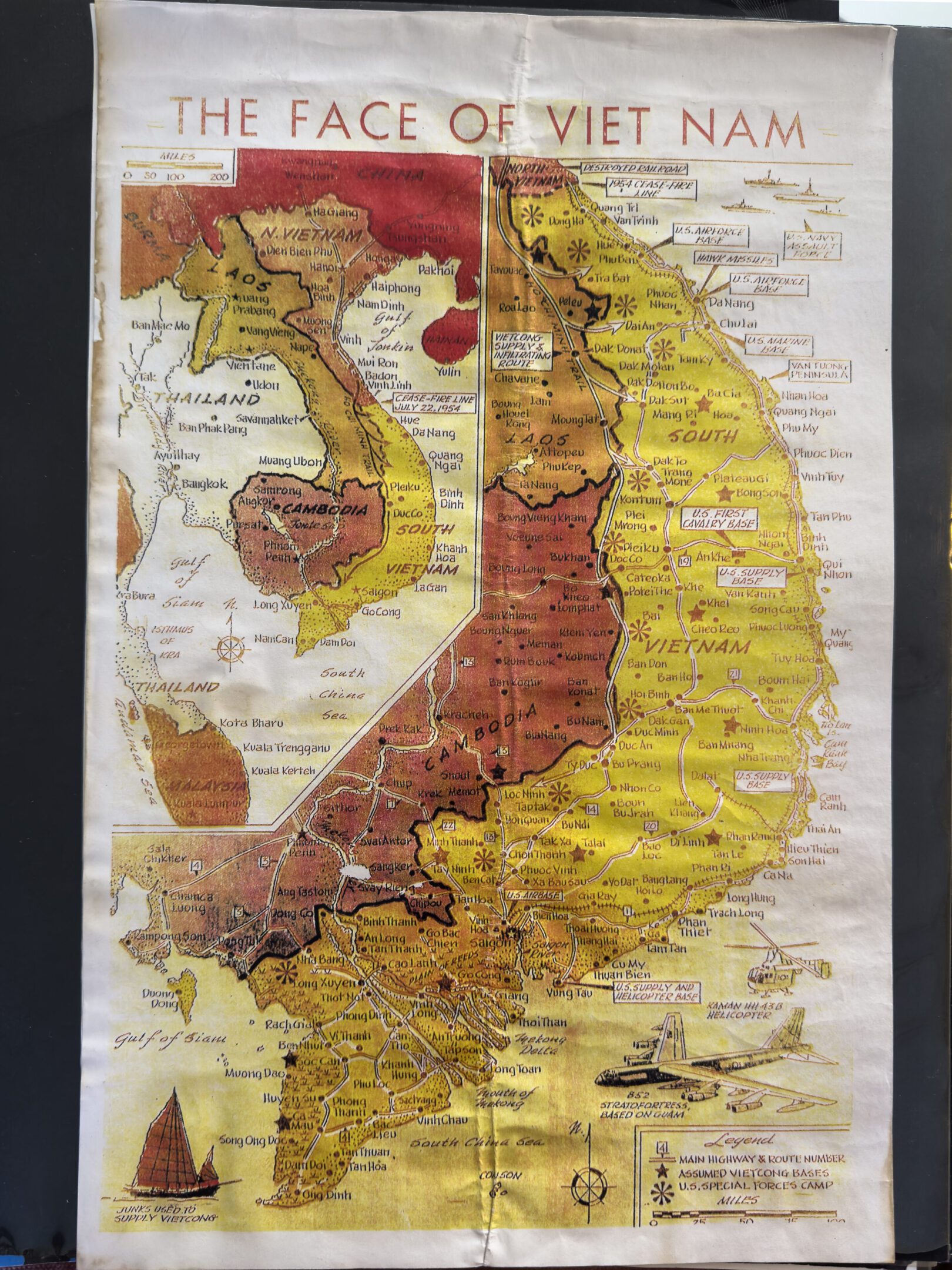
The Face of Vietnam
This artifact map, titled “The Face of Viet Nam,” presents a Cold War–era American military view of Vietnam, likely produced in the 1960s, combining geography with strategic interpretation. Rendered in bold reds, yellows, and browns, it divides North and South Vietnam while highlighting highways, airfields, U.S. supply bases, special forces camps, infiltration routes, and naval presence along the coast. The map reflects how Vietnam was seen not merely as a country, but as a battlefield system—terrain measured by access, logistics, and military control rather than by communities or culture. As a historical artifact, it reveals as much about American strategic thinking and assumptions during the Vietnam War as it does about the land itself, illustrating how maps can function as instruments of power, narrative, and war.
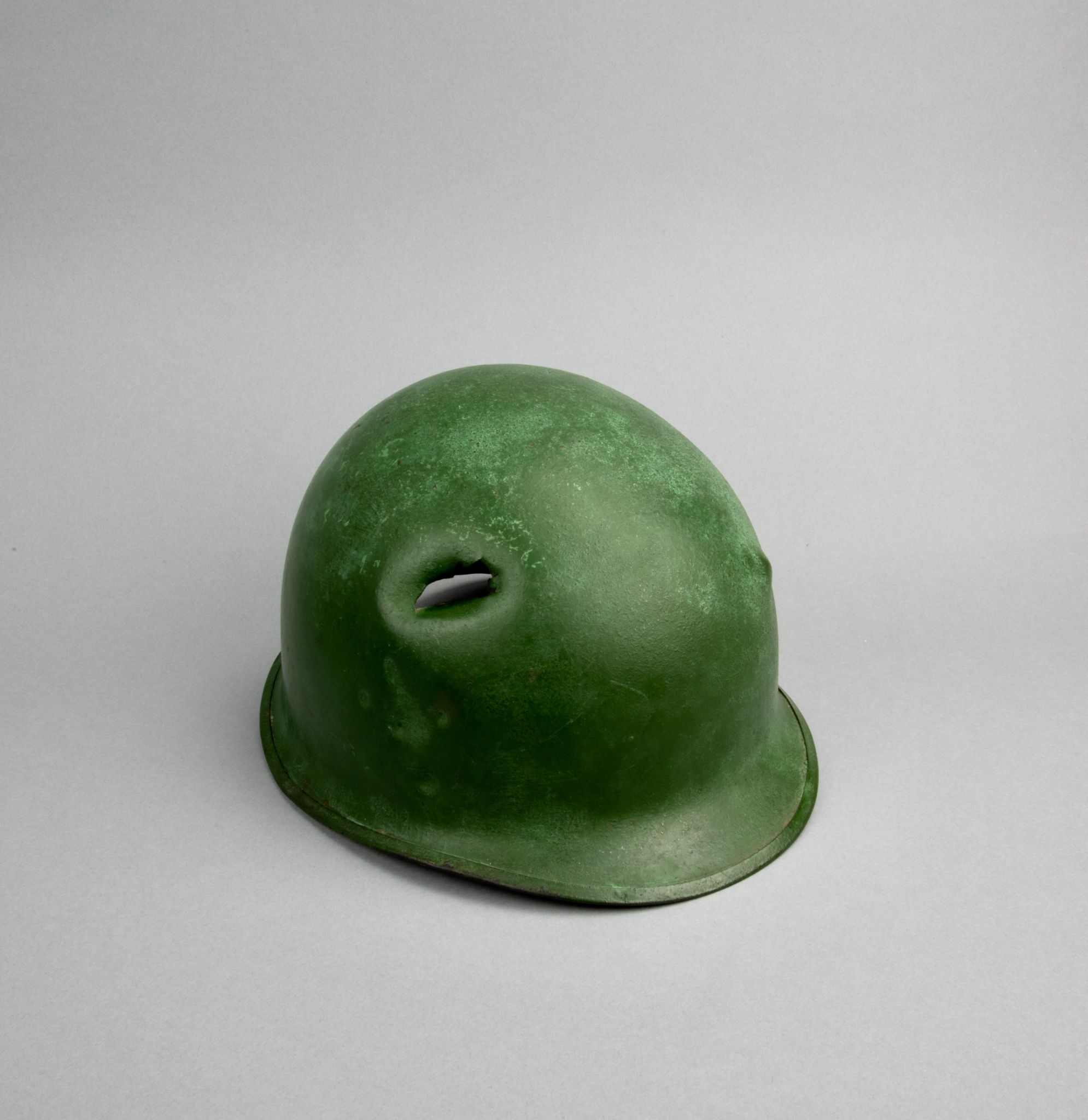
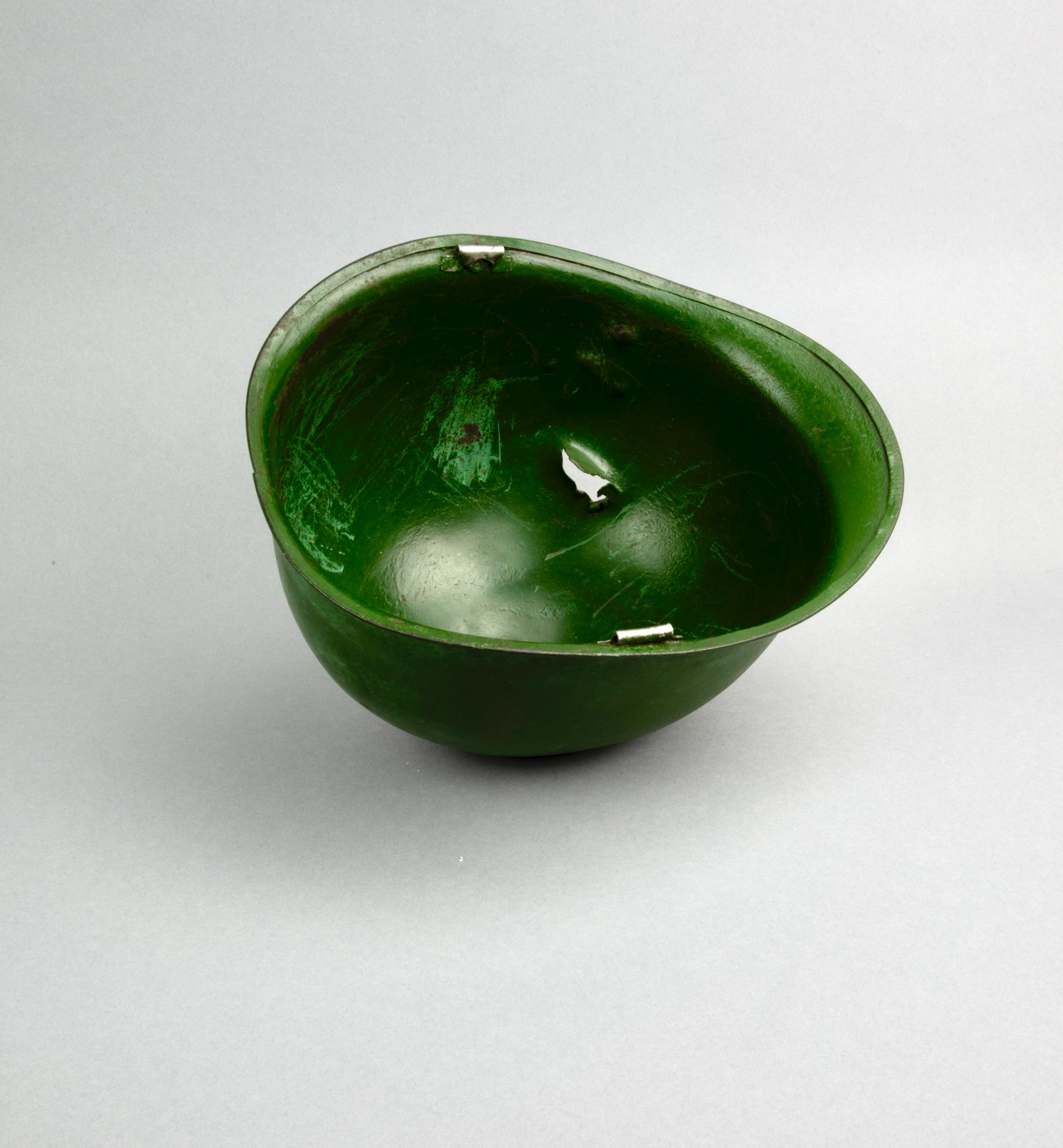
ARVN Helmet
The helmet represents the role of individual artifacts in memorializing the experiences of the veterans who fought for the Republic of Vietnam. The wound that created the hole in the helmet, which was donated by the local community, demonstrates the hardships and risks experienced by those who fought.